
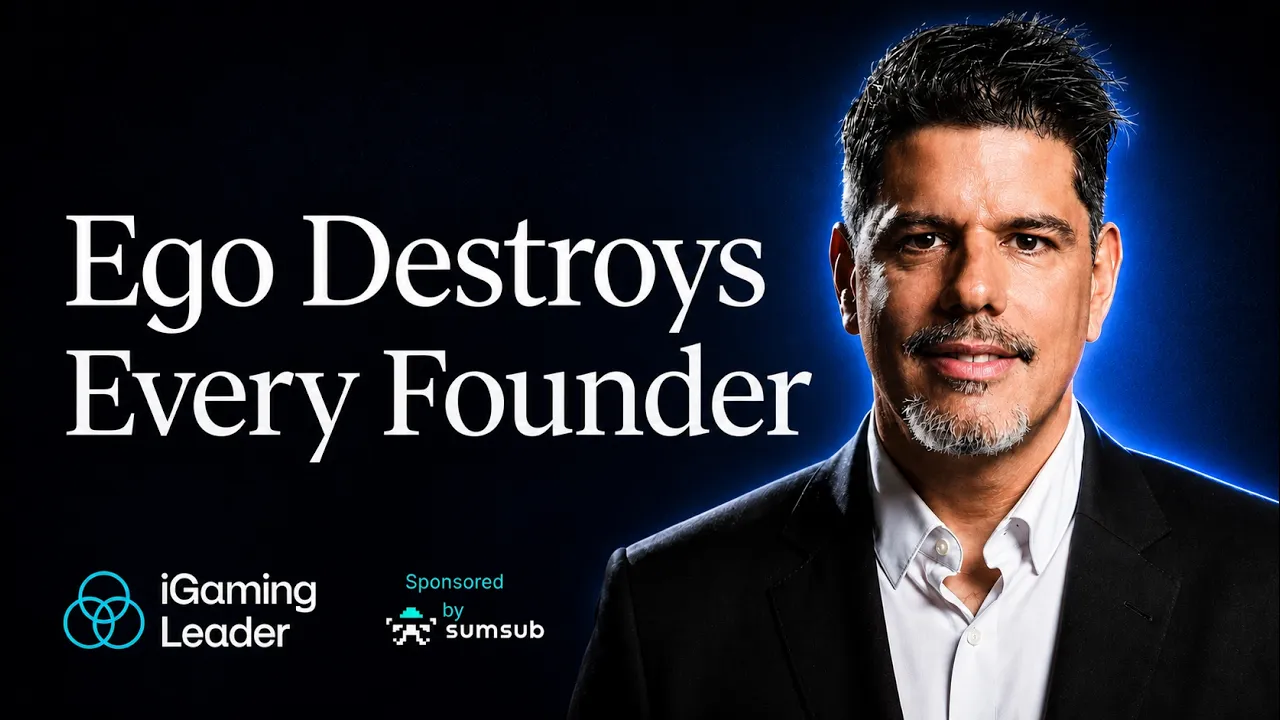
Stop Fighting Alone: The Secret to Startup Survival
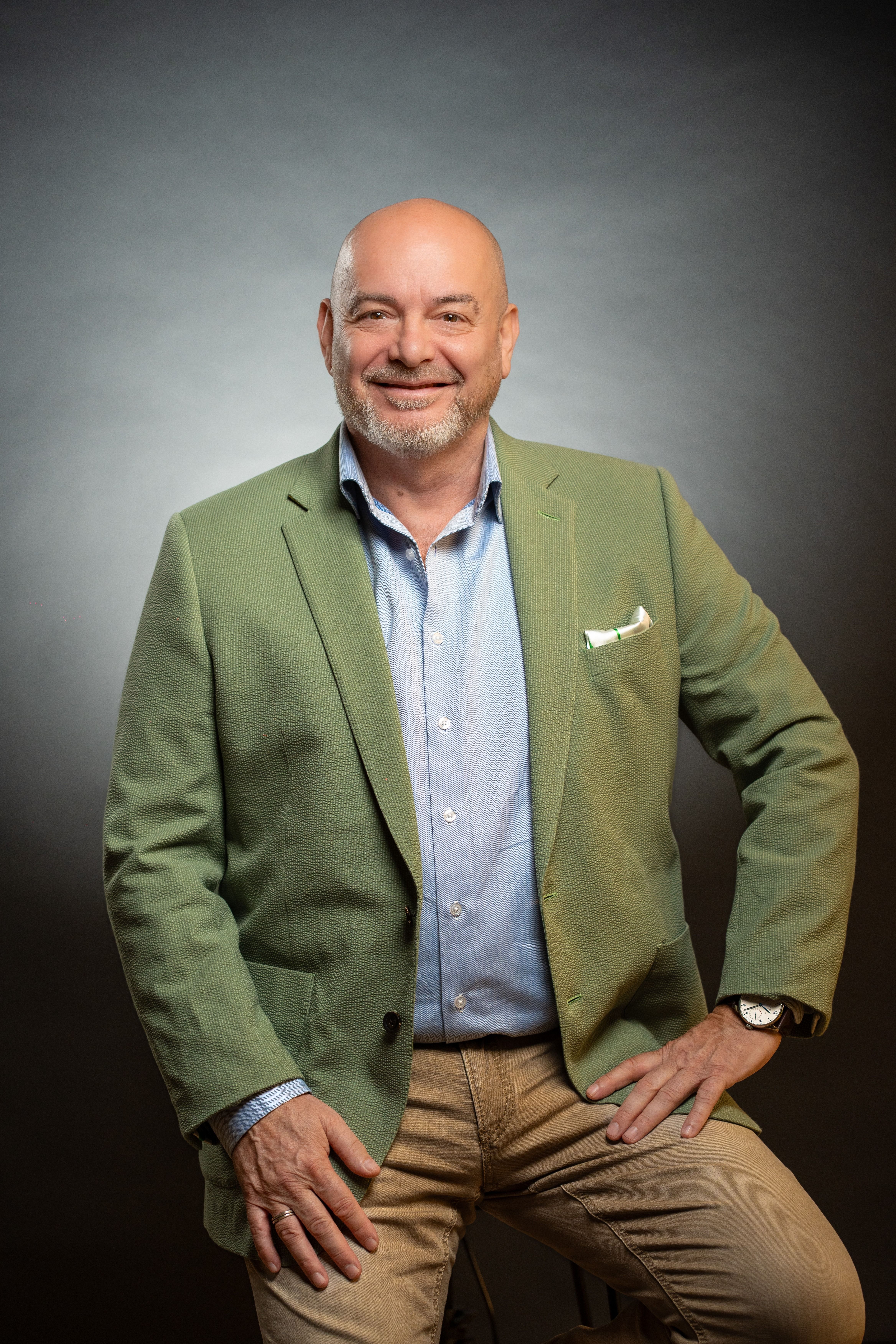
Ebbe Groes is a seasoned technology entrepreneur with a PhD in Economics and a proven track record of scaling software startups. Since co-founding EveryMatrix in 2008, he has transformed a bootstrapped venture into a leading global B2B iGaming provider that remains debt-free and founder-controlled. With nearly two decades of experience in the sector, Ebbe is known for his sharp commercial focus on tier-one clients and his commitment to maintaining product agility through modular, independent business units.
Key topics discussed
00:00 – The VC calculation: Why investors push 60% of companies "down the drain"
02:00 – From garage to global giant: The EveryMatrix origin story
04:00 – Founder-led advantages: Fast decision-making vs. board bureaucracy
06:30 – Identifying bottlenecks: your Outlook calendar is your best leadership gauge
09:00 – The 2015–2017 crisis and nearly running out of cash
4:30 – Swapping salaries for equity during the lean years
20:00 – Why EveryMatrix only raised $4.3M in 18 years
25:00 – Watching your business dreams get taken by VCs
28:00 – The luxury of "No": Segmenting clients into Gold, Silver, and Bronze
32:30 – Co-CEO Strategy: Bringing in family to build a 100-year business
37:00 – "Chop, Chop": Removing people who aren't in the fight with you
Key takeaways
The "Fuel" Trap: Venture capital often accelerates a company toward a "hit or fail" binary outcome. Founders who take too many rounds often end up as "passengers" in a company they no longer own or recognise.
Modular Agility: Splitting a large organisation into independent business units with their own P&Ls prevents management bottlenecks and allows each product to compete as a specialist in the market.
Transparency in Crisis: During the 2015 cash crunch, EveryMatrix survived by being radical about cost-cutting and transparent with staff, eventually converting reduced salaries into high-value equity.
The Power of "No": Taking the wrong clients creates "opportunity cost" and disrupts your roadmap. Segmenting clients and being willing to cut off distracting revenue streams is essential for long-term scalability.
Succession as Legacy: Bringing in a Co-CEO isn't just about bandwidth; it's about shifting from a "trade sale" mindset to a multi-generational, family-owned philosophy that preserves the company’s DNA.
Memorable quotes
"The key thing to understand about VCs is that they do their calculations on large numbers... they're going to push and accelerate to see if you belong to the 60% that go down the drain."
"Suddenly the founders... their dreams are shut to pieces and they own 10% of the company. There's nothing fun about it. You feel then cheated from your own dreams."
"It's important that you surround yourself with also people that think like you and you don't feel, 'oh, I'm alone in fighting this battle.'"
"If there's some founder in a similar situation... and he feels that some people are not with him... then, you know, here's your chance to get rid of them... So chop, chop."
Important links
Episode Transcript
Read transcript
Ebbe Groes: [00:00:00] The key thing to understand about VCs is that they do their calculations on large numbers. They're going to push and accelerate to get to see if you are one of the 10% of hits, or 30% of okay survival companies, or you belong to the 60% that go down the drain.
Ebbe Groes: You might start after this first round we, the founders, still have 60% or 65% something. Into the second one and third one, then the fourth one, suddenly the founders their dreams are shut to pieces and they own 10% of the company. There's nothing fun about it. You feel then cheated from your own dreams.
Ebbe Groes: It's important that you surround yourself with also people that think like you and you don't feel, oh, I'm alone in fighting this battle.
So if there's some founder in a similar situation, and he feels that some people are not with him and helping him in this fight. Then, you know, here's your chance to get rid of them because you need to save some money. So chop, chop. be sure that the people you are with, are really with you.
Ebbe Groes: Even if you then fail, then [00:01:00] you fail together and you give it your best shot. Do it with people that feel that you are doing this together, and that you are not just fighting alone.
Leo: Welcome to the iGaming Leader Podcast I'm your host, Leo Judkins, founder of the iGaming Leader Mastermind. And on this show, I sit down with some of the most inspirational and forward thinking leaders in our industry, diving into the real challenges, high stakes decisions and lessons. That shape our industry
If you are a VP director or an executive in iGaming, this podcast is built for you.
Before we dive in, a quick thank you to our sponsor Sum Sub, the full cycle verification platform. Trusted by top iGaming operators worldwide, sum sub helps onboard players quickly stay compliant and prevent fraud all without slowing growth.
More information in the description. .
Leo: Hey everybody. Welcome to the iGaming Leader Podcast. I'm here with Ebbe Groes co-founder and [00:02:00] CEO of every matrix. bootstrapped B2B iGaming platform from a sure ditch garage in 2008. Did, very, very well. Debt free, only 4.3 million raised externally. Built the world's largest casino content aggregation platform.
Ebbe really excited to have you here because, yeah, we all. Of course know about you, but I wanna talk about the decisions that you've made, the lessons that you've learned, the challenges that you've gone through, and really to what got you here today. So welcome to the podcast. Ebbe, I, I wanna talk about, um, actually our pre-call, if that's okay.
So we had a quick call before we actually did this. we started the recording and, you'd turned up with this big mug With a bell on top of it and I loved it, I thought, oh my god, this is great. So, you said that you use them in meetings sometimes when things go on too long and you mentioned this thing of get to the point or Get outta my office.
Have you actually ever rung that bell?
Ebbe Groes: on occasion wrong the bill. Yes. it's a little bicycle bill sits, on the head load mark and, uh, yeah.[00:03:00] when you're in a meeting, uh, there's loads of participants. they are busy people, they are paid high salaries, and sometimes they can get slightly, inefficient.
So yeah, sometimes good to get to a point and then, yeah. comes so useful, Hopefully people take it, in a nice way.
Leo: I bet that's probably one of the, challenges in scaling, especially as a founder, where you go from. You know, kind of starting by yourself or really small, out of that garage that we were talking about to, a large, four figure, team size, business where you don't control everything yourself anymore.
and obviously things go slower, meetings for meetings, all that kind of stuff How do you deal with that, with the frustration that the organization is slower than it used to be. When you, you know, on decision making on those kind of things, how, how do you deal with that?
Ebbe Groes: firstly, I think. As a founder led organization, you have some advantages and you have, some disadvantages. But in terms of decision making, that is really one of, the pros here of being decision that we are in compared to a situation where you have [00:04:00] a higher management, you have a board representing investors, owners, um.there's certain limits to what you allow the management to do. our case, the, ownership and the management, is united. the ownership sits in,in our management, and, we have an ability to take fast decisions for better or worse. But Yeah, I, I see this a plus we have compared to others, clearly then getting these things implemented.
Yes. there are things where you have less agility, and it has been one of the focus areas we had was to try to see how can we ensure agility, all the way through the company, essentially by trying to. the amount of decision making that needs, to be taken at the top level. so we built an organization around this. that being said, it can be hard when you have been part of the company from when you are 10 people and 20 people and 50 people, and you literally were involved in every single decision from, uh,wordings and some contract [00:05:00] to whatever, feature in the product development and so on. At that time, we had the bandwidth to it. Um, so, you know, at, at the time I got into all these things, I see it as a nineties today because sort of forced me to get into all these different aspects. Um, I would, say entering as a CEO into a mature organization, our size gives you this very big challenge that there's so much to learn, so much to get into necessarily to make the decisions, but at least to the ability to know the essence of what's going on, to ask the right questions, to know when it's important to maybe step in and when it can be okay to, just to not be part of it. So I feel kind of privileged to be in this situation. It's a huge privilege to be able to be part of this long journey. So,I've had 18 years, in error matrix to accustomed to what kind company this is. it has changed over time and I've been part of these changes. And so, even for a slow mover, like me, I could keep pace, with this because everything happened [00:06:00] quite organically. also relates to this thing about the. We didn't do any big re rounds. It sort of forced us to do things slowly. so this is a privilege that?
Yeah. in the beginning you have a small organization, you can get into everything, and then the organization develops, fairly organically, all this time. So, I don't get hit as a CEO through all this period with. Huge, changes that I have to get adjusted to in contrast towards what, ICO would've to do.
Leo: that's something that you must have learned or experienced over time as well, right? Like as a founder, you don't scale with the business necessarily, and you run into the bottlenecks of yourself. Right. And wanting, also, even just wanting to be in those decision making processes, but realizing that you no longer.
Can because you stop things from happening, right? You start micromanaging or like, how was that for you? what were, maybe the earliest signs that you ran into where you thought, oh, this is like, I need to step out of this process here and need to start leading.
Ebbe Groes: you have to take a look at your Outlook calendar. clearly [00:07:00] it all starts there. if this is constantly blocked and you don't have time to do things that have a day where,where you are sitting not in meetings all day and can do thinking, actually do some work.
Get into the core matter thing so you can, play a part there. if you're getting to block, then you have a problem. And, this problem will be bad for yourself. It'll be bad for your company, bad for people around you if you become that bottleneck. So. I think it's a reasonably easy gauge of, how you make things that you are able to do this, have, have some space in your can and if you put in some hours in the evening or put in a Saturday, then it should be fairly rare that this is, a necessity. Yeah. time to time you might do it, to, we have some hump. You have to get all this, but you shouldn't be in a state where. that happens on a regular basis, then there be things that excite you that, well, I really want to, get to work today because, you know, it's a Saturday, the sun is shining.
after the gym, what's nicer than, sitting alone and underst disturb than office, [00:08:00] nobody's bothering you. Your teams channel or whatever using is completely silent except for some stray that insists on also working on the Saturday. that kind of, space free time is something you can treasure if it's not something that is forced upon you. and that's the same feeling you have, in a larger company as we have today in Matrix, I'd say as we had when we are much smaller, much younger company
Leo: Yep.
Ebbe Groes: keep this, it stay, it stays fun, it stays, something you do out of joy.
Leo: Love it. I wanna talk about the period between 2015 and 2017, if that's okay for you. So you split, every matrix, into nine independent business units, each with, C levels, right? C-E-O-C-T-O, and a p and l. You ran. I think two parallel development teams at the time, nearly ran outta cash. And it's something that we spoke about before as well.
So we spoke about investments and we spoke about runway. And I think you've moved a lot of the operations to Bucharest just to survive. Can you tell me a little bit more about that period and what that was like?
Ebbe Groes: first of all, the basis of it is a hard look at yourself [00:09:00] and say, does your software, is it able to deliver what you want, from your future growth and something you have to do from time to time if we, eight years into our existence would be able to deliver according to ambitions, same software as we had when we started the company software we built in 2008, 2009, 2010. but we realized at the time was that, these for us, the white label segments where you stress out. simple template sites, fairly quickly, fairly, easily fairly small operators. this was not a sustainable business, and so we needed to do something drastically.
The, spin business units an attempt to address exactly the point, you raised earlier, bandwidth and agility on a product level in particular, but also on operations level. It is, quite demanding to build a competitive sports book. And if you look around, you see that many have not, succeeded with this. there are well known few, companies that really do this at a high level, but for us, you cannot expect that the product [00:10:00] people, the CTOs, et cetera, would have the ability to both do a world class platform products, payments, Pam. as sports book and do this with the same resources.
It can be orchestrated. Yes. but will invariably run into these, bottleneck issues. So we, we said, okay, let's try to decentralize this. It's also based on, I believe that when you try to show it here once, you cannot necessarily expect to show turnkey. Yeah, we can go and be lucky that a large operator would go lock star Barrel, over to us.
And indeed this happened and it's happened more frequently, which I'm very happy for. But on the outset, large operator would maybe say, yeah, we have a shortage in our sports park area or a casino area, or some other area, and we are looking to address this where we'll be quite reluctant and cautious about moving. Full scale away from maybe in-house, maybe a trusted, third party that is good in many dimensions, Yeah, now some B two Cs large enough to say we can with in-house, uh, address [00:11:00] all areas of our business, but the number of such operators is small You can maybe, today in 2026, survive as an incumbent in, some mid-size European country, and you're the largest operator and you can have this in-house. But in five years from now, can you do this? Will you not be, uh,have your business targeted by, moving, moving to Europe, and chain, et cetera? so you'll be facing more competition and in end you realize that, uh,you have at you possible will not suffice and you'll be forced to start.
So, okay, what is, what is the area where I can stand out? Where, where can I best you? My resources. So you try to build our software in such a way that we allowed, these large operators to do this. So this went along with the modularity. Um, we sort of got a win-win we thought by both izing development, the decision making, even the operations. So each of these, units would have their own operations team. In case senior, you have an operations team doing configuration of games. They have their own, first line support team, [00:12:00] or second line, sorry.but sports is the same. There's a trading team. a dedicated support team that we didn't know that stuff.
this allows us to sell these companies, these products separately, but also to bond them together. and it's worked quite well for us. it might get into later, uh, why I think it might not work well for us in the next, uh, five to 10 years. cause also this model has disadvantages, but in term product quality, this strong product focus, this put us in a position, to. have the type of growth that we had from then on, it also nearly put us in the ground,
Leo: that's the stuff I'd love to talk about because, I think that was one of the big challenges is that the development of that just took like, like every piece of development probably with every single company took a lot longer than expected.
Right. You, you map it out and then it takes longer and then there's a certain runway and that runway starts running out. So how is that, how is that,
Ebbe Groes: would say a little bit scary, of course. But, the truth is a little bit different. of course you fear that, everything is lost. You start losing money, you start looking the runway, a [00:13:00] month that taking away. but, you know, survival nstinct, kicks in. you look at ways to. do something on revenue side.
Uh oh, I have some site deals side, but you know, if I can somehow launch, this client, two months faster, that's two months earlier, I get revenues here. we were helped by some of our suppliers. I mean, I will still think actually back to some of the suppliers that gave us, some, credit here.
We accumulated a few months of invoices with some of the large, suppliers at the time for us. Managed to get them to believe enough in us, to sit still a little bit, while we got through on the other side. And then I'm happy to say this is the last time we've been in that situation.
But, of course, introduce some stress in the organization. You have a CFO who's job really should be something else and trying to keep, the data list, at bay. With some collaboration from management and people dealing directly with them. so there's some stress organization. clearly we tried to, I mean, I think maybe one of the harder parts was to gauge how serious the situation can do, how much you expect to get of it, let's say, [00:14:00] okay, I trim across the bed better, but. if I'm 500 people and I say, okay, what I need to do is 550 and trim to three 50, then you can lose so much that you essentially kill the company. And I've seen examples of where this happened. suddenly you have no development,team, you have no resources, for adding features. Team that becomes completely disillusioned because they are just holes without a chance to really, do something serious about it. salespeople are come, managers who are unable, to really compete.
They do the best they can, but so we manage not to get into the situation and, I'd say some skills we had, but maybe the most important one was this ability to have some feeling for, uh, we needed to go in terms of like serious cost cutting. we did also some things that today some of my dear staff and ex staff will treasure, which was that we, uh,did some, exchange of salary to cs. So essentially we converted some, I did a bit, but you know, around my,my C level, we had guys [00:15:00] doing this. this was six to nine months of, reduced, for some cases, much reduced and this in some sense, uh, you know,creates a togetherness. you come out stronger, as you'll often see in these situations. In the end. they make good money on this, evaluation, at the time was, like, tenfold less than where we are now. so to do factor a 10 on, some month salaries there, is a good thing.
Also, some people, stay with us long and so all in all, I felt, we were sort of all, Coming together at this and, uh,we are very transparent, about where the situation was and how we saw it, I really thought we got a really good buy-in from, people in the company. And as I said, a buy-in that even today, I think sort of gives me a little bit of credit, inside the company from us having gone through this and something that, hopefully we don't have to exploit, but it's a little bit something you can lean on
Leo: it's so true, isn't it? they're horrible moments when you're inside of it, but they pull people together and those battle scars, they become your armor almost right afterwards. They [00:16:00] become like your strength, I think. And, uh,it certainly sounds like that's true for you as well.
Ebbe Groes: it's not pleasant. But I think the harder part of being manager is when you have these big doubts or should I do this or that? I'm not really sure what is the right strategy. If I know my strategy, I know I,if I feel comfortable about this, then I'm,I feel fairly able to the team and get everybody on board and all we are excited, we are pulling, towards this. But you don't really know. If you are starting to find your direction, this becomes a serious issue and you feel it immediately yourself and you feel, fake if you're trying to push
Leo: Yes.
Ebbe Groes: towards people inside your own organization. People you consider friends and
Leo: Yeah.
Ebbe Groes: yeah, battle allies. if you're not really, really yourself sure that this is the right thing, if you're not, then Yeah.
you really have to. Have some movement discussions, and then get to some common understanding.
Leo: how's that gone for you then with that conviction? Like being sure about that this is the right direction because. You know, the problem is always, we never have enough data, right? we're always [00:17:00] about 80% sure. And then you've gotta go. And then actually in the action, as you start progressing towards that strategy, that's when the real conviction comes, I believe.
And so, how's that for you? How do you go about decision making processes in such. Pivotal decisions like splitting the company into multiple business units or, even maybe what's coming in the future. How do you go about these decision making process? Do you do that by yourself?
Do you talk to the board, you've obviously brought your brother in, like how, what does that all look like?
Ebbe Groes: I very much lean on other people.
Leo: Yeah.
Ebbe Groes: I'm not particularly good at just, uh,come up with inces things all on my own and then, uh, you know, that's just great.It was, from day one in Matrix. I had a partner,
Leo: Mm-hmm. Yep.
Ebbe Groes: we ran this for the first many years, essentially as co-CEOs.
we had different roles, and we didn't put it as co-CEOs, but of a hundred people, that had importance to this company. He was, by far, most one most important one. I played a role but he played an equally important role. I had the CEO role, but, it's very, very [00:18:00] nice when you have this partner that you have where you have the full trust.
There's no scheming, there's no strategy, there's no, issues of feeling that, you know, like looking for something for or something. we just completely straightforward towards each other. from the first, day we started this company and this has been a fantastic asset for me
and you learn, of course, who you can rely on for quality of advice and for honesty. You try to embrace it, even though it be hard sometimes besides dn, also great assets, We have inside the company, and I do try to listen to them and, you find them not necessarily to be people that report directly to you or that are very highly in the company and just people who, really know what's going on in this area of our company who have an opinion, whose opinion I respect and who I'm happy to listen to. and so. I think it's, it is a little bit of, it isn't much. We have this easy decision making because we don't necessarily [00:19:00] use our board too much. We are not controlled by boards.
Steve and myself, uh, said, and the majority of the shareholdings in the company. that. Also allows you to be more open in some ways, and to say, we will figure this out rather than I have to do it because it's sort of mandated to me and I feel this great stress. it's, it's, it's a de-stressing thing that, you know, every fuck up. Then, you know, it's mostly the end of my own body, that, that we lose.
And, uh,of course I have, some obligation towards other shareholders, but the fact that it's, 25% or so of the shares helped, by anyone else, and two founders, it still means that by and large, it's a lesser concern than I would have as a CEO towards shareholders if this is, uh, the majority of shareholders.
And really legitimately, I had to spend. More time worrying about what's good for them. Yeah, I can worry a bit more about what's good for the company,
Leo: And, and it kind of goes directly into the next topic I wanted to talk about because, when we spoke, last time , we were talking about capital discipline really, and, how [00:20:00] that's, very underappreciated topic. I dunno why it doesn't get spoken about enough, but that's just the way it's, so I'd love to talk a little bit about that kind of,
The thing that you said, which I really loved, which is that, yeah, you can take investor money, but it just means that you're no longer loaded a castle, you said. Right. And, your bootstrap, you took a single round, 4.3 mil, I think. yeah. And every, you funded every acquisition since then from, cash flows.
When do you first realize that external capital wasn't the route that you wanted to go towards?
Ebbe Groes: I tried it in my first startup.
So really, I, I tried it firsthand, again, myself, a good friend. We start a company and, somewhat to our surprise, we suddenly had, Seed mining, first round, second round, you know, the classic, VC tail. and that for us, we thought, oh wow. Quite high valuations.
And, and so we were building this company without any revenue. and, you know, this is, uh.happening a AI right now. So, it's not, you say it's, it can be, be great, but, it, it can be [00:21:00] extremely distorting for your own, uh,vision, clarity, or vision. I would say that you are removed from the discipline.
This the strictness of a p and l. here's my revenue, here's my cost, here's what I have to deal with. When I started this, my second company, which was, in this industry, it was an affiliate company called, So, let's control our costs, keep this very, very tight and then, um, and then grow the revenue and then only carefully grow the company as revenue growth allowed it to. so this worked out. and of course it's many companies where you cannot do this. You cannot build, open ai, where you have revenue coming first.
You cannot build, a new medical where you do this. You have to invest a lot first. But in our industry, there are many areas where you can do it. Of course, what you can then do is to say, okay, you build on this, you build some capital, and then you use this for later investments. and essentially this is the way we have gone yes.
Some things we do needs investments and needs maybe [00:22:00] 12 months, 18 months, uh,years. And, uh, several examples of this happening inside Matrix, uh, right now. But where we have the ability to fund this ourselves, from funds we have accrued, so, yes.
if you sit there and you have your startup and, suddenly you cannot do what you think is the right thing because you have investors and you have a board and it's,it takes a lot of the joy away More than that. I mean, if we didn't start not agreeing with the, the this going, maybe, you're an idiot.
but you know, when you start a company, it's born out of some, um, misplaced, uh, belief that you're right and that, if the world thinks differently, that the world is wrong. and this idea is great and, you would absolutely succeed. And this, uh,data shows us, of course, most of these startups do not succeed, and the founder was indeed wrong. But you start from misbelief, uh, from this missjudgement of probabilities, and, this is, um, your weakness and this is your strength. and when,when you then challenge this and say, you're born from this, then it's deeply [00:23:00] troubling. Damaging to your sense of self. because you create this and someone tells you, no, it's wrong, and we'll not force you to do the opposite, you mean this is, um,the impossible to do. Anyway. That's what happened in my first company. it was, uh,quite painful. Left that company. I used, the money from that. To start the next one. that gave me a bit of runway. It was 200 K I got from this. but it was enough to get us to, Casper even on that second company. that morphed into Matrix, seven years later.
Leo: Love it. Yeah. I had, um, I had Dave McDowell on the podcast as well. Right. And,so for people listening, Dave McDowell is the founder of FSB, which, uh,later on acquired, which we'll get to in a bit. and he spoke about that, right? He was constantly just trying to find cash and then he felt he'd never got the balance right.
I almost feel like sometimes it's like trading the crown for a fuel tank, right. what's often happens. And so how is it for you, what were maybe decisions that you could or couldn't make that, a company in a VC-backed, you [00:24:00] know, like perhaps a VC-backed competitor simply, could have made or couldn't have made?
Ebbe Groes: the key thing to understand about VCs is that. They do their calculations on, law of large numbers. I
Leo: Yeah.
Ebbe Groes: companies.40%, uh, will, um,succeed to some level. 60% will fail. Of the 40% that succeed, let's say 30% will be okay. Companies and last 10% will potentially be like hits.
that will make a lot of money for them. this is pragmatic for you as a founder. Because what they're going to do from their point of view, is they're going to push and accelerate to get to see if you are one of the 10% uh, of hits or 30% of okay survival companies, or you belong to the 60%, that go down the drain. and for them it's important to get to that point. Two years, three years, four years. This is the,the whole business model. you might yourself want to spend more time and take things more slowly, be more careful. You're under constant pressure, but doing the opposite to accelerate. and to see if [00:25:00] this bears out to win market share, which investor initially buys into, uh, that this is an interesting market.
So let's go and grab, uh, this, quickly. it doesn't work well. You blown it. if the, this still thinks this could be maybe interesting, the next thing that's going to happen is you run our money and they come with another bunch of money. unfortunately for you, uh, this happens in slightly different terms. So you might start with say, okay, after this, first round, you know,we, the founders, still have 60% or 65% something into the second one and third one, then the fourth one, This is how these things end up. And, suddenly the founders, they're still active in the company. their dreams are shut to pieces and they own, joint 10% of the company, um, shrinking for which time some investor utilizes some, option that they got, as part of, route, et cetera, pity these people. I have tried it. It's just, uh, is,there's nothing fun about it. you feel then cheated from your own, dreams, and you're still there working. of course if you have the ability to control the terms [00:26:00] yourself that you can manage this carbon injection without ever needing money again, I would say this is literally the key thing. You should do this, only go in this path. You feel confident that you can reach the targets that are set up in front of you so that if you raise more money, it's not from lead. It should never be from lead. can you manage this then I think it can work out well. I didn't manage, um,but I can see,see where it goes wrong.
And this is the one advisor that everyone trying to go down that path.
Leo: I love that because that's so true and it happens to so many people I speak to as well, and suddenly you don't recognize the business that you or originally built and you don't haveyou lost control as well, right. it's probably one of the biggest fears for most people is exactly that because you built something that you were passionate about and it's no longer,it's no longer your baby.
Ebbe Groes: and then for whatever reason, people often feel compelled to stay in this company. They no longer recognize and look after this baby that in fact, somebody adopted, out of your womb, you gave birth. it got taken away from you and you can now admire the baby a little bit from a distance [00:27:00] raised by somebody else. In
Leo: Yeah.
Ebbe Groes: approve of. but, here you are, feeling just happy that you see the baby from over the kindergarten fence.
it's no joy. Walk away and leave a nice letter for the baby. in case you ever want to know about your will dad.
Leo: one of the things that I've heard you speak about is, um,that you had a realization about turning away business. and that came from kind of watching the alternative and watching that perform miserably.
Right? So you're talking about tier one operators, and so tell me a little bit more about that period.
Ebbe Groes: Yeah. Yes, it's, it's of course, it's classic opportunity cost. it is so easy in particular when you're struggling a bit to take any business and, you get misdirected. But, the ability to, to say no to business, that is a wonderful, wonderful luxury. Even better than having money to invest into, into new things, It's a bit an investment and a gamble I was able to take,
Leo: Yeah.
Ebbe Groes: to takeand, and I'm very happy to have that ability. but yes, the most crucial part is that one because this is [00:28:00] truly disrupting for your business when you start taking, uh, on business that you deep down no is not going to, lead you towards, the decision you have, as a software supplier. you're very much being guided by the needs of your clients. So by getting the right clients, you'll be forced to go the right way and you get the wrong clients. You're forced to go the wrong way. this is not so hard to understand when you take a step back. Uh, maybe, but be quite hard to understand.
if you sit in the middle of it and. You are in the breakeven a little bit and like, okay, here's the deal. It's not really, what we wanted, but it is money. So, we'll take it.
clients will complain and demand and, uh,want things regardless of whether they are on the path that you want or not.
Whether they're large or whether they're small. They want access, to your top management and to your roadmap and to everything. And they all have that ambition. You have to control the access to this scarce resource. Became more strict about what policies we have [00:29:00] for allowing clients, that kind of access, we segmented our clients and, uh,so okay, we have have our gold, clients and our silver clients, our bronze clients, and we all know who they are. And here's the list and everybody in the company are aware this, this is limited. can still work as a small company and sort of have the same, use the bandwidth if you just say, okay, don't, don't 400 clients now.
Um, but yeah,
I see something, 15 to 20 clients that is sort of on the list of where I have would receive them regularly. Of course, I'm not hitting account or anything, but even the CEO of course, also meet the most important clients from time to time. It's useful, them, useful for me. So, this, this, uh, this turned out really well, but again, only really helps you when you can, show that these are the right types of clients.
Leo: Yeah, because that, it's so true, isn't it? Like I hear so many people that are in your position, like years ago, that have one big client who then dictates the roadmap, right? That way you build features for them and it kind of doesn't align with your, if that's a client that doesn't fit your [00:30:00] vision, it doesn't align with what your vision for your business is anymore, and you create a Franken son and suddenly the business five years later is.
Not sellable, it's not scalable. It's not like it's nowhere near what anybody else. you basically can't sell anymore. Right? And so, I think that's one of the biggest challenges. Staying true to your own vision and your own roadmap. Is that how you feel about it as well?
Ebbe Groes: I do. and then when you see, okay, I want to implement a change, you also say, okay, this change will not happen overnight.
Leo: Yep.
Ebbe Groes: this phase you refer to from 15 to 19, where we rebuilt this. it was also a change in business model, not only in architecture and organization pre this, we had a Malta B2C license
So we had, white table sales. We decided it was not for us, and then we,it took us, probably three to four years to phase it out. the first thing is you start saying, okay, we want really more of these deals and less of the, the, this same things. We bit signing new, then this part of our business starts to shrink until we get to the point where we can say, it's now so small [00:31:00] part that we can find a way to just cut this off completely.
We knew we wanted to cut off, completely, and it took us some time, um, when it,it went below 10%. The remains to sell off, this business. Horrible deal. We ended up, uh, to be, but that's not so important. But the most important thing was we got rid of something that was distracting for our main goal. So sort of if, let's say you give up 7% of your revenue, but you win not having the burden of managing a salary of your business that is, uh,simply not leading in the right direction, then in a fairly short time, you start realizing. efficiencies from not having to span both the type of business you want.
In our case uh, tier one, pure software, deals, that we wanted and we want to let go of the smaller, turnkey, wide deals where our license involved made all kinds of, uh, worries, about this. Get rid of these worries, freeze up, one part of your brain and you can use this for where it's being needed because, Clearly, uh,[00:32:00] anything you want to achieve, you know, there's more things you want to do. At the same time, the harder it becomes. So,
very, very good to see, seek ways to simplify and concentrate, what the business is and be very clear about this, and then stay good you can demonstrate and narrow on of this.
Leo: It's true, isn't it? Like it helps with your sales, with your marketing, with your messaging, everything becomes clear because now you are going after this one, one single message. I wanna talk a little bit about Yonas, if that's okay. So he, recently joined you as co CEOI know that you and him have been, had been speaking about it for some time
as brothers, of course, but like, what, what made you. Kind of finally pulled it, both of you finally pulled a trigger on that. what's made you make the decision that that's somebody that you needed next to you as a co, CEO.
Ebbe Groes: there's, many factors firstly, yes, we're speaking about it, and, uh. We are brothers, we are friends, and uh,we like to spend time together and Iadmired what he'd been doing in his business and he liked what I've been doing in mine. so it was always something that was a little [00:33:00] bit, fun to do one day. next thing that happened was and it makes us realizing, that we are actually quite comfortable with the way that things were running privately built. we were starting to generate good profits. we were paying dividends for the sake of, ownership, have an exit, a trade sale or an IPO. such an exit would of course also mean, that normally at least, that there'll be a change in management happening. If That's not happening, then, what is the long term plan for, the management of the company? and when you look around, then that's a certain type of company.
The family owned businesses, you usually did a deal with the Mecu for their, Danish business, was a fantastic force. and, uh, this is some, one example of this, um.
Leo: Yep.
Ebbe Groes: Robert, to just say that over time I've started to interface, uh, Fon businesses as well, where it could be second or third generation even. And. Yeah, it has some appeal. don't know, part of it's maybe, uh, ego,ego, et cetera, the decide to leave behind [00:34:00] something of duration. some desire to not see what you built being up or dismantles, uh,by some new owner. Yeah. And if you don't need to do it, then why not? so this was also playing a part. of course Jonas is family, but it is also, you know, it gives me that feeling of ensuring some, planning as well.
Um,
Leo: Yeah.
Ebbe Groes: not, uh,near retirement, I hope. but, um. Yeah.it is nice if I can get to where would not need to stay, at my post simply 'cause of lack of alternatives. tried to hire, C-level people and look around the industry, tons of examples. It is incredibly hard. My best take on how I can find sustainable, um, way of doing this without having to step back again, five years later, older and outta shape. that would be to do it where I really get a chance to see this unfold. [00:35:00] And the influences, of course vitally really choose somebody that, that I trust, uh, has their heart and, and their brains. to do this in the right way. So Unos, um, made all these criteria, Yeah.
it's early days.
Um, he's been the company for two months. I can say that, I had very high expectations and, it's gone better than I expected, I'm very, very happy. it's, a great job to work with him Of course, he needs time to get into the business,
he's starting to get to where, uh, step by step, he's contributing more.
And this, of course, will only grow. so this is how we're doing it and, it's, it's a lot of fun. and also feel it's very Good.
Leo: I love that. my last question, you are now a 10 minute walk away from. The old garage with the London office. It's not the garage anymore, it's a hotel. From what I hear. that must, first of all, that must be quite,quite funny to be back there, right. And opening that office in London.
But if you go back to that garage that you were in back then, what's one piece of advice that you'd give yourself now with all this experience that you've got, the challenges that you [00:36:00] face, the lessons that you've learned, what's one piece of advice that you would give your old self in that garage?
Ebbe Groes: good question , But it's also something I think has a rather obvious answer,
because, it turned out pretty well,
2008 or 2009 a dgig advice from, 15 years into the future, versions that, all knowing or seeing, uh,beings here. so I think, uh,probably I would, uh, look down and I would, uh, would, uh, pat, myself a little bit on the back a little bit, say, you know, Yeah.
probably fine without my advice, um, because it turned out like this. I think if you really need advice, from your future self, it's probably because, you ended up in a very shitty situation and they're like, why didn't, uh,why
Leo: Yeah.
Ebbe Groes: uh,older Leo come and, and tell young Leo that he really shouldn't have, have done this?
but Yeah. since we ended up here, then I would say, okay, let the older Ebbe sit and relax and enjoy where he is in 2026. there's no need to go and, uh,help with the young Ebbe because e
Leo: Yeah.
Ebbe Groes: pretty well.
Leo: Let's turn it into a lesson then. So if you think about a [00:37:00] founder that, is perhaps in that period where they're also running outta cash, that period where things are tough and you've gotta hold onto your vision and the foundation of your vision is being shaken because you know, you see the end of that runway going in, what would your piece of advice be for that founder?
Ebbe Groes: That is, uh,to stay optimistic clearly. I mean, and here it's important also like, like you choose your clients and the clients lead, the right clients lead you in the right path. Same to true around the people around you. We had the, CFO then our, uh,who were insisted that. Uh, we were actually, um,legally bound to, to declare bankruptcy. and he insisted on this and, uh,she and I said, well, he should get another job because we think we'll pull it through. Um, and, um,and lo and behold, we did, and he left the company. But it's quite my chief vote today. I've completely, I, I know that. That he is part of our team and he's not going to sit there and be worried about his own or whatever, this or [00:38:00] that. It's important that you surround yourself, with also people that you feel think like you and in this way at least, that they have this buy-in and you feel at least You don't feel, oh, I'm alone in fighting this battle, because I wasn't. and, and so if there's some, uh,founder in a similar situation. and he feels that some people are not with him. And helping him in this fight then, you know, here's
your chance to get rid of them because, you need to save some money. So, uh,chop, chop. be sure that the people you are with, are really with you.
Leo: Yeah.
Ebbe Groes: and that will make it easier even if you then fail, then okay, then you fail together and you give it a,you give it your best shot.
Leo: Yes.
Ebbe Groes: ahead and give your best shot, but do it with people feel that you are doing this together, um, and that you are not just fighting alone.
Leo: Thanks. Thanks so much for your, for your time and wisdom. Really loved, talking to you. And, I'd say keep ringing that bell on your tea mug. I, I love it. I thought it was great.
Ebbe Groes: didn't ring once during our interview, so that's a good sign I guess.
Leo: Thank you for listening to the [00:39:00] iGaming Leader Podcast. If you are a vp, a director, founder, or an executive in iGaming making the biggest decisions alone, that's exactly what I've built. The iGaming Leader Mastermind for Small inner circles of vetted senior executives weekly hot seats. And accountability from people who understand the effects of the decisions that you need to make.
Find out more and apply@igamingleader.com. And a final thanks to our sponsor, sum Sub, the full cycle verification platform for iGaming operators player onboarding a ML fraud prevention all in one place. More at sum sub.com/gambling. See you next week.

Want to learn leadership strategies like
Ebbe Groes
Related podcasts
Podcast Episode
55
41 min
Why Most Founders Are Wrong About Who Should Lead Their Company
Ramiro Atucha
Founder of Atucha Strategic Advisory
Listen now
Strategic Execution
Founder & Entrepreneurship
Leadership Development
Podcast Episode
54
42 min
Why most entrepreneurs are not risk seekers, only bad at assessing risk.
Nigel Eccles
CEO and Co-founder of BetHog
Listen now
Leadership Development
Building High-Performance Teams
Navigating Pressure & Change
Podcast Episode
51
48 min
Founder Mode: Whatever it takes to get the job done
Daniel Graetzer
Founder, Investor & Advisor
Listen now
Leadership Development
Mental Health and Burnout
Strategic Execution