
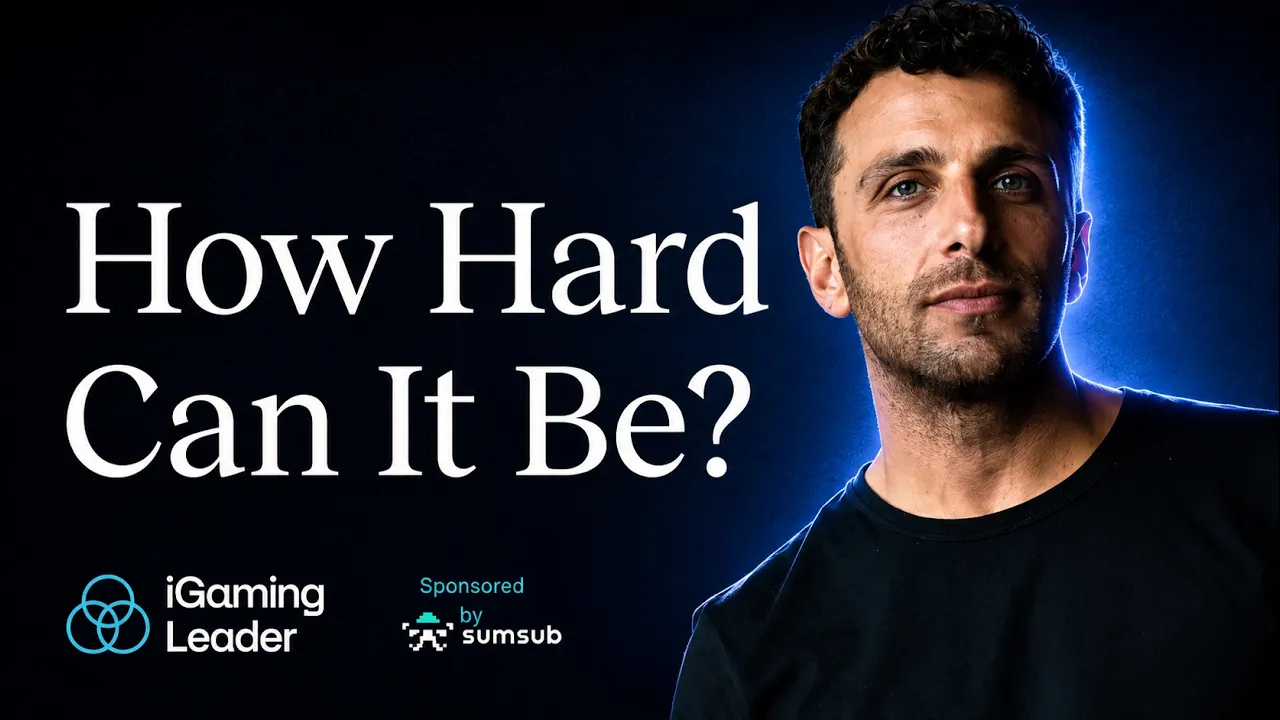
Your Company is Not a Family: Bootstrapping Lessons with the Founder of TESTA

Founder & CEO, TESTA Kyle Wiltshire is a technical-leader-turned-entrepreneur who specialised in DevOps and backend innovation long before they were buzzwords. After years of driving massive scalability for Asia-facing operators, he founded TESTA in 2023 to solve a persistent industry pain point: real-world, crowdsourced QA for the global iGaming sector. Based in Taipei, Kyle is a self-proclaimed "generalist" with an MBA who believes in building lean, profitable businesses in uncontested markets.
Key topics discussed
00:00 – Why a company is a sports team, not a family.
02:00 – Moving to Manila: The "brutal" 12-hour time difference and the project that never ended.
04:00 – The Bodog Days: Scaling from 50 to 1,200 people and the chaos of "two of everything."
09:00 – The Partner Betrayal: How a startup partner tried to hold code hostage for equity.
14:00 – The Ethics of Equity: Why Kyle is now "freewheeling" no more with cap tables.
16:00 – The Bootstrap Constraint: Why saying "no" to VC money made TESTA a more scientific business.
23:00 – Finding the "Blue Ocean": Why Kyle chose crowdsourced testing over the "Red Ocean" of slot studios.
26:00 – The Squeaky Wheel: Why coaching low performers is a drain on the high performers.
31:00 – Parroting vs. Execution: The challenge of "yes-men" in diverse global cultures.
36:00 – The Art of the Handoff: How to get over yourself and let the team run the booth.
43:00 – The Vince McMahon Lesson: Railroaded ambition and disrupting regional territories.
Key takeaways
The Sports Team vs. Family Model: A family is unconditional; a company is mission-based. Viewing your team as a high-performance sports unit allows for the "ruthless" but necessary decisions required to protect the organisation's goals.
Make Yourself Non-Essential: The ultimate goal of a founder is to be "off the critical path." If a business requires you to be the subject matter expert in every room, you haven't built a company—you've built a job.
The "Mom Test" for Software: You can have all the data in the world, but you will always learn more by watching a real person use your product in their own environment. Data tells you what is happening; stories tell you why.
Bootstrap for Clarity: Outside capital often forces a "race to the top" that ignores product-market fit. Spending "money that would have been in your pocket" forces a more disciplined, scientific approach to growth.
Stop Fixing People: In leadership, you cannot solve people like a technical challenge. Spending excessive time coaching a low performer isn't just a waste of your time—it’s an insult to your high performers who are actually carrying the weight.
Memorable quotes
"A company is not a family. Let's be honest, we're trying to accomplish this thing... It’s not, we're all just here to hug each other and sing Kumbaya."
"How would you ever get promoted if they absolutely need you to do the thing that you do? The goal is to make yourself not essential."
"If you are clever enough to build another slot company in 2026, good on you... I like the uncontested space."
"You have to learn to fire people when it’s not working because it’s actually this weird superpower that brings the whole group together."
Important links
Episode Transcript
Read transcript
Kyle: [00:00:00] The whole "we're a family" thing was a terrible thing we did throughout the two thousands.
A company is not a family.
Let's be honest, we're trying to accomplish this thing.
There's clear, achievable goals.
It's not, we're all just here to hug each other and sing Kumbaya, We're trying to get this thing done.
The reality is sometimes it's a blur and you look back and you're just like, how did I get here? Right? Like, all the thousand little baby steps accumulate.
one strength I think I've always had is I like to hand off.
The goal is to make yourself
not essential to whatever role you have. How would you ever get promoted if they absolutely need you to do the thing that you do?
Kyle: I'm happy to get my hands dirty, but I know that I'm a generalist.
I am not the best at anything. I know a little bit about marketing andaccounting and finance from doing an MBA, but I'm,weak at all of them. An intermediate person or higher is gonna be a better subject matter expert in almost anything than me.
If I can get the ball rolling and get the right person and hand it off and then see that they're getting traction, then great.
Kyle: If you [00:01:00] are clever enough to build another slot company in 2026, good on you.
'cause I don't know how you can compete with 400 other studios and 40,000 games. That is a tough racket, right? As a red ocean. I like the uncontested space. It's a problem. People like it, they get it. name another company that does what we do. You probably don't know of too many, right?
Leo Judkins: Welcome to the iGaming Leader Podcast. I am here with Kyle Wiltshire, founder and CEO of TESTA We are gonna talk about everything from him starting out his iGaming career in the Philippines, working with some brilliant people, as well as some very challenging minds. We'll talk about him. Bootstrapping his company, his leadership journey, some of the challenges and massive failures that he's gone through, and the lessons that he's learned from that, as well as the big successes that he's had and, what we can draw from that as well.
It's turned out to be a very inspirational conversation. Kyle has the battle scars to show for his experience and is glad to. share them with all of us. So with that being [00:02:00] said, let's dive in.
Hey Kyle. Uh, welcome to the podcast, man. I, uh, really excited to talk to you today. I, I wanted to start with your story about, moving to the Philippines, if that's okay for you. I think it's a good place to start tell me a little bit more about that. What kind of started that move?
Kyle: it was pretty simple. They were expanding an Asia operation over there. Nobody really wanted to go. I was the only one that put their hand in the air. The team out there was quite small and they were, I bought up a a previous operation and were moving it over to the Manila and I was in charge of a team doing, I don't know what you call it these days, kind of like DevOps, frontline support, but also.
Kind of server configuration and moving stuff around and making sure releases were clean and all those type of things. So I had just moved to Montreal. I was there all of, you know, a, a month or two, and I was basically being tasked with, setting up this team in the Philippines that would, to help with 24 hour support for all the tech [00:03:00] stuff.
And it was brutal 'cause it was 12 hours difference. So I was, you know, staying till 9:00 PM in the office and doing these, you know, this is before Zoom. So we had these like teleconference things in the boardroom and you know, I'm standing there till nine waiting for people to come into the office on the Philippines side at nine.
'cause of the 12 hour difference, doing a few interviews a night, getting it all set up. I got out there and of course nothing went to plan. We thought it was gonna be a one month project, I hired two people. One didn't show up on the first day and I trained another and it was looking really good.
And he quit after a month. So like three months into this whole process, we reset. I came back to Montreal. I went back out there, one month project turned into three. Three months turned into eventually some of the leadership there said, why don't you just move here? And My hesitation was, ah, I just relocated to Montreal, but it was also like 24, 25.
And eventually I was like, hell, why not? Right? So packed up, moved out there, it was supposed to be a one or two year thing, and it kind of became indefinite. So, Worked there a few more years and eventually had a [00:04:00] startup in the Philippines. And that's kind of how I wound up on that side of the globe.
Leo Judkins: Love it man. when we spoke last time, you were talking about the craziness of that first job there, right? The Bodog job. You mentioned great names and brilliant success of people that turned into becoming really successful people we all know. You also said about the opposite side, right. There was also some absolute, I dunno, like the extremes on both sides, I suppose people that, yeah. weren't great to, work with. So, tell me a little bit more about what happened and how did that divide happen and how did that kind of show up as you were working there?
Kyle: So to go all the way back, I mean,I had not much context of the gambling industry. My excitement was that I had worked in tech and it,you know, the company I worked for before Bodog was a personal motivational events company. They did seminars and trainings, kind of like Tony Robbins type of stuff, and they certainly wanted tech.
But it was a cost center, right? You were just kind of this natural evil they had to pay for their email servers and their systems and maintaining their website So it was never that [00:05:00] strategic. when I jumped into. an online gambling company. It's blowing my mind.
It's like, there, there's, there's more transactions happening a day than, than in a bank.
Leo Judkins: Yeah.
Kyle: at the time the Canadian entity was Antigo licensed I moved to the Philippines 'cause they had a PCO license there. that took me there.
And I was helping the local operations and dealing with kind of the global support. So it started as kind of this small team, but over time, I think when, when I first moved over there, there's 50 people and there was, after the call center and everything, there's about 1200 when I left
Leo Judkins: Oh
Kyle: So the company moves very, very fast, right? If there is an opportunity, suddenly there's a new office here and you go from 50 to a hundred people, You get this fascinating mix of people, you get people like myself that saw an opportunity, jumped on it, and then you saw people that could do the same and maybe didn't have that kind of corporate rigor of moving up the ladder.
Right. so we had a management team there that was. some of the most talented, smart people I know, andlots of 'em went on to do all sorts [00:06:00] fascinating things or run big companies or built and exited businesses themself. and then some of them were just, I don't know what they did.
It was crazy. they were in the same management meeting as us and had nothing to report and there was no real damage to their. Status. Right? Like there, there was never any repercussions. So, I think you can learn from a well organized business, but you can learn from a chaotic, crazy business as well.
And the Asia team was constantly changing. I think there was a bit more structure on some of the European and more global operations, but the Asia team we went through four or five different managing directors in the course of two or three years. at one point, you know, everybody from London.
Moved to Asia 'cause it had become headquarters. So suddenly we had the politics of, two of everything. Like you thought you were the CTO, now there's the other CTO, so it, it got a little crazy there. So,to sum it all up, when the doors wide open like that, you kind of get the best and the worst.
there was not a lot of middle ground. It was a crazy place to be.
Leo Judkins: think that's quite, um,
typical for fast growth organizations. You know,it's almost like sink or swim, [00:07:00] right? You've just gotta deal with the, like it's a fire hose, you've gotta deal with the water coming in. some people do and some people don't. do you think it was inevitable that you attract. People like that or that people like that don't grow with the organization when it grows that quickly, orlooking back maybe that could have been handled differently? Perhaps could have been more successful somehow?
What, like how would you, how would you assess that now?
Kyle: I think when you're constantly changing the macro goals, it's really hard to. Have consistent, you know, if the objectives in January are not the similar objectives you have by the end of the year, how can you ever measure where things are sothings move around really quick And what was once the big priority changes quickly?
We did get some great things off the ground and worked with some great people. And I believe in the years, you know, this was a very long time ago. I mean, I, I left that organization 2013, so going on 13 years ago. So I don't know how much of this is,relevant now and I haven't been in much contact with people there in [00:08:00] quite some time.
But,just in those days it was so manic. There were opportunities and you could get a lot done and learn a lot of things because it was kind of go, go, go, go, go. at the same time, what was important was constantly shifting and who was responsible for what was constantly shifting. that gives ambitious people an opportunity to move up really quick.
But it also means that you can get the wrong people stuck in the wrong places.
Leo Judkins: Yeah. Makes sense. Thanks for sharing that. Hey, and then, your intake, you mentioned something that I found super interesting. You said something about how, your partners didn't handle things ethically in your previous startup. Let's, let's talk about that a little bit.
what actually happened? how did you discover it? And especially how didthat maybe affect how you structured TESTA now, later on.
Kyle: So Testa comes from another company I run, which does very kind of boutique technical work, especially in Asia, any sort of, problems with performance or optimizing for devices or availability, that's,what we really focus on. So, Testa. [00:09:00] It's kind of the brand and commercialization of something we've done in one shape or form for eight, nine years.
we would always have people in various markets that could actually look at a product, that could look at, uh, gambling site or, you know, not just that we've worked with manufacturing, cybersecurity, and lots of different groups, They could get on the ground and show us how does this look like on a real phone through a real internet connection, et cetera.
this originally started, we had a framework where we had some partners who had built up a platform. We'd kind of brought them in to help us recruit Testas and do all these things. They put this platform together and they really, really drove it in the early years. And we were like, okay, fantastic.
Let's, let's get them involved. Let's maybe set up a separate company and make them partners. And you know, so we had this whole structure where. Basically this was this separate company, that had these people involved. 'cause we wanted them to continue to drive it. and we eventually decided, okay, we're gonna build these features and build this platform like this.
And we had an [00:10:00] engineer who really went his own direction. He just did things that he wanted. you know, we had a team in Taipei. He would not communicate or sync up with them. he would. Keep building stuff and show us here and there, but he wouldn't share his code. he's not really coordinating with the rest of the company in terms of what we need. he's not interfacing with our clients or the market at all. He's kind of gone off into his own little world and is building this product, trying to copy another product that was already on the market without really talking to us much.
Right. So we kind of throw up our hands in the air and say, well,let's see what he comes up with. after six or nine months or whatever, he gives this this kind of full demo, anda, it's not really what we want. Uh, and B, once this is delivered, uh, he wants, what did he want? He wanted more equity. He was basically holding this product hostage.
Right.
we had been paying him the whole time with revenues from our clients. He hadn't been working with the team. And now we kind of had a gun to our head, saying, if you want this [00:11:00] product, you're gonna have to give me this or give me that . And I don't mind a,tough negotiation, but it was kind of like.
Pardon me? Do you know how we got here in the first place? And unfortunately, I think our other partner in it just didn't really have the commercial sense to see that this was basically a form of blackmail. so what we ended up doing is kind of just building around them, copying a lot of what we had already built with other people, and we found we could do it leaner, meaner better without them anyway.
So once we started using other resources on it, we kind of. Said our goodbyes and said, if you think this platform is worth something, it's yours, you go commercialize it, you go market it, you go figure it out. Right. Because that's, that's actually the hard part.
Building a,tool that, you know, looks neat is all fine and dandy. You go, actually go take it to market. So,it was one of those things where they tried to screw us and we took it pretty calmly and methodically and it took six, seven months, but eventually it was like, okay, goodbye. Right? so I'm very careful about who I make a partner and who I bring in.
Leo Judkins: Man, that's awful. That's horrible. How, how did you stay calm? Like, do you remember the [00:12:00] moment when you actually found, when he said something like,, I wanna have more equity, how did you feel in that moment and how did you stay calm and methodical as you said afterwards?
We already knew we were approaching the end of the road. I wasn't very excited about what was being built. at first it was kind of like, you gotta be kidding me. you're trying to extort me over something you built that I didn't even want, that I've paid for.
Kyle: but then the more you think about it, the more you think of that history, the more your blood boils. And I think my partner and I certainly had a few conversations where we were yelling and screaming and, you know, kind of at each other just venting, But in terms of how we dealt with them, just very kind of calculated, careful.
Um, I mean, to be honest, I, I talk about it, it still bugs me a I mean, it's, it's
Leo Judkins: Yeah.
Kyle: good six, seven years ago, but boy oh boy.
Leo Judkins: that's the problem isn't it? you connect the dots afterwards, right? You look backwards and think, ah, these signs were there. you start blaming yourself it's actually something that we spoke about last time, remember where we were talking about like the hard thing about hard things.
That book where he's talking [00:13:00] about, when you mentioned management debt and kind of this idea of. Sometimes you just don't make the hard choices because you think, it's not that bad or something. And then afterwards it's obvious you should have, you know, and, but then it's so hard to not blame yourself for that and you know, why did I do
Kyle: You gotta let things play out sometimes I think, I mean, you never quite know, right? Like sometimes You have certain biases and you put certain things on people. So you may be looking at a situation through a negative lens and maybe you should let it play out, so you know for sure. I like to know for sure, I'll say the nice thing about a situation like that is when you end a partnership with someone.
Sometimes it's, what could I have done better or did they treat me right, In that case, it's so clean, cut like goodbye. I will never work with you again. it's so simple. they almost do you a favor there and there's no ambiguity. the tough part is half the time you kick the can down the road, it bites you and sometimes it doesn't.
Sometimes it is fine or you get more information and the situation isn't a big deal, you can't snap at [00:14:00] everything and make every uh, long-term decision right off the bat. you gotta let some things play out and hindsight's 2020 when they do eventually bite you, you go, God, what?
I waste so much time on that.
Leo Judkins: yeah. That's the thing. And very often there's just no good decision, right? There's no clear decision, it's bad or worse, There's just options and you've gotta choose. And you are the only one that can choose. because you are at the top, What are you doing differently because of that experience now? Like, are you
Kyle: Hmm.
Leo Judkins: decisions differently or are you,are you less trusting of people? Like how,how has it affected you
Kyle: I'll tie this to something else, and that's employee stock options, which I've done in the past. I really like that Silicon Valley model of getting everybody thinking long term and this natural filter of people that want to take a little risk with you and therefore can actually reap the upside reward or think a bit more long term.
I was probably too freewheeling with partnership and equity in the past. I've learned through both employee stock option programs and stories like that. you gotta be [00:15:00] really careful who you partner with. And one thing I remember, partner of mine said during that whole thing was, if you're gonna screw me over when there's no money on the table here.
nothing's really been built. you're screwing me over, over nothing. So how would you act if there was something serious, right? Because the, the trust really shows up once there's, you know, millions of dollars flowing or people, or equity or whatever. You have bank accounts that are full, that's a different story, right?
So, um, I'm just very careful about who I consider on Who else is on the balance sheet? Who holds the equity? Basically, um, sharing revenue, sharing payments. You gotta Be very careful with who you partner with.
Leo Judkins: That is so true, isn't it? Even the best families break up over, minor money issues when somebody dies, right? Yeah. So, uh, makes a lot of sense. You, you bootstrapped, Testa, right?
And, um, ex I, I explicitly, I think because of that,
that's a deliberate constraint that you've put in place. One of the things it does, I suppose, is it limits how fast you can grow because there's a runway. But what [00:16:00] growth opportunities did you have to say no to because you didn't have outside capital?
and looking back now, was it worth it to bootstrap it,you feel?
Kyle: Yeah, I'm glad we did because. so I had a real estate startup in between, stints in the gambling world or tech consulting world. we took venture capital and it became you're immediately on a track and once it's almost easier to race funding and run a business when you haven't gone live or your pre-revenue or whatever, the second you start bringing financials into the situation.
Now everybody's got those numbers to work off, right? So, We ran that company quite aggressively and wefound some product market fit. And the mistake is when we started making some revenues, we thought we had cracked it. So let's throw a whole bunch of money at things, get super aggressive with the marketing budget.
It was Philippines, so the, the salaries weren't super expensive, but we blew up to like 70 people at some point. and then we couldn't sustain it. Like a lot of the revenues we found were churn out [00:17:00] or they didn't. We thought we had a product people wanted, they didn't quite get it. And so things started to nose dive and suddenly we had to lay off almost all the people we had and we had to get rid of the fancy office.
all the coffers went dry and we had to rethink how the whole company actually worked, right? So I've been a lot more careful to make sure that we understand. The inner workings of what are the pain points of customers? Do they like us? you know? I think the first two Testa clients, the team was very small.
We signed them and I said, okay, we're gonna see if they stick around for six months or a year before we make any other decision, right? We're running another business. we'll keep it kind of lean 'cause I wanna see if this is actually something you know, do they need us for a project this quarter or are they gonna use it consistently?
Once we saw evidence that, okay, this is something that's useful and valuable and people will pay and continue to pay for, okay, now we can hire some expensive engineers and, put aside a marketing budget and do all that. it's also just the natural extension of when you have other people's money.
when you're spending, money that [00:18:00] would've been in your pocket, otherwise you're a lot more careful, you're a lot more scientific about things. So that's been a real, lesson as well. So by the time we take a large venture check, if, we do, we would have a formula and it would just be, this is, you know, the only thing holding us back now is just growth and commercializing and it's just kind of a, just add water scenario.
Right. Versus, we're still in the woods exploring.
Leo Judkins: Yeah. Makes sense. And I mean, now again, looking backwards, would you have done exactly the same thing? would you have bootstrapped it again or would you have taken capital?
Kyle: Maybe would've brought some partners in earlier. But again, I wanted evidence that things look quite healthy. what I've learned about myself is I'm naturally not the best fundraiser. it's not my favorite thing to do. I've also learned that. When I was running, that real estate startup with my partners, if we didn't raise funding in the next couple weeks, we were toast.
We wouldn't make payroll. So what naturally rises to the top of your priority list when you're running one business off the free cash flow of another, You're not distracted by raising [00:19:00] money. So It's strange because you don't need it. I thought that would give me lots of leverage
And in fact it never became my biggest priority. So we would get offers or conversations would happen, and I'd be able to say no. But then you realize that six months have gone by and you haven't put any money together, so it's a different way of doing it. it's leaner, but I feel like.
Everybody has a deeper understanding of what we do, what works, what doesn't work. when you're running off other people's money, I think the C-E-O-C-F-O or both are gonna spend a huge amount of their time fundraising then how much time are they actually gonna spend on the business?
so, I'm, I'm, I, I wouldn't, I wouldn't do it any differently,
Leo Judkins: It sounds like you, like it's made you far more considerate of how you, actually wanna position the product, how finding that product market fit, thinking about, okay, how do we, optimize this? And then how do we scale rather than thinking scale early and burning a bunch of cash just to figure out that it perhaps didn't work, right?
Kyle: Yeah. And what we do is a little experimental and different as well, right? if we're building a platform or another slots [00:20:00] company or some sort of market proven thing, then it's about competing and executing
Leo Judkins: Yes.
Kyle: it's kind of a different ball game. Like we're building something that's a bit unique.
the crowd testing. Industry is quite large, but aiming at gaming and understanding what works with gaming and what doesn't. Then looking at other verticals, it's all quite specific, right? So
Leo Judkins: Yep.
Kyle: we can't run on too many assumptions. we're at the point now where, I think we have learned most of the things we want to learn.
So now it is more about commercializing it, growing it, just being more efficient to what we do and making it bigger.
Leo Judkins: Love it, Kyle. Hey, you invest too, right? You're an angel investor what do you look for when investing that you wish your previous partners had looked for in you? is there any red flags that make You walk away from a deal, any specifics that are important for you.
Kyle: At the angel stage, mostly the people because they are going to learn lessons and things will change. there will be at least a few changes in how they commercialize it or how they do things. I do [00:21:00] try to look for people that at least are open to feedback.
I know what it's like to run a company and everyone's got an opinion, sometimes you don't want to hear it, but if they're not interested in other perspectives or people from different walks or different sectors that's kind of concerning, They should be open to it.
Uh, but I mostly look for people and just try to assess do they have the kind of grit to do this? Can they change it if they need to? do they have the balls to do just really unpleasant things sometimes, like fire people or. Fire a customer you have to have these confrontations.
Sometimes you can be polite, but like there's plenty of times you just have to do things that aren't pleasant. So are they, that type of character. I probably look at the product and the model and the market more so than, a lot of people I, because it's angel money, I don't care that much about some massive, crazy, giant return.
I want to see three Xs, four Xs, five Xs, and I've done okay at it, but it's a lot of time. I'm doing less and less of it now. I've never invested in any iGaming stuff [00:22:00] just because I'm so exposed to that sector anyway. I'm glad I got into it 'cause it taught me a lot about being on the other side of the table and, what it's like to be a smaller person on a cap table versus, a big VC
You don't get to set any terms. It's kind of, these are the terms, they're not gonna, Haggle with you over 10, 20, 30 K. it's taught me a lot. we'll see how I do. it's been about a decade of doing it. I think I've kind of wound up coming out, breaking even after all that. So it's a hard, hard class to invest in for sure.
Everything they say is true.
Leo Judkins: Really? Yeah.
Kyle: not everything pays right.
Leo Judkins: No, no, that
Kyle: Sorry.
Leo Judkins: But it sounds interesting as well from just being able to. see things outside of iga, like you've just said about Testa as well earlier, which is okay. Yeah. There's a big market out there that does something similar and from your consulting, you could have built anything, right?
You could have built a studio platform, whatever but you chose. Crowdsourced sourcing, crowdsourced. Oh my God, that's a tongue twister. Crowdsourced testing, which, which I suppose operationally [00:23:00] quite difficult, not, you know, it's not the most obvious choice. It's not necessarily super flashy either, but why was there a specific, why did you do that?
Was there a specific, frustration that you ran into that you thought, oh my God, the world needs this.
Kyle: Saw it in almost everybody I worked with. especially in, my experiences with gray markets or offshore markets. So you don't always have good feedback from the ground. but we also saw it with technical consulting we did sometimes we get buried in data of all these charts and all these points and all these big things, but it's like, can somebody also tell me a story and just show me how the thing looks on the phone or on the computer?
can somebody give me, it's like that classic mom test, right? you've built this piece of software or app for months and it's perfect and you hand it to a relative and somehow they manage to take the path where it like goes, you know? Totally ass backwards,you, you will always learn something when you get a real person to get their hands on it. So that's, that's an old problem we saw consistently and we had done it so much with our [00:24:00] technical clients. Where I started putting two to two together is I just saw that some gaming companies were hiring these larger crowd testing firms.
They were quite expensive. People were saying, Hey, don't you do this already? Like, could you do this more efficiently or do something like this? And. help us out here. So it was kind of one of those things where the market came knocking and eventually I saw, oh, this is how you can commercialize it and this is how we could aim it at this category.
Right. The nice thing about, you know, our industry is as big as it is in terms of money and size and people, it's not that hard to like Speak to, right? Like if you wanted to like build a company and say, you know, something like insurance, which I think is actually a very similar industry to ours, it'd be very hard to get that brand out and get known.
Whereas in gambling, it's kind of a small community of people that actually talk and make decisions and it's not too hard to explain what you do and get it out there. so that's what it came from. It was a real problem that was driving us nuts. And I like uncontested space, right?
Leo Judkins: Yeah.
Kyle: If you are clever enough to build [00:25:00] another slot company in 2026, good on you.
'cause I don't know how you can compete with 400 other studios and 40,000 games. That is a tough racket, right? As a red ocean. So,I like the uncontested space. It's a problem. People like it, they get it. And, you know, name another company that does what we do. You probably don't know of too many, right?
Leo Judkins: Yeah, exactly. I love it. So many good references already, Kyle. I love it, man. Like the mom test. I highly recommend reading the book if you're listening. It is great. And, uh, yeah, the like red ocean versus blue ocean strategy. really important as well, just understanding where your market is and not fighting for the bottom of the barrel, you know, like really, really good. I, I wanted to go back to that, hard thing about hard things that we were talking about just a little bit earlier and,mean, one of the things in there is about taking the easy way out and then paying 10 times harder later. Right. That's the whole concept and I think we all recognize it.
Where we think we kind of, avoid the short term pain. We feed it later, right? We [00:26:00] don't wanna have the uncomfortable conversation. can you tell me about a time where you've done that, where maybe you've taken the easy way out, on a management decision and later on you found out, oh my God, I really shouldn't have done that.
and how did that blow up for you and what, what, what did teach you?
Kyle: If I go way back to one of the first teams I built, once I moved to Manila and brought all these guys on, I eventually found a fantastic team lead who kind of took it over for me and that let me kind of move a rung up the ladder and work on other things. But there was one guy there who was just a, a, generally a, not a very good performer, nice guy, but made mistakes.
And mistakes in that line of work are costly. They cause downtime. They cause bugs. They cause. Potential security issues. but he eventually over time did build up a fair amount of domain knowledge, but that, that, that kind of, tendency to just mess things up and, and not really improve, just continued and continued.
Right. this was early in my career and I I come [00:27:00] from a technical background, so I think if I look in those early years,my biggest mistake was thinking that you could solve people like a technical challenge, If I gave 'em the right support and the right training and the right this and the right, that it would all come around.
So I put a lot of attention on trying to fix this kind of squeaky wheel. And what it ultimately ended up doing was losing confidence with the rest of the team. 'cause the guys that were better and did their job, they knew they were getting paid roughly the same. They got very frustrated with this guy.
They got frustrated that they would have to clean up his mess. they were getting compensated roughly the same. They got frustrated that I was giving this guy more coaching and attention than the guys that were performing well. So. I really don't know how to say this nicely.
'cause it's a, it's a terrible thing to say, but I mean, you have to learn to fire people when it's not working because it's actually this weird superpower that brings the whole other, it sets the example for everybody else. they, somebody, somebody comes into a group and they kind of look at the lowest performer and they go, [00:28:00] well, that's the low bar.
that's the minimum you must do in this team, right? some people will come in and do the minimum or at least benchmark off the minimum. Right? And if you accept that, then you're gonna bring the whole group down. So if I look back, I mean there was a couple cases, like that wasn't just at that particular team.
And sometimes they were good individual performers, but had the wrong attitude or caused conflict Sometimes they were good when they worked, but they would strictly go home at 5:00 PM on the dot. That would jam up other teams 'cause they were waiting on something or whatever, and then we'd have another business day to get to this thing.
So now I jump on those things much faster leniency is fine. But if you see that somebody is not doing well. you gotta give them the opportunity to improve and have those conversations, you gotta jump on it really fast because it'll drag down everybody else, especially in a small team, they can hide better in big organizations.
when you're a team of 20, every time you hire one person, you've grown the team 5%, So that's a mistake I've [00:29:00] made probably too many times
Leo Judkins: it makes a lot of sense. that's so many people do that. because you've gotta go through performance improvement plans and all that kind of stuff, as a manager, you're also almost forced to spend more time with poor performers than with high performers.
And it definitely sets the wrong tone within your team, right? It sets the wrong. Intention. but I think the other side of that, is what it does to you as a leader as well. When you are constantly just being involved with people that you need to fix,
Because they're not, not living up to whatever the standard is that you wanna have for that team, it drains you, right? It drags you down to that level as well. just. think about sports teams or something. I dunno for listeners how much sports experience, but you know that when you play with a better team, you actually play better immediately as well.
And it's the exact
Kyle: Yep. It's a strange two plus two equals five thing, right? Like things are really, larger than the sum of their parts if you have all the right ones in there. So that becomes, I think, more and more of a focus as you mature really careful about who you bring [00:30:00] on. Really careful about who you let.
Continue to be in the team or where you place them or what their capabilities are. and I mean, the sports team analogy is so common 'cause I just haven't found anything else that works quite that well. the whole, we're a family thing was a terrible thing we did throughout the two thousands.
a company is not a family. we have a mission, we're trying to all do this right. Love working with these guys. going out with them when we have the opportunity. But let's be honest, we're, we're trying to accomplish this thing. There's a, there's, there's clear, achievable goals.
It's not, we're all just here to hug each other and sing Kumbaya, We're trying to get this thing done. sometimes you have to let go of people you really like and you could see that maybe they will be. This or that but you've given them the opportunity and the results just aren't there.
Right? So I think I made that mistake for a good, I don't know, eight, nine years running before I tightened it up. And again, when it's running off your own money, you get a little more ruthless with those things,
Leo Judkins: look, everybody will recognize that. Everybody will have gone through it. [00:31:00] It's kind of this, higher slow fire fast idea, which, um, yeah,
Kyle: Yep.
Leo Judkins: you've gotta protect the team. and protect the business. So I think you're right. Hey, I wanna talk a little bit about this parrot problem that we talked about. You said that you've hired people that are so good at parroting back to you, on what you want to hear. Again, something I think most of us will recognize, right? Where people just repeat what you say and they understand the business better than anyone, but months go by and then Yeah.
They haven't executed on a single thing, right? I feel that. It can often be a bit like boiling a frog, you know, the frog doesn't even notice. It just gets worse and worse until the moment it actually kind of dies. And I think sometimes it's like that in management as well.
It's kind of, it's too late. How has that been for you? Have you got examples of that?
Kyle: One of the kind of, shifts I've need to make because I mean, we're now all over the globe. We've got people across Europe and Latin America and Central Europe. it is a little different now, but especially in the early [00:32:00] Testa days, it was entirely in Taipei Taiwanese people, they work hard. They know their stuff, they come in sharp, but. It's tough to get that, that pushback that confrontation. my leadership team is quite good at it, but generally speaking, when the boss is in the office, nobody's going to push back too much or say this or that.
over years we've encouraged it and it's gotten a lot better, but that was always the challenge. I would set things out, or when we talk strategically, you get nods and then people go off and work. sometimes you want your ideas to be checked or filtered, or if you had more information, maybe you would think of it differently.
So I was always looking for, people that understand this more strategically. And then I, I, throughout the years, there was a couple times either on projects or in full-time roles, we hired in people with the exact opposite. Who would. Could kind of speak at that 60,000 foot level, like, you know, abs, you know, tell you exactly what you wanted to hear.
They understand what you're going for, what the plans [00:33:00] were, But you know, the months go on and on and everybody in Taiwan is getting shit done. And, the big strategic talker has not delivered anything. Again, as you get older, all these cliches really ring true and talk is truly cheap, right?
lots of people can talk. we now live in a culture, where social media and, podcasts or whatever, everybody has lots to say, right? the ability to speak and argue is valued so highly, but it's not actually that valuable in most organizations.
Like you need a kind of tight team making the decisions and, plotting the course, and they want feedback and everything of course, but you don't need, 5,000 decision makers, you need a couple sharp people and mostly people executing. So there's that balance between can I have somebody to get stuff done, but kind of filters back and somebody that understands but can actually execute.
Right? So trying to find or build those is always the magic.
Leo Judkins: Yeah, I think it's one of the hardest pieces is all right, we want people to still get their hands [00:34:00] dirty as well, because they understand how things work but can also talk on a very high level. and one of the things that you just touched on is kind of those cultural differences, right?
Between Taipei, Philippines, Canada, and many different nationalities within those places as well. One of the big things that I feel is true there, you tell me if I'm wrong, is kind of directness of people right? in different cultures. Like how willing or acceptable or normal is it to push back on things? how do you deal with that pushback, or lack of pushback? Do you. Act differently with people from different cultures. Are you just you and that's what you get? how do you handle that?
Kyle: Like you said, you just know who you're talking to. with people you know, that are less likely to challenge or push back, you wanna encourage it and draw it out of them.
Leo Judkins: Mm-hmm.
Kyle: for the people that have a thousand ideas and whatever.
You, you, you fight back, right? Like, okay, if we're gonna do that, then I'm gonna box. Right? So it really depends on who you're talking to. I think I've [00:35:00] actually seen moments where my team sees me do that and they're like, oh, that's, geez.
'cause normally I'm pretty nice with the Taipei guys. no one's getting into big arguments there. But every once in a while, in a different context, I'll have to fight back a little. just knowing the strengths and weaknesses of who you're working with.
And that's why the sports team analogy kind of works so well. your job as a leader is really to assemble the best people. And they are smarter than you in many, many ways, and you're kind of steering it. You're making sure they all stay together and stay incentivized and you point them in the right direction with things.
But it does oddly get easier as you get stronger and stronger people.
Leo Judkins: Yeah.
Kyle: one of my favorite things to do is just whenever. We're executing on something. I love it when I'm no longer involved. I love it when, you know, just at ice, our booth is buzzing. All tables are filled.
People are selling this thing that we only came up with a couple years ago. They know it better than me. sometimes I get lost in the product tiers, the specifics, they know it all. Same with technical projects. The reports are flying out, all the details are there. I'm not in the details anymore.
that's [00:36:00] always my goal to not be in the critical path in any way, shape, or form.
Leo Judkins: I love that man. Yeah. Let's talk a little bit about that handoff So I ran into Jenny in, IGB Exec Lounge in Bara. And, she was buzzing from having the, having the booth there, you said something that I found really interesting. You said you were like lazy, the last few trade solos, right?
Where your team ran the booth, you handled sales, did presentations without you the reason why I really love that is because for a founder, that's a huge handoff, right? it's your baby nobody's ever gonna be as passionate about that thing as you are, or maybe they are.
I dunno. But walk me through how you actually structured that handoff. how do you get over yourself, first of all, letting go of that, and then secondly, how do you get people to do it right, in a way that you are also comfortable with as a founder of that business.
Kyle: The reality is sometimes it's a blur and you look back and you're just like, how did I get here? Right? Like, all the thousand little baby steps accumulate. one strength I think I've always had is I like to hand off. the goal is to make yourself.
Not essential to whatever role you have, How would you [00:37:00] ever get promoted if they absolutely need you to do the thing that you do? Right? And how do you go from the founder and CEO of a company to just the owner that kicks back, you're always gonna need to be replacing yourself in some capacity.
my strength is in certain things. I am happy to get my hands dirty. when we started doing technical projects years ago, I was researching putting it together. I have a technical background. I mean, I'd be lost these days, but, you know, once upon a time, the first guy we hired, I put everything on a whiteboard in a tiny meeting room and started downloading it to him,
So, I'm happy to get my hands dirty, but I know that I'm a generalist. I am not the best at. Anything. I know a little bit about marketing and even a little bit about accounting and finance from doing an MBA, but I'm weak at all of them. Like there, there's gonna be an intermediate person or higher is gonna be a better subject matter expert in almost anything than me,
If I can get the ball rolling and get the right person and hand it off and then see that they're getting traction, then great. if you want to [00:38:00] talk about more books, kind of lean startup method of, you know, you're going through these loops you have this idea, you wanna see if it's executed, if it's executed, this thing should change.
You have this hypothesis, you test it and you just go through those loops over and over again, the things that work, you dump fuel on those fires and the things that don't work, you have to be quite aggressive to snuff 'em out. If you're not getting the results, you have to deal with it.
You can't just, be pock committed. Right. recently we brought somebody on who said to me I love working with founders because founders, they're not attached to anything personally, right? Like, I think in the corporate world there's a lot of politics about, I put my name on this so it can't fail, we gotta go through with it. But founders that just, they'll have this idea and it'll be them that was pitching it and,
Leo Judkins: Yep.
Kyle: you know.
I'll throw it in the trash can a couple months later. That didn't work. New thing. Right. So it's that lack of attachment to any idea. Happy to be wrong because you just know you're going through the loop, right? throw it out, try it again. Eventually I'll be right. And we'll double down on that.
so I think you just do that a whole bunch of times and try [00:39:00] people out. And when things work, you invest in 'em. When things don't work, you don't, I mean, it makes, it makes it sound simple, but that's fundamentally. How you get there. I think.
Leo Judkins: Yeah, and I think the other thing which is also gonna be true for you, is that because you're a generalist and, brutally honest about yourself, you are able to connect a lot of dots, right? you see connections that other people in your organization won't see because you know a little bit of everything
Rather than being super specialized in one area. I think that is a true, unique. superpower, specifically for founders. and yeah, it's important because then you can start those fires and see what's gonna, what's gonna take off.
Kyle: And you need to know your weak spots too and compensate for them. But yeah, I think in any industry, you either want to be quite wide or quite deep. if you're in between, you're not gonna be super helpful. Right. I mean, you get to a point in your career where if you don't understand some basics about accounting, you are toast,
even if you're great at sales, operations, whatever, if you don't understand how this all eventually gets broken down into [00:40:00] the one thing you can compare from any business to any business, the only standardized part of business, you're toast. Right? So you need to have some understanding of every little part, if you're gonna run the whole org, I think.
Leo Judkins: Yeah, mentor of mine called it T-shaped knowledge, so T, t, T-shaped bar, right? It's like the T is very, got wide knowledge on many different areas and then you've got one bar going downwards, which is your deep knowledge about subject matter. I think that's quite, interesting and that makes sense.
Hey. so, last thing I wanted to talk about here is kind of your tech to sales thing. as a founder, people often feel that, a lot of it needs to be sales. You said you're not super salesy extroverts, right? which is great. but you're CEO of aof a sales driven business, right?
tell me about the first time you tried to sell Testa and it went badly. I'd love to hear that. how did that work out?
Kyle: Boy, I mean, so much of it goes badly in the early days. I don't know if I have one particular story, I mean, first of all, I. You think anybody that'll talk to you as a potential lead that they may [00:41:00] not be actually qualified for, they don't have the problem or whatever, right?
second, you have kind of the easy comparisons for something like Testa, I can go on Fiverr and get a Testa for 50 bucks. It's like, you absolutely can. And if you're looking to only do one test, please do that. You are talking to the wrong guys. Right? I think when you first start selling something, again, those loops, you haven't been through 'em.
So even if you come nice and prepped and you know your product in and out, you will get caught flatfooted. 'cause you just haven't heard that one before. And unless you're an absolute genius, you can't come up with a good response on the fly. You gotta think of it. Right. Um, and this is something that I'm not.
I like having everything organized and structured I'm not someone that can smooth talk my way out of those type of situations. So there was plenty of those in the early days, but you just do it enough times and you talk to enough people and you take enough shots and eventually something comes through.
Right? So in the early days, we [00:42:00] didn't quite know where we fit or what our profile was. We spoke to a lot of white label and affiliate groups and small people, and we spoke to them because they know the problems better than anybody else. They drive a bunch of traffic to an operator.
It doesn't convert, or certain things in the reg process kill them. They don't get their share of the revenue. Everything dies. Affiliates also typically don't have the most giant budgets unless they're huge companies. They're used to doing everything on a share. Investment to them means investment in web and SEO stuff, which is not cheap, but it's also not that expensive.
So to turn around and say here's an enterprise IT contract for a bunch of testing packages. it's way outta their league. Right? They think I'm gonna,do business for a couple hundred bucks. And it's like. My business will never work if I'm doing that so yeah, in those early days you just, you gotta go through that loop. Lots and lots of times What are your actual problems? What are your objections? Make sure I've kind of got mys ready, or I'm ready to paint a picture. And with time, you also just learn to spot who's interested, who's not, [00:43:00] who's even in your wheelhouse to begin with.
And it becomes oddly satisfying when you can say, oh yeah, no, this isn't the fit, right? politely, but you just know this isn't, we're not. What you're doing and what I'm doing, there's not a match here. Maybe, you know, best of luck, keep in touch, et cetera. it gets easier, but in those early days, you just don't know.
you're in a dark room kind of fumbling for the light switch.
Leo Judkins: Yeah. Love it. Uh, very last thing, like when we talk about, people that inspired you. You know, men, people often mention, I dunno, like Zuckerberg or. Bezos as business inspiration. But you mentioned the guy who inherited regional wrestling turned it into global entertainment, Vince McMahon.
why is that?
Kyle: I'll put the disclaimer on him, but he is not a very nice guy and all sorts of terrible accusations against him. So like I, I don't condone on anything Vince McMahon does in his personal life, and it doesn't sound like a very nice guy. But what I liked about his story was, wrestling It had this kind of gentleman's understanding where it was territorial in the US and there [00:44:00] was this group in the northeast and this group in the southwest, and they all kind of had their parameters and nobody stepped outta line. he came from a wrestling family he inherited from his dad, who I think was in the Carolinas and he was the first one to say and think that.
I could make this bigger, I could do this better. I could gobble up this whole thing, he chased the TV contracts and he chased all the best talent from all the regional spots. everybody in the industry hated him. And like, I don't know if I could even be that type of person.
he must have been despised getting death threats left, right, and center because he took the whole model for an industry. And just said, no, we're gonna do it this way. And within a decade , by the time they were doing WrestleMania and pay-per-view and they had the TV contracts, the regional wrestling had turned from, the actual pro circuit into the minor leagues.
'cause everybody wanted to go to the WWF where the big contracts were happening and where you'd get the exposure and where you could build your career. Right. So it's crazy to me that Nothing [00:45:00] really about the macro changed, maybe cable tv, but it just took one guy to look at it all and have the ambition to piece it all together and just railroad on through.
Right. So I always found that to be a really interesting story and to this day, I mean, it's merged with the UFC and it's still growing Now they're going after international stuff. So it's a very, it's a very, very strange business. I'm kind of fascinated by it. I can't watch it anymore. It's just too childish.
But having grown up with Steve Austin and everything, there's always, a certain attraction to what is going on with that company. Like what a strange industry, right.
Leo Judkins: Yeah. Love it. Kyle, thank you so much for your time today. Really love your openness and honesty and sharing all your experience with us.
Kyle: It's great to do it. Thank you.
[00:46:00]

Want to learn leadership strategies like
Kyle Wiltshire
Related podcasts
Podcast Episode
56
45 min
The Founder Who Got Tired of Gambling's Bullshit. So He Built Something Better
Savvas Fellas
Founder/CEO — MrQ
Listen now
Leadership Development
Building High-Performance Teams
Navigating Pressure & Change
Podcast Episode
55
41 min
Why Most Founders Are Wrong About Who Should Lead Their Company
Ramiro Atucha
Founder of Atucha Strategic Advisory
Listen now
Strategic Execution
Founder & Entrepreneurship
Leadership Development
Podcast Episode
54
42 min
Why most entrepreneurs are not risk seekers, only bad at assessing risk
Nigel Eccles
CEO and Co-founder of BetHog
Listen now
Leadership Development
Building High-Performance Teams
Navigating Pressure & Change