
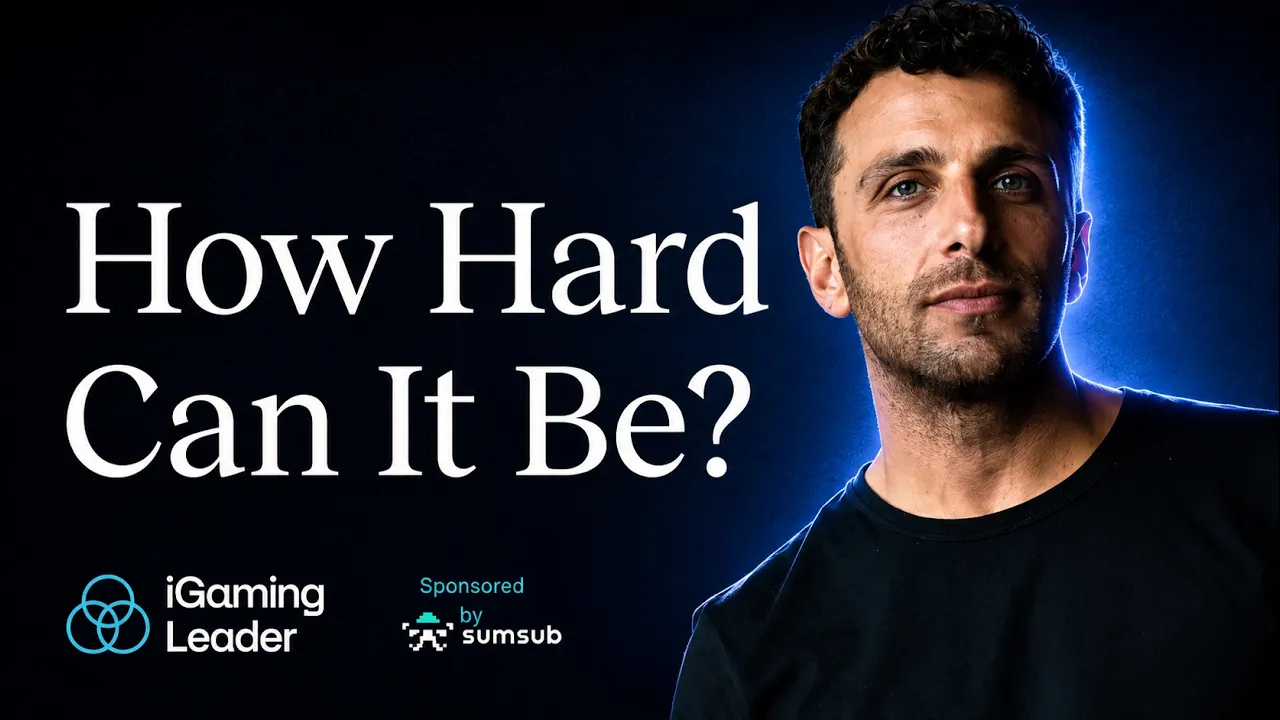
Founder Mode: Whatever it takes to get the job done

Daniel Graetzer has spent the past two decades working across the full company journey, from building and scaling businesses to transactions, restructurings and exits, across tech, AI, iGaming and digital media. Over that time, he has led strategy, M&A, commercial growth and international expansion across Europe, the US, LatAm and Australia. He has worked with founders, operators and investors through growth phases, complex deals and high-pressure strategic decisions. Today, his focus is on advisory work, investing and supporting early-stage companies.
Key topics discussed
00:00 - Raising money is just the start, not the celebration
04:00 - Sustainable High Performance
07:30 - Burnout and the "too little, too late" reality check
10:30 - Pivot to MaximBet and Nicki Minaj
14:00 - The $250M valuation that felt like a "momentum trap"
17:30 - Bullishness vs. Kidding Yourself
22:00 - How stress clouds strategic lateral thinking
26:00 - Empathy vs. Sympathy in the executive suite
30:00 - Stoicism and Values
34:00 - Mindfulness for High Performers
39:00 - Founder Mode vs. Manager Mode
Key takeaways
Raising Money is a Responsibility, Not a Win: Celebrating a fundraise can distract from the fact that anxiety and investor demands start the moment the cheque is cut.
Founder Mode vs. Manager Mode: The traditional MBA paradigm of "hiring good people and getting out of the way" can be fatal for early-stage companies; founders must stay close to the truth of the business.
The High Cost of Isolation: High-performers often avoid burdening family or friends with complex corporate problems, making professional support and mastermind groups essential.
Reframing Mindfulness: Tools like breathing exercises and journaling shouldn't be seen as ways to "disconnect," but as biological "power-ups" to sustain elite executive performance.
Decision Quality Erosion: Chronic stress narrows a leader's perspective into binary choices; maintaining a "cool head" is a requirement for creative, lateral problem-solving.
Memorable quotes
"I don't think people should celebrate raising money... it's actually just the start of the next step."
"Owning a business is like staring into the abyss while eating glass. And glass doesn't taste nice"
"The train just kept getting bigger... the stakes were bigger... and at some point the macro started really going against the growth story."
"Founder mode says: results over process any day of the week."
"Mindfulness has had a really bad CMO."
Important links
Episode Transcript
Read transcript
Daniel Graetzer: [00:00:00] I regularly would get people telling me: "you should be so proud of yourself, celebrate the success."
And in my head I don't think people should celebrate raising money, like as if they've accomplished something.
It's great and you have accomplished something, you've convinced investors that you've got a business idea to invest in.
But it's actually just the start of the next step.
Daniel Graetzer: The valuations they were putting in the business were eye watering. On paper we were sometimes being pushed for anywhere, you know, 700 million plus.
And the fundamentals of the business weren't anywhere near there.
Daniel Graetzer: The train just kept getting bigger and bigger and bigger, The stress was getting higher and higher and higher. The stakes were bigger and bigger. We had more employees, more investors demanding more growth. And at some point the macro started really going against the growth story.
Daniel Graetzer: The higher up you go the more problems that are just coming at you
all the time.
There's a saying in business, which is like the CEO, the only problems that seep through is like, all the shit, all the problems. You don't get the good things because the managers absorb all the good things. 'cause they wanna take the win for it.
Leo: owning a business is like staring into the abyss while eating glass. You have to [00:01:00] deal with the very worst problems not the reason why you started the business not the really cool stuff. Always the worst ones because you are the only one that can fix those.
Daniel Graetzer: I can picture that perfectly and glass doesn't taste nice.
Daniel Graetzer: Founder mode says, you are the founder.
You have one responsibility, which is the success of the business.
So if anything is gonna get in between you and the success of the business, it is your job to deal with it.
And that means anything.
Your goal is really to make sure that your message is being translated in the clearest form possible to the entire business.
Leo (2): Hey, welcome to the iGaming Leader Podcast I'm your host, Leo Judkins, founder of the iGaming Leader Mastermind. And on this show, I sit down with some of the most inspirational and forward thinking leaders in our industry, diving into the real challenges, high stakes decisions and lessons. That shape our
industry
If you are a VP director or an executive in iGaming, this podcast is built for you.
Before we dive in, a quick thank you to our sponsor Sum Sub, the full cycle verification platform. Trusted by top [00:02:00] iGaming operators worldwide, sum sub helps onboard players quickly stay compliant and prevent fraud all without slowing growth.
More information in the description. .
Leo: Hey everybody Welcome to the iGaming Leader podcast I am here with Dan Graetzer ex CEO founder of Maxim Bet he's an advisory partner at Partis working on corporate advisory in m and a He's also an angel investor in several startups around mental health and ai
today we're gonna talk about isolation and leadership founder versus manager mode and when to pivot versus when to stick Dan I'm super excited to have you here Thanks for joining the podcast mate
Daniel Graetzer: Pleasure To be here. I feel like we, talk so much off camera. It seems only right that we do a little bit on camera.
Leo: it's a bad time I mean you've been in the mastermind as an expert speaker met each other a few times like the very first time we spoke was actually around Yeah Mental health wellbeing so let's let's actually let's start there if [00:03:00]that's all right Dan we were talking about wellbeing and you know an app that you were creating or that you were working on can we kind of start there and talk a little bit about why that's such an area of interest for you and what how that's how that's come about
Daniel Graetzer: interesting area to dive into. what I was really exploring and still am with that particular project, is I felt like a lot of the tools around mental health and mindfulness and, coaching and support. Focus more around bringing down the energy, bringing down the levels, kind of bringing you to a,quiet place, less noise.
But I actually, I believe there's a huge gap in people who are operating almost at the limit of their capacity, but wanna do it in a sustainable way. So I,I noticed that there's a distinct lack of tools, advice, platforms to help high performance individuals operate at a high performance level while avoiding burnout, while maintaining support around them, while knowing how to read their own, like biological signs.
and just adapting some of these tools that are already being used on, [00:04:00]yoga retreats, but to the workforce and to high performance individuals, whether they're athletes or business people. So it's been a real focus of mine for the last, almost two years now, Trying to pick apart that whole world, cognitive behavioral training and a lot of these kind of methodologies and,and how they could be applied to the high performance cohort.
Leo: one of the things that often happens with high performers right is that they're let's use the metaphor of running that they're constantly sprinting right And especially in gaming we see a lot where everything's urgent People are constantly firefighting and of course we hear about switching off and all that kind of stuff But I often think about it as like this concept I heard somewhere from from a guy called cognitive gears right Where we where we are sometimes we are in like in sprint mode and sometimes we are in kind of consistency mode Like how do you look at that How do you look at sustainable high performance And what do you think is necessary for a for a fast paced high pressure industry to be able to operate at your best at a yeah at a sustainable at a in a sustainable way
Daniel Graetzer: I break it down to a [00:05:00] few areas. One is like self-awareness. You need to know what you're going through. So you need to be able to read your own signs, to be able to gauge the situation that you are in. have you gone past a point where you need help urgently? You know, are you sleeping well?
Are you able to make sound decisions? Are you operating on a good level? Are you in a positive mindset or whatever. But there's, so there's the, like the, you know, the,the self-judgment, and awareness. And then there's the application of the tools. So you need to know they exist. You need to know how to apply them, where to apply them, whether it's things you can do by yourself or whether it's actually going out and getting support, like joining a mastermind group or getting a psychiatrist or doing breathing exercises.
So I, I think everyone needs to kinda have both of those things in their toolkit. It's like knowing how to be self-aware. I'm. Past the point of burnout. I know it's just any matter of time now I'm gonna burn out. Okay, what do I do? But also it's also knowing when to apply it when you're not even there.
It's like,I need to go through the next quarter. It's gonna be a really big quarter. I'm excited for it. I wanna do it really well and do it in a sustainable way. [00:06:00] What should I be doing? What tool should I be applying? What help should I be looking for? these are tools that exist in the world, but there's a,a lack of people understanding when and how to apply it to their personal situation.
And also, basic things is who can you go and talk to about it? Where can you find reasonable advice on it? and just even being able to engage people in a conversation. fortunately, tools like chat, GPT and Claude. When they're not being nannied about what they can and can't say.
I actually just heard that in New York. They're thinking of banning AI tools from being able to give medical advice, which I think is an absolute disaster. but it's never been easier now to get access to this information, which again, is where my head's been going in the last year or two is applying likeAI to help solve a lot of these problems.
not to re-engineer the underlying, proven models, methodologies, but actually just helping people identify their problems, analyse themselves, and then know what tools to apply at the right times.
Leo: it's such an important area and especially in this,age of ai right where people are,actually going more and more inward I guess and talking more to an AI and,[00:07:00] perhaps not talking as much to other people it's like that whole mental health part is crucial can we go a little bit back to your past we'll talk a little bit about Maxim Bets in a
where did that come from So what's your origin story if you will around your interest in that particular area and how,what were your experiences with that burnout Mental health sustainable high performance
Daniel Graetzer: I guess that the headline in the newspaper would be too little, too late is a good way to, to frame it. I always believed myself to be quite resilient and that I could help myself better than other people could help me. I guess it's like maybe, part of where my family's come from as, you know, like war refugees to Australia or something like that.
The need to, to be independent and push no excuses. My grandparents were very resilient. They were very strong-minded. and I never thought to reach out. I never thought to really consider whether I was under, like certain medical conditions like burnout or stress or anxiety. and I should have seen the signs coming along the way.
And I actually now realise that what I was [00:08:00] going through, which I'd experienced before in other roles, just not to this level of extremists. And I,we can go into why this particular venture caused all of these, alarm bells to go off. But I think it's, really common patterns in people that are going through the same kind of type of business.
you know, I started likefalling into all the typical traps of, how do, how do I get through my day? Not sleeping enough, not paying enough attention to sleep, starting to rely on sleeping pills, probably drinking more than I should. not paying enough attention to my health. Letting exercise go is one of the first things thought I didn't have enough time, making up excuses for not having enough time and not really considering the effect of that on my workday.
Just letting work consume everything, all of my waking time, my hours, and letting it consume relationships and family and just. you know, becoming everything in my mind and pushing everything out and then not realising that actually, wow, you've just completely upset the apple cart and, uh,you're completely off balance and you can't make rational decisions and not really also realising that there is tried and tested tools out there.
I tried [00:09:00] therapy once, like a normal, therapist, which I think I got off, like better help.com, and it was so textbook, it was like cookie cutter stuff. Like, I want you to go and write down on a book three things that you'd love or something like that. You know, like stuff, things like that. And for me, my problems are so complex.
the person I was talking to, she was fantastic, but she had no idea what I was going through. Like the immense pressure of, you know, Millions and millions of dollars flowing across your desk every week, coming in and out and invested stresses and employees and all kinds of crazy things that were just so overwhelming for me to like, how could I translate that to a person who's really, they understand how to deal with probably more simple human psychological conditions.
And for me, mine was in my head, was this was really complex. I ended up settling on psychoanalysis, but that came again way later. So now looking back against the same things, like I wasn't reading the signs, I wasn't self-aware, and then I wasn't aware of the tools that I should have been applying to myself.
now the hindsight has led me to where I sit today, which is okay, wow, this is actually really quite [00:10:00] simple when you know about it.
Leo: that's the problem. When you're in the middle of it, You're definitely aware about all the pressures. You're aware that you drink a few too many and maybe you are aware that your sleep is being affected Very often we feel that that's just the season that we're in right And I think that's sometimes the difficulty that if you are not aware about the tools that you could use that becomes really hard so talk a little bit more Dan about Maxim Bet and why that was so high pressure for anybody that doesn't know kind of what that brand was like how you entered had it macro turned like talk to talk us through the headlines there if you don't mind
Daniel Graetzer: So before Maxed existed, we were, kind of trying to build a international business, multi-brand, multi-market strategy. We'd finally, after like two years, got a multis license, which is so. Painful, when we thought it would actually be very easy, which is why we chose Malta. so we had this pretty strong business plan. We had a great team. We were building our technology. We had a, like,expertise in every part of a business, we were like vertically integrated. We really knew our business. And then [00:11:00] the PASPA was repealed 2018. And then 2019 everyone started talking about it.
I hired Partis where I'm now an advisory partner to come and do a consulting project for us. And they did a fantastic job. They flew out from the US out to Madrid, where we had the office and laid out the groundwork and we understood the way the markets were working and the dynamics.
And by 2020, I think it was, we decided let's go all in on the us. Let's shut everything else down. Just focus on the us. This is the holy grail. Investors were so excited by this. money was just flying around the market. you saw all the stories of how much money people were raising, like billion dollar fundraisers, SPACs, these blank check companies were just throwing money at iGaming.
look, we probably got there a little bit late. at least maybe we missed the first wave. We probably got on the start of the second wave into the US and it was just all excitement, all hype, everything was amazing. We raised a really nice amount of money and started building out this business, which we kept saying was, you know, we're going [00:12:00] for the holy grail here.
It became a business of momentum. You needed to keep building momentum because we needed to keep raising money. It got so expensive to keep growing this business. trying to raise more money. And to do that also, we needed to keep, increasing the potential future valuation of the business.
So to have, better forward looking revenue forecast, you needed to have more markets. So you needed to be in the next five years, I'm gonna be in five markets, or I'm gonna be in 10 markets. ' cause if I was to say I'm only gonna be in Colorado for the next five years, well my valuation would've been very small and I wouldn't have been able to raise much money.
So to keep raising money, you need to keep getting more market access, doing more deals, creating more brand awareness, hiring more people, spending more money. And so it's this kind of. Tumbleweed effect. And the business just kept accumulating and it was going very well for a while. You know, we were accumulating a lot of potential energy and a lot of momentum and, making a great name for ourselves.
And we eventually pivoted to the name Maxim Bet and Part, partnered with Maxim Entertainment. Did a lot of market access deals with Caesar's Entertainment. And [00:13:00] the reason we did that really was to create more noise. You know, we wanted to create a bigger brand. I was this close to closing a deal with Kevin Hart to be our brand ambassador.
had some really crazy conversations with him at three o'clock in the morning on the phone in Las Vegas. Uh, we ended up, partnering with Nicki Minaj, as you're probably aware. the goal was really just to create like a lot of noise and raise a lot more money so that we could go and compete with the big boys.
So The train just kept getting bigger and bigger and bigger, The stress was getting higher and higher and higher. The stakes were bigger and bigger. We had more employees, more investors, demanding more growth. And at some point the macro started really going against the growth story.
Firstly, the economics were getting very expensive. Everyone started wanting a piece of the action. The leagues wanted their percentage. all of the data providers wanted a lot of money out of things. You needed new products that were expensive. Market access deals were insanely expensive.
Like the minimum fees just to be in these markets were, you're talking millions of dollars. This is just before you even operate. So you can just imagine the burden of this business where you're [00:14:00] just spending so much money just so that you have the right to be there and that's before you build a successful business on top of it, where you actually get to prove yourself, where you actually can prove whether you deserve to be in the game or not.
Whether you can operate a sharp business, whether you can operate a good sports book or a good casino. There are big shoes to fill.
Leo: you recently wrote about hitting a 250 mil valuation everyone around you celebrating but you had, never felt more pressure or more alone What what was actually going on for you at that point
Daniel Graetzer: Yeah. I regularly would get people telling me that, you should be so proud of yourself, celebrate the success. And in my head, and I actually think it's the right approach, is I I don't think people should celebrate raising money, like as if they've accomplished something. It's great and you have accomplished something you've convinced investors that you've got a business idea to invest in.
But it's actually just the start of the next step. And it's, I think it's a challenge for founders and entrepreneurs to actually, know when to stop and celebrate. Like, when have you actually achieved something? Like what are the achievements that are worth celebrating? And of course, internally for staff morale, we were trying to celebrate [00:15:00] everything because you needed that.
You needed to keep people going. You needed to keep people invested in this business that was gonna be tough and needed to keep pushing forward. But as the founder, and as the person responsible for delivering returns to the investors, well, they just written me a big check.
They're nervous. They cut the check and the, nerves start, the anxiety starts from there. Then it's every month is, where's my money going? How's my money doing? When's the next deal? So of course, the investors are pushing you to, raise the enterprise value. So for me, yeah, it was great raising at a 250 post.
But then we went to, we signed a deal with Canna Fitzgerald to, to do a spac, to do it, to go public through a blank check company. The valuations they were putting in the business were, were eye watering. They were kind of in line with the crazy in the market. But you know, like on paper, we were sometimes being pushed for anywhere, you know, 700 million plus.
And the fundamentals of the business weren't anywhere near there. Right? Because that wasn't how the market was operating. It wasn't based on EBIT or, you know, your sports book results. It was based on forward-looking revenues at the time, and that was the whole [00:16:00] SPAC game. And also probably the biggest problem with the SPACs is that because you don't have fundamentals at the time, everything's based on forward looking multiples.
So there's just so much pressure. So again, immediately after like. Closing any deal. In my mind it was like, oh shit, now we have to deliver. Okay. How are we gonna do that?
Leo: I wanna dive into that a little bit more that valuation because I know we spoke about it before right when you are in that position as a founder and you are raising the funds right And you get that kind of crazy valuation which in your heart and in your mind you actually know that that's a crazy number that you kind of disagree with And but it's reputable banks talking about it right It's like how do you stay grounded through those kind of craziness around you especially in the US I suppose How do you not get lost in that
Daniel Graetzer: Well, firstly, we were honest, like with Canna Fitzgerald, we told them like, This is an unfair valuation because I have to justify that it's fine to put one thing on a piece of paper, but the founder and the C-suite, we need to go and sit down with the investors and convince them why we're putting ourselves where they are.
So of course there's a lot of song and [00:17:00] dance to it, but a lot of the time the investors aren't investing necessarily in the fundamentals of the business or the market. They're investing in the founder's ability to deliver. And we were really confident in our ability to deliver based on what we thought we knew about the market, you know, based on how the market was at that point in time.
so when we did the first, I guess the series B round, where we were at two 50, things were looking really positive. Like we believed if we could fulfill our plan and get the market share that we thought we were gonna get, that we were gonna be able to deliver on those numbers. It was really after the things started going a little bit crazy, it was when the market, the macro started going against us,
One of the challenges was not being able to read all of the signs on the wall, and also kind of like the lack of alignment between investor needs and the realities of like, what a founder's going through. Because maybe for a stronger founder or a seasoned entrepreneur, they would simply go back and sit down with the investors and say, guys, the macro's changed massively.
We're really struggling to achieve this, this, and this. Your valuation's gonna go [00:18:00] down. Your money's worth less than it was before. I'm sorry, we're, but we're doing our best. But that takes huge mega balls to be able to go and have a conversation because you can't walk that back. So the other type of founder, which is like the bullish younger.
Excited founders. Like where there's a will, there's a way we're gonna get through this and you just fight. And so we took the fighting approach and we just fought and fought and fought. And we did, we tried to pivot and we changed platforms and we changed sports books and we tried to launch new product lines.
We tried everything, but we just the tsunami was just coming in too quick and we couldn't move quick enough. It was just so hard to get ahead of like the, the wave of both the negative macro and also the fact that we just couldn't raise enough money to compete. so I think we were more or less honest to ourselves about what we thought we were capable of.
And I guess that's when we realised that we weren't capable anymore is when it was time to pull the plug, which was, obviously an incredibly hard decision. But, um,it just ended up being throwing, good money after bad. if I look back in hindsight now [00:19:00] as to. How I would feel if we'd raised more money and continued,I'm probably thankful that the market did collapse in the way that it did and that more money wasn't burnt, not just by ourselves, but by a lot of other companies.
We all wanted the first, I think we were maybe the third to drop out of the market, but after us was just one after the next, after the next. And big deals getting wound back and big companies pulling outta the market and huge exit fees needing to get paid for like brand severance deals and market access deals.
So I'm also, you know, it's, it's a bittersweet, but also maybe thankful that, we decided to pull the pin when we did and not throw more good money after Bad.
Leo: Yeah it could have been way worse Right that's kind of what you're describing
Daniel Graetzer: Yeah.
Leo: things I'm noticing about you Dan is that you Like like anyone one right You are looking at yourself looking backwards and going all right maybe I could have made different decisions and all of us do that right And we all go oh maybe a wiser person or maybe this and absolutely fine But when you are that deep in right whatever that is when you are that deep in as a founder how [00:20:00] do you tell the difference between backing yourself which is really important as a founder right kidding yourself how do you even know if you don't have the foresight or the hindsight knowledge
Daniel Graetzer: you need good people around you that you can be honest with and like that you trust their feedback on, which is really hard. There was probably only a few people that I could talk to that really understood what I was going through and had no vested interest one way or another.
anyone in my corporate sphere, for the most part, were either potentially. Providers or competitors or their investors, or their employees. And like by nature, none of them are impartial. Like they've all got some kind of skin in the game or they,want something, you know? And that's just part of the business.
I've been a B2B provider before I've wanted things from my friends, it's okay. But there were only so few people that really had no vested interest whatsoever in what I was doing, and that were close enough to me that could speak honestly. and they could see like the Instagram act that was, you know, Dan, the founder of a mainstream media brand, this VIP brand and like the actual Dan, and knew my life [00:21:00] and knew what I was going through.
and I think my friends did a good job of trying to coach me through things. But also looking back, I didn't have the tools, I didn't know how. Overwhelmed. I was near the end and I definitely didn't realise how poor my decision making, process had become. I realised that I was not necessarily overwhelmed, but the emotional, maybe anxiety of what the business was going through was clouding my ability to make decisions.
And I can't, like, throw data, any particular decision, say that was the wrong decision or not. I just think that if I had a cooler head, if I had more mindfulness and if I was healthier and if I was more settled, I would've sat back and taken decisions with a much cooler head.
And maybe we would've pivoted more into other verticals like non-sports betting, non casino.like right when we were winding up, sweeps was. Flying, you know, later came, DFS now came prediction markets. a lot of businesses are probably thinking, well, we could have pivoted into those. I'm not necessarily saying we would have, I'm just saying there was just so much emotion [00:22:00] around like, driving the core business that I, my mind wasn't really capable of like, taking stock and being really strategic.
my blinkers started getting more and more narrow, just focusing on like the challenge that was like right in front of my eyes, you know, the conversation that I was having right in front of me. Whereas now, now that I'm relaxed and now that I do more corporate strategy work with clients, it's great.
I feel like fresh air and I can sit back and think strategic and I'm creative again, you know, and it's,it's wonderful. Now, I just wish I could transport this mindset back to 3, 4, 5 years ago.
Leo: So we'll talk about a few things that you've mentioned there The quality of decisions I think is a really interesting one because when you're excited and you're in the middle of it and you also feel the pressure but you probably don't notice that the quality of your decisions is slowly eroding and getting worse So at what point you feel that that perhaps isolation was affecting the quality of your decisions and did you even notice it at the time
Daniel Graetzer: like the, the lack of options that I was giving myself as solutions to problems. You know, they, they're almost quite binary at the end. It was like, well, this is, I have to do this or not do this or [00:23:00] go this way. I'll go this way. instead of like really thinking laterally and like more creatively, like how do I solve problems?
And it's easy to think, you know, talk about, well, if we go back to first principles, this is how we achieve this. That's great. You know, we're not all Elon Musk after smoking a joint. Exactly the mental capacity to like, be in the middle of firefighting and also be able to, you sit back and have a kumbaya and like think of all of the potential options.
It's the same fundamentals. It's like, get yourself in a good place first, and then you can make the right decisions if you're just living with anxiety or you're living with stress, it's just so hard to operate, like efficiently. you don't need to be a founder or a CEO to have the same problem.
Like you could be managing a team of five people. And it's the same thing, like in many of the roles that I've had before, I've been in management roles for the last 15 years, probably. They're just the same things.
They're just amplified. And I talk to like friends of mine who have startups.And they're small startups. They're like, well, I've never been through what you've been through. And I'm like, well, tell me about a problem that you've been through. They're like, well, you know, like my staff are upset 'cause this [00:24:00] decision I made, but they don't see what I see.
Or, you know, I'm like struggling to like pay bills this month, but I've got invoices coming in month two and three. And like, they're exactly the same problems I'm having. they are a different scale. There's maybe another zero at the end or something, but it's the same problem. You're going through the same thing.
your emotional state is the same. Really. the way to solve the problem is the same. break it down to its components, be more rational about it. solve human problems with human solutions. Solve technical problems with technical solutions. You know, all these things. so while, yeah, they,they might have been big for me.
There's guys and men and women who are managing companies that were 10 times that size who are dealing with exactly the same problems. sure. Their boards are bigger, maybe public investors, but they're probably also going through the same challenges. And a lot of them probably aren't, they're still not doing the same basic things, the same fundamentals of self-analysis and then applying tools, to dig you out of the hole you're in.
Leo: And the difference is also that is their reality right And their reality is of course like the stress the amount of stress you experience is could be exactly the same although there's a like you [00:25:00] said a zero less at the end of that figure it's their reality
Daniel Graetzer: Yeah.
Leo: it's irrelevant what somebody else's size of the business or complexity of the business is I think it's one of the big mistakes most people make is that we compare ourselves right And we oh well I shouldn't be complaining because X Y Z and it's just it's irrelevant
Daniel Graetzer: A hundred percent. I, think there's a, like a general, A general lack of empathy, like on the executive level as well. and you, you learn it too late. And while businesses are businesses and, you shouldn't build a business around. People's happiness. There was definitely a level of empathy that I think all people upwards and downwards need to have in businesses for it to be really successful.
And it's not sympathy, it's empathy. I think there's a big difference in a corporate setting anyway, like, I'm not asking anyone to feel sorry for me. I'm asking for people to understand what I'm going through, because it might help them understand what the business is doing and why we're making decisions.
obviously if there's headwinds to a business, well the CEO is naturally gonna be trying to sail around them or find a way through that, and people around them should be mindful of that. there, [00:26:00] there's a saying which I'm gonna mess up in business, which is like the CEO, the manager only ever sees the problems because everyone underneath them solving their problems.
So the only problems that seep through to the manager is like. All the shit, all the problems. You don't get the good things because the managers absorb all the good things. 'cause they wanna take the win for it. That's fine. They deserve that. So if you think about it from like a, the higher up you go the more problems that are just coming at you all the time.
Like all the time.
and I think it's like,really important for everyone to be able to take note of what the other executives are going through, whether it's the CEO, whether it's C-suite, whether it's just departmental managers, I think being an employee, being able to read the temperature on their manager is helpful for being able to have a better relationship.
And also when the right time is to go and discuss your problems or get a solution or ask for a pay rise or complain about something. Just like you expect your manager to know exactly when the right time is to come down to you with a problem and not burden you with something when it's a Friday and you want to be out, taking your mind off work or whatever it might be.
Leo: [00:27:00] Love that That's a great description of managing upwards Really important talking about Musk it's actually from the this clip where he is saying that owning a business is like staring into the abyss while eating glass Because as the owner you obviously You have to deal with the very worst problems not the reason why you started the business not the really cool stuff You're just dealing with problems all the time It's
always the worst ones because you are the only one that can fix those it's staring into the abyss because at any moment it could all be over
Daniel Graetzer: I can picture that perfectly and Glass doesn't taste nice.
Leo: It's such a truth Um,One of the things you wrote about as well so by the way if you're listening I would highly recommend stuff to Dan Some really cool stuff that you'll find in the show notes actually So you wrote about um what you needed was people that,who aren't impressed,by you have no stakes in the outcome and who pick up the phone at 11:30 PM when you are about to make a bad call Did that person exist for you at Carousel I know we were talking about friends and what difference do you think it would've made if you did have a group of people around you like that that didn't have that vested interest that perhaps [00:28:00] able to pull you back into reality and help you see that the decision making quality was going and all of that kind of stuff
Daniel Graetzer: Look, I definitely had a support network around me. I have great family, great friends, but they're not equipped to deal with like a lot of the problems that I was going through. I think it's also innate limitation of most people when you are dealing with like quite complex problems
How do I like even have this conversation with people? Firstly, I didn't wanna burden my family with what I was going through. You know, I didn't wanna burden my best friends with what I was going through. 'cause I felt like this, again, this is like, my mindset back then is like, why ruin this time, this limited time that I have with my family or my friends and just be dumping problems when, they already get so little time of me anyway.
And usually when I'm with them I'm like, I was like on my phone all the time just checking emails and I was really not very present. And, it's definitely something that I've been working on a lot more. but yeah, I think that's where professional help is really the only way to go. Like, you need people who are really well equipped with not necessarily your specific like, corporate problem or your compliance [00:29:00] related concern, but like equipped with helping you explore your, your particular set of problems.
Like for me, I found it in psychotherapy, which I mentioned and what I'd like about it. In particular is that there's not really an answer at the end of any conversation and there's no like, particular topic. Like we're not trying to solve one particular thing. We're like exploring challenges that I'm going through.
We like talk about philosophy and how that relates to what I'm going through and it lets me go away with things to think about and ways to address problems. Like it's really quite, self-healing process. we've talked a lot about stoicism and I've explored that a lot. And while I'm by no means stoic, it's helped me just understanding stoicism and reading books like, meditations by Marcus Aurelius.
It's just helped me have more frameworks in my mind to deal with things. And it sounds pretty cliche to go and read philosophy, you can apply some of these things to your day-to-day life, I think. There's a really great fit between like corporate performance [00:30:00] and like some of these like very old school.
I don't think old school's understated, if you're talking about Marcus Aurelius is, but like Like one thing in particular has really helped me is that I've taken from our discussions on like stoicism,
we talk a lot about happiness, um, which I think everyone should really take the time and explore because otherwise, what's the point of life if you're not, like, the pursuit of happiness is understanding what makes you happy.
So you start there, you start with your happiness and then you understand the values that take you there. like what are the things that are important to me? Like is it friendship, is it love, is it. Action. Is it adventure, whatever? is it one particular person? Is it having a child?
And then when I go and make decisions, or is it being very successful, is being really rich? Is it buying a boat? Whatever it might be, they're all fine. Anything's fine. Like buying a nice watch that could make you happy. going and picking grass that could make you happy. And just making sure that every time you make a decision, whether it's business or personal, that you, you at least take the time to stop and just consider whether it's in line with your values or not in line with your values.
And again, like that [00:31:00] simple toolkit would've helped me so much like five years ago, just to go, like, what will make me happy is this business is a huge success and it goes public without sacrificing love or my family or my friend. Okay? So each time I come to a big decision, I'm not saying like every decision, Think about it, go, is this decision in line with my values or does it go against them? Am I pushing myself further away from like my pursuit of happiness or not? And it sounds like, it sounds pretty vague, but it's actually not at all. It's just like a little mini micro check when you're making decisions to say like, I'm gonna buy this thing.
Is it gonna take me closer towards my values and make me happier or not? is this startup really gonna make me happy? Or am I just chasing something that isn't actually gonna make me happy? Like, is money really a, a happiness driver for me? Is it one of my values or is actually am I just, I just want money so that I can spend more time with my family?
Okay, cool. Well focus on that. You know, like,
don't focus on money's not your goal then money, like family's your goal or quiet time is your [00:32:00] goal or adventures with your friends is the goal. And yeah, it's like that, that kind of general package of like mental models is like helped me so much over the last two years.
Leo: I love it We were talking about it a few weeks ago as well and how you know often you when you hear these kind of stories that you are talking about that listen to that often think oh well I've gotta have this super healthy uh, lifestyle and it's all gotta be perfect And then we were talking about yeah sometimes you just need a blowout you know, and that's just part it And that's again you know when we talk about high performers and high achievers it's often this just this all or nothing approach right Of of anything that you pursue what are your thoughts on that
Daniel Graetzer: I think for some people, if you don't have like a blowout, like if you don't let off the steam sometimes, like you can just build up Problems in other parts of your life, but as long as that's part of one of your values is like the adventure or going out drinking with the boys at the pub or whatever it might be.
for me, like I've always tried to weigh up in my head like social life, love, family, et cetera, and like work out exactly what level of what, there was like a four burner [00:33:00] metaphor that someone said recently where you've gotta like adjust the four burners. I dunno whether I agree with that.
I think it's a little too simple. I can imagine like having 12 burners, you know, and it may be adjusting them once a week
couple of things in the oven and then electric wok on the side. But I think it's definitely important to understand, you know, like what motivates you and like for me.
If I live in a really small remote town now, you know, I've really focused on my surroundings and like, quality of life. And I think for me, like nature and animals is like super important to me and family. but I also need my social life. I need to be in the city every once in a while.
Like I need to feel somewhat connected, you know, with, if I didn't have the internet and could do like teams or Zoom calls, I wouldn't be able to live here obviously. But, but like for me, like being able to go and support friends whenever they do things, you know, like I'm flying over to London in two days to support Daniel Beard and Rob Dowling and the Oliver's Wish charity, like for me, like I, I need to go and do these things in the city and then I get to come back to my like, beautiful quiet life because that's what I value.
I value like 5% crazy city, you know, big, big events. And then like for me, the other [00:34:00] 95% needs to be like healthy and quiet and mindful.
Yeah
But that's me.
Leo: Love it And and that wasn't you before right That wasn't you
No,
Daniel Graetzer: not at all.
Leo: so let's talk a little bit about maybe founders or even whatever level you're at let's talk a little bit about people that are under that pressure that are feeling that maybe you know experiencing exactly what you were saying before You know the the lack of sleep the drinking a few too many How, what would you have needed to hear back then you to kind of stop for a moment and think ah this is something I could do differently or this is how I could approach it without it all falling apart Because I think that's the biggest fear that most people have if they stop
Daniel Graetzer: To go full circle again, back to like the project I was talking about at the start of why I thought actually a lot of this stuff should be focused around high performance people being able to be more high performant, is that if someone had told me that. These tools can actually just make you even more performant.
I would've understood it a lot better. I always imagined things like breathing exercises or [00:35:00] yoga, which I don't do. I don't do yoga, just to be clear. But I appreciate what it does to people or mindfulness. Like for me, my mindfulness is a long bike ride with by myself or an hour in the gym with my headphones on or walking in a forest.
So, you know, whatever that might be, that they're my things. And now I use a lot of AI also to, to fulfill things like basic, like journaling and and like checking in every day and basic stuff. But if someone had come to me years ago and said, these tools aren't to help you.
Disconnect from the world and find in a peace that actually they can be used. The flip side, they can make you really powerful. They can make you a super executive, they can make you more successful, they'll make you more money. They'll help you make better decisions. I would've thought about it completely different and I didn't, and it wasn't the conversation that was ever had around me.
It was, you know, go to therapy and like you, you're probably working too hard and you're not doing this enough, and you should get away from that and do less of that. And sure that's probably right for a lot of people. Maybe they hate their job and they're not feeling successful and they're in the wrong area or they're doing the completely wrong thing [00:36:00] and they need to like kind of come back and reset and take magnesium and do an hour of mindfulness or something.
But that wasn't my case. And I think for a lot of PE executives, it's not their case either. It's like they wanna be more successful, they just don't wanna burn out doing it. Like they want to be able to do it in a sustainable way and be like, push yourself and work a bit more and be able to put in like 10, 12 hour days, but be effective.
know when to take a break, know when to stop and do a breathing exercise or to take five minutes and do quick walk or to log your feelings in an app at the end of every day. Or to do gratitude exercises before you start or go to the whatever they are. Like there's what I realise is there's like hundreds of these micro tools that you can do.
And the benefit is not that you do one or you do two, it's the accumulation of them. It's like the compound. It's that you find the toolkit that works for you and they compound over time. You know, and like having a framework for being able to deal with problems. And like, as I mentioned, like when you, when you can read yourself and go, okay, well I've reached this situation.
I know this is maybe gonna push me [00:37:00] over the edge. What do I do to be able to get through it? Like, I've gotta go, I've gotta have a horrible meeting. I've gotta fire people, or I've gotta go and pitch for money and I'm stressed, or I'm anxious. Like, what do I do now? And so being able to like have this toolkit, like I, I feel like, like knowing all those things can make you so much more successful.
And you can be really smart, you can be a great entrepreneur. You can like have all the business acumen, you can have all the street smarts, but your body's like a biological mass of blood and guts and it like it's chemicals and it can break and it can burn out and you can like really destroy yourself
Like not taking care of yourself, and you become ineffective.
Leo: I think there, there's great marketing lesson in that as well You know which is kind of read the room understand your audience and talk about the benefits rather than the features right Like the all of that is my basic marketing and I think that is certainly true for executives for high performers It's not about the meditation or the mindfulness or it's about how can I actually achieve more [00:38:00] By using tools right That's the headline The headline is the benefit And we hear slowing down and we hear you are working too much And we hear all of that And then you go yeah but if I do slow down if I do work less I can't see how I could still sustain this business So obviously I'm not gonna do that And I think that's where the disconnect is between kind of positioning I suppose and desire do you see the same
Daniel Graetzer: Yeah, a hundred percent. And it's not, it doesn't just apply to work, it applies to everything. It applies to like your personal life, it applies to your family, it applies to your friendships. Take care of yourself, know what tools to use and when. And, yeah, you're right. Like it's mindfulness has had a really bad CMO
Leo: Yeah. Yeah, exactly. Um, I wanna talk a little bit about something that you said which I love So I have quite a few founders on podcasts right and I often speak to those founders employees or the people that work for them And typically those type of employees they all say the same right Like oh my God this guy crazy And every day like changes his mind and all of a sudden this has to happen really quick And and there's [00:39:00] a real difference between something that you talk about right The founder mode versus manager mode this idea that founders need to takes close to the truth of the business rather than relying on on layers of management to relay it talk to me a little bit more about that about your thoughts on that and yeah how that how that's worked out for you and and how you've applied some of those principles
Daniel Graetzer: maybe start, just for anyone listening or hasn't heard this term founder mode 'cause it's a reasonably new term to something that's actually not, not particularly new, but, I believe it was Brian Chesky that Airbnb founder was giving a talk at a Y Combinator, like class, you know, like a school of alumni kind of talk, maybe only a couple of years ago.
And Paul Graham, one of the YC partners or principals was there and he heard this talk and he, I don't think it was recorded, this talk, I think they, it was kept in private, but Paul Graham. Blog article on it, which I recommend everyone reads. I think if you just look up Paul Graham founder mode, you'll find it.
And it basically defined this alternative way of leadership where like this traditional MBA style of [00:40:00] leadership is. The paradigm is you hire good people and you let them do their job right, and you get outta their way. You find capable people, you give them the vision, you don't jump over people.
You respect the organisational structure, you respect people's responsibility. Founder mode kind of just throws all that in the bin and says, you are the founder. You have one responsibility, which is the success of the business. So if anything is gonna get in between you and the success of the business, it is your job to deal with it.
And that means anything. You do not need to respect a line on a piece of paper. You do not need to respect like typical meeting formats. You can ask the entire company questions. You can do these thing called skip meetings where you jump over managers. You, your goal is really to make sure that your message is being translated in the, like the clearest form possible to the entire business.
But you also need the feedback loop. So you're getting the information and you are fixing things everywhere. You can call it a micromanagement, but I don't think that's really the point of [00:41:00] this. I think micromanagement is usually quite a negative term. You, in that they talk about someone who's like obsessed with all the details and they just can't be hands off
in my opinion, it is doing whatever it takes to get the job done and using all people in the company as your resources. So in maybe the last two businesses when I had, C-level roles. Including Carousel Group. I really wanted to build the perfect environment. And in Carousel, one of our founding pillars at the start was I wanted to take all the problems that I'd seen other businesses and things that frustrated me and created an ideal democratic business.
I think we've managed to make people happy initially, but I think that it also started to eat itself up with the over democratisation of problem solving. Too many cooks in the kitchen. Information, not necessarily filtering down too much, being over filtered. And then the net result is people feeling disconnected, feeling confused, being involved in too many conversations, and just being overwhelmed by information.
So I really, really [00:42:00] respect founder mode. It's something I've had like parts of it in my head and I've tried to do over the years, but this was like someone throwing the Old Testament in the bin and going, here's the New Testament. Follow this. And you're like, oh my God, this is what I've thought along.
and it just, it was really clear for me and I'm like, guys, like if you are building a business, you should really consider this like, results over process any day of the week. Like, do what it takes.
You are like, you are there because you have an instinct. You believed in a vision. You've, you've taken steps to go and get this thing off the ground. You've got capital from somewhere you've made convinced people to believe in your business. Don't let it fall apart because you're trying to respect like norms, business norms, which are just theoretical anyway.
Ultimately, if your business is successful, people will respect you no matter how you went about it. Obviously, like within limits, respect people, they're humans. don't do mean things, take care of your staff, reward them fairly, et cetera. But this is like this whole new paradigm for like how to aggressively be successful and I love it.
I really love it.
Leo: Yeah it's almost like a permission slip right And I think that's very often when you look at these books or what we were talking about before [00:43:00]as well you have these consultants that look at super successful businesses and put it in frameworks And when you are in the midst of things when you're growing something aggressively or you are under the pressure of you know running out of runway whatever it is right That's like those principles those frameworks are not gonna save you They're not gonna help there might be some you know there might be some good work in I dunno like an Eisenhower matrix on prioritisation but everything is coming at you right
I think some of the stuff that you've said here on when to pivot versus when to stick like all of that is so important So my last question Dan what would you say to a founder right now who's maybe 18 months into something that isn't quite working Their investors are perhaps getting nervous and they're making these decisions by themselves where they're perhaps not even realising that the quality of those decisions are going down and down as you experience What would you say to them
Daniel Graetzer: Look, I mean, I don't wanna sound like I'm just repeating the same thing over and over again, but it does come back to some of those same principles. It's like, firstly, if you're a founder, be the best version of a founder you could [00:44:00] possibly be. And so that starts with like, taking care of yourself.
if you're not making good decisions because you're stressed or you're anxious, like deal with that. Get to the root cause of that. Like firstly, do you have some underlying health condition that you need to worry about, whether it's like chronic anxiety or something else. Like can you get help?
Do you see an endocrinologist? Are you getting your blood test done? Like, honestly, go back. Go back to basics. Like do first principles on that. Sort yourself out. Be the best possible founder you can possibly be. Like, be the best human so that you can make the best decisions. and then presuming that you are in a perfect state and you're making optimal decisions, then there's like typical business things like sunco fallacy and like, you know, knowing how to make hard decisions.
And I think they're really important, like to understand, that maybe you do have, you are emotionally overweight a certain decision because of some something historical, which you don't need to worry about. Like past performance doesn't reflect potential future performance. back yourself to make hard decisions.
I think as businesses grow, and this definitely happened to me, founders lose confidence, in decision [00:45:00] making potentially, because maybe you lost a couple of runs. your job is to make more good decisions than you make bad decisions, and I think that is super, super critical. You can break down some big decisions into smaller decisions as well, unless you're like fundamentally changing the entire course of your business and you're moving from, a sports book to mining Bitcoin, , your decisions are probably a little bit more nuanced, than you realise and they can be broken down into smaller challenges.
People need to back themselves a lot more again, like, realise how you got there, but just being an entrepreneur is one of the hardest things you can do in the world, at least as in the business world. and whether you're doing it when you're younger or when you're older, there's usually like a history of, there's some patterns, these typical patterns that I think entrepreneurs think to find themselves in, like family.
Like styles of the way they grew up, their family background, their, their style of education, like how hands-on they were, you know, are they early adopters versus late adopters? I think you'll find a lot of entrepreneurs are early adopters. Like they're, they're anxious to make and break things. and you're making like a whole trail of decisions to, to lead you where you are today, and look back at your decisions.
If you've made a [00:46:00] lot of horrible decisions and you're like, you probably shouldn't be there, well then maybe you should also think twice about like, whether you're, you should be an entrepreneur or not, or whether you're just cha chasing money. And that probably comes back to the other conversation is, you know, like, what are, why are you actually in this?
what is your goal? Do you love building businesses? Like me personally, I love business. I love creating things. I love technology. I love products. I love consumer products. I like building things that people enjoy. I really love the process. so I think it's like just a combination of fundamentals and, and frameworks.
Leo: Dan thank you so much for your time and sharing your experience I really loved the conversation with you
Daniel Graetzer: Always a pleasure.
Leo: Thank you for listening to the iGaming Leader Podcast. If you are a vp, a director, founder, or an executive in iGaming making the biggest decisions alone, that's exactly what I've built. The iGaming Leader Mastermind for Small inner circles of vetted senior executives weekly hot seats. And accountability from people who understand the effects of the [00:47:00] decisions that you need to make.
Find out more and apply@igamingleader.com. And a final thanks to our sponsor, sum Sub, the full cycle verification platform for iGaming operators player onboarding a ML fraud prevention all in one place. More at sum sub.com/gambling. See you next week.

Want to learn leadership strategies like
Daniel Graetzer
Related podcasts
Podcast Episode
56
45 min
The Founder Who Got Tired of Gambling's Bullshit. So He Built Something Better
Savvas Fellas
Founder/CEO — MrQ
Listen now
Leadership Development
Building High-Performance Teams
Navigating Pressure & Change
Podcast Episode
55
41 min
Why Most Founders Are Wrong About Who Should Lead Their Company
Ramiro Atucha
Founder of Atucha Strategic Advisory
Listen now
Strategic Execution
Founder & Entrepreneurship
Leadership Development
Podcast Episode
54
42 min
Why most entrepreneurs are not risk seekers, only bad at assessing risk
Nigel Eccles
CEO and Co-founder of BetHog
Listen now
Leadership Development
Building High-Performance Teams
Navigating Pressure & Change