
The Founder Who Got Tired of Gambling's Bullshit. So He Built Something Better
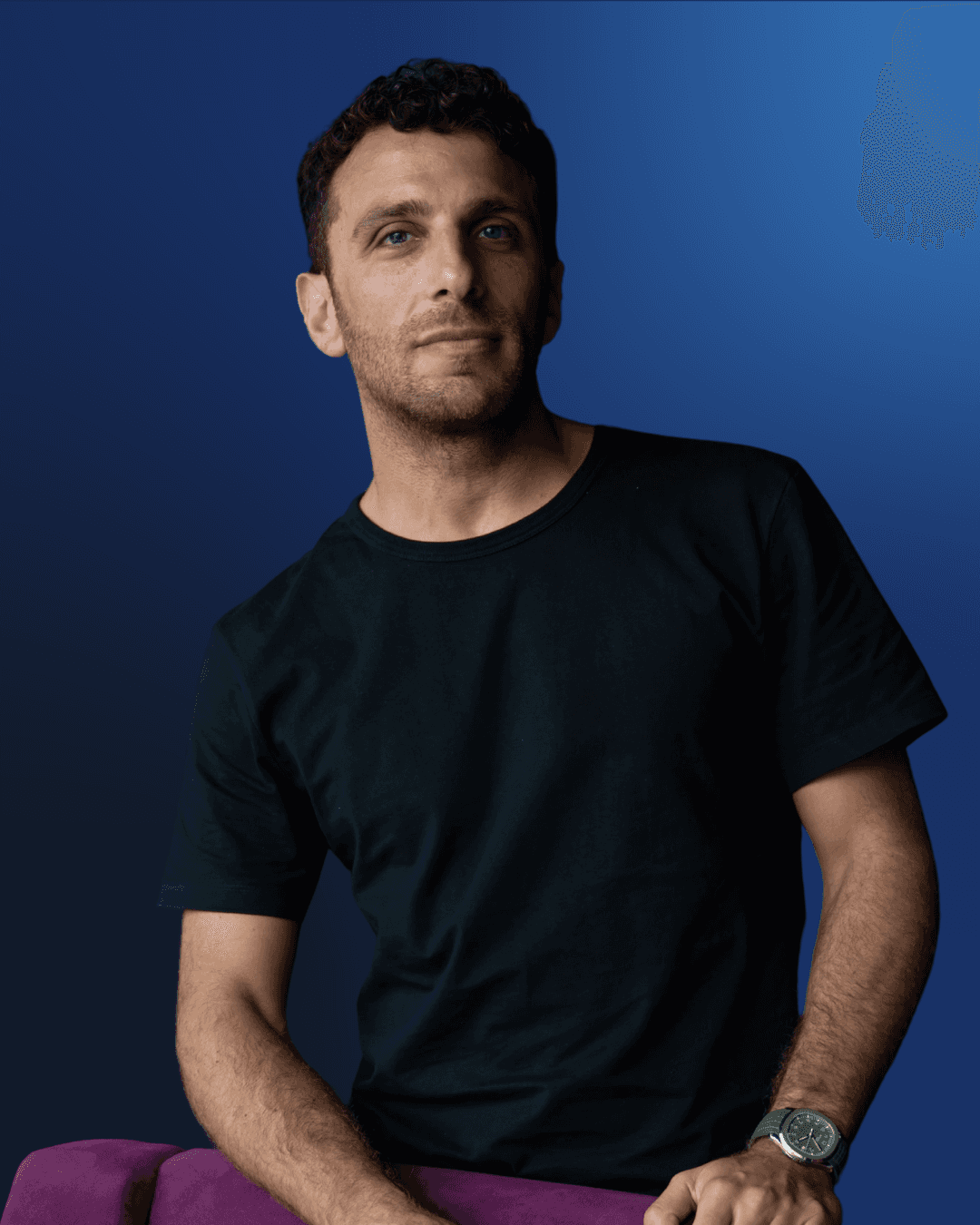
Savvas Fellas is the founder and CEO of MrQ and Lindar Media. Starting out in digital marketing and affiliate SEO in London, he identified the gaps in the player experience from both sides of the fence before deciding to build his own platform from scratch. MrQ launched in 2018 as a fully bootstrapped, UK-focused online casino built around fairness and transparency: no fees, no wagering requirements, no complexity. Under Savvas's leadership, MrQ has grown into one of the UK's fastest-rising gaming brands, backed by partnerships with Watford FC, the World Snooker Tour, UFC, and boxing with Queensbury and DAZN.
Key topics discussed
00:00 – "How hard can it be?" The frustration that started MrQ.
05:00 – Running both sides of the fence as advertiser and affiliate publisher.
09:00 – MrQ's six core values and how they shape every interview.
11:00 – The secret sauce: mission, vision, and values as a decision-making framework.
13:00 – Shiny objects and one-way door decisions: staying focused when everything is calling.
18:00 – The C-suite problem: why building the right leadership team took eight years.
24:00 – "What got you here won't get you there": managing the human cost of restructuring.
27:00 – The tech vs. product realisation: the mistake that cost MrQ years of momentum.
32:00 – The 40% tax shock: MrQ's response and why Savvas thinks the government is reckless.
35:00 – Creating a common enemy: how the tax change rallied the whole team.
38:00 – Shifting the paradigm: why real money entertainment doesn't have to mean slots.
42:00 – What Savvas would tell his earlier self about building the C-suite faster.
Key takeaways
First Principles Over Pattern Matching: The best founders don't ask "this worked over there, will it work here?" They break the problem down to bare bones, challenge every assumption, and build back up. MrQ's entire product philosophy, from no wagering requirements to synchronous entertainment, is first principles thinking applied consistently.
Values as a Decision-Making Framework: MrQ's six values (We Own It, We Challenge Everything, We Win as One, We Care by Design, We Play Smart Long Games, We Get Shit Done) are not a wall poster. They are the filter through which every hire, every decision, and every strategic debate runs. That's the difference between a culture and a slogan.
The Tech vs. Product Mistake: Savvas spent years solving a technology problem that had already become a product problem. More engineers without product ownership produces nothing. Recognising when the nature of the bottleneck has fundamentally changed is one of the most important and most missed leadership calls in a scaling business.
Management Debt Is Exponential: Every hard decision deferred compounds. Savvas learned this when he reversed a C-suite appointment in front of his entire leadership team. The earlier you reverse a wrong call, the less it costs. Waiting does not make it easier; it makes it more expensive.
The Common Enemy Playbook: When the UK's 40% gambling tax landed, MrQ reframed it immediately. The threat was not internal. It was the black market. That reframe turned a business crisis into a team rallying point and a brand differentiator.
Founder Mode vs. CEO Mode: Great companies transcend their founders. Good ones collapse when the founder leaves. The distinction is whether the leader has built an organisation that runs on mission and values or one that runs on their own energy and oversight. Savvas's goal is the former.
Memorable quotes
"The frustration started to brew. I couldn't get anything over the line. Eventually I was like, 'Do you know what? Fuck this. How hard can it be?'"
"Have a very clear mission and clear vision and values that underpin your behaviours and your collective personality. The first principles in which you make your day-to-day decisions should be your value framework. That's the secret sauce."
"I don't wanna tell you that you can't do the job when I don't even know what the job is. I'll run you through this programme and they'll benchmark you. And I said: if I don't benchmark either, I'll also step aside."
"This government does not have an idea of how business works. They've never been in business. How can you be okay with £500,000 going into the black market knowing that people are going to be put in front of risk?"
"We sell entertainment. Can we shift the paradigm of what real money entertainment is? That's the headline."
"The genius with a thousand helpers are the good companies. But you take them out and the thing should still perform as good if not better."
Important links
Episode Transcript
Read transcript
Savvas: [00:00:00] I don't wanna tell you that you can't do the job that I don't even know what the job is. I don't really know what a proper CMO looks and sounds like, or COO or CFO. but I'll run you through this program, they'll benchmark you against what they know with this big, data set, and then they'll be able to tell me if,
Hey, Person A can do this job over here at the C level. And I did that, and it turned out
Pretty much no one could. 'Cause I'll go through it as well, I'll also step aside."
Savvas: Obviously, the Mistakes are always happening, predominantly they're around people who are just not a right fit.
We should be reviewing, rewarding, hiring, and firing too. Firing in a compassionate way.
Savvas: This government does not have an idea of how business works.
This government is reckless and putting real people in danger. How can you be okay with £500,000 going into the black market knowing that people are gonna be put in front of risk?
Savvas: Have a very clear mission and clear vision and values that underpin your behaviors and your collective personality. The first principles in which you make your day-to-day decisions should be your value framework. That's the secret sauce if anyone really wants it.
Leo: It's like the man to the moon kind of thing, right? With the guy sweeping. He asks the cleaner, what's your job?
What do [00:01:00] you do here? And he says, My job is to make a man go to the moon. It's that, right?
Savvas: I love that.
Leo: because he works for NASA. That's the thing they're doing.
Savvas: we sell entertainment and that doesn't necessarily mean, it has to be a slot machine or a live dealer.
It's pushing us to innovate I mean, you should see something in the next couple of weeks on MrQ. Both on the traditional side and on the non traditional side. Can we shift the paradigm of what real money entertainment is?
Leo (2): Hey, welcome to the iGaming Leader Podcast I'm your host, Leo Judkins, founder of iGaming Leader Mastermind. And on this show, I sit down with some of the most inspirational and forward thinking leaders in our industry diving into the real challenges, high stakes decisions and lessons. That shape our
industry
If you are a VP Director or an Executive in iGaming this podcast is built for you.
Before we dive in, a quick thank you to our sponsor Sum Sub, the full cycle verification platform. Trusted by top iGaming operators worldwide, sum sub helps onboard players quickly stay compliant and prevent fraud all without slowing growth.
More information in the description. .[00:02:00] hey, everybody. Welcome to The iGaming Leader Podcast. I am here with, Savvas, who's the founder and CEO of MrQ, a bootstrap founder-led business that, uh, is a real challenger brand. I actually met Savvas for the first time at the Power 50. really cool. Saw him on stage, and walks the walk and talks the talk.
Leo: I think really brand is really a reflection of,what you are, Savvas. someone who loves debate,
Savvas: Yeah.
Leo: afraid to call out the bullshit, and, challenges the norm to fix what you see as wrong. So I'm really excited to talk to you today. Thanks for joining.
Savvas: Thanks for having me
Leo: hey, I wanted to start all the way back, maybe not at the Ministry of Sound, but, uh,
Savvas: You really have done your research
Leo: Of course. Um, no, I'd, I'd like, I'd love to start where this whole idea with Mr. Q started. because I think many people start businesses out of frustration can you talk us through that? can you start there, where, this idea came up, what your frustration was, and what you're trying to solve?
Savvas: I mean, you're, you're completely right. There was frustration and I guess a naivety. [00:03:00] I was early 20s, completely naive but very kind oftunnel vision and determined and, I like to think of myself as having grit and that's something you can't teach.
I don't have a good, educational background. I grew up on council estate in Birmingham. but the problem was, uh, so I was in a marketing agency in London. I'd graduated uni, I'd come down and I'd set up an affiliate site, to practice some of the things I was learning, SEO, PPC, display, cookies, retargeting,
I, I, I ended up somehow, doing a bingo comparison site. then that evolved into becoming a white label operator as well, so I could be both sides of the fence of advertiser and publisher. I was advertiser on my publisher site. So whilst I wasn't getting this kind of CPA, I was getting the data, I was,practicing being a grown-up operator and the software suppliers were taking care of all the boring stuff.
I did that again and again, but the frustration started to brew I couldn't get anything over the line. [00:04:00] It was the days of Flash, real-time data, you know, staging environments, better back offices, speedier back offices, better reporting. making it more dynamic because they had lots of constraints, these software providers.
You have to work the way that they want you to work, this CRM tool or this back office or this particular report. And eventually I was like, "Do you know what? Fuck this. I'm just gonna... How hard can it be? I'm gonna build it and I will then only have to answer to myself, and if I've got anyone to blame I only have to look in the mirror and I can either fix it or choose to do nothing about it or fail."
that's how I looked at it, and then I started to build it. we had the advertiser publisher building in the background using the revenues from this, hence the bootstrap thing, and then slowly building it. Managed to get MisterQ live in August 2018. and then slowly justgot rid of all that other stuff.
That was the means, this was the end. and the kind of rest is history but you're right that a lot of the personality of a founder is [00:05:00] in the business but yeah, it's been an interesting journey.
Leo: Mate, I see it in so many things, right? Like even, even with what you just said about not getting features through because you were sa- you've said before it was on merit. You had good arguments. You just weren't doing the revenue that's for them to listen to you, right?
Savvas: Yeah, the meritocracy wasn't there
Leo: exactly, yeah.
So I think a lot of this translates back into how you run MrQ, right? the brand is run on fairness and, transparency, no bullshit, like all of that is your personality coming through in the brand. But famous last words, right? Like how
how
hard can it be?
And
Savvas: do you know what? it's an energy that doesn't leave you either. I've sat with that a little bit because, so this building that we're in is Queen's House. used to be owned by Crown Prosecution Service. I needed a place to put my team. We were on a business park in the back end of St Albans, and I wanted to rehouse them, bit more central, bit more vibe, bit more energy, reflected the personality [00:06:00] and the culture of the business, not a business park in the back end of nowhere.
Uh, I ended up winning it, got kind of carried away and swept away in the process and then when the dust settled I was like, "What am I gonna do with 20,000 square feet of a building, beyond housing Mr. Q?" I didn't need 20,000. I barely needed five. I still barely need five.
and then I was like, "Okay, I'll just renovate it and do a co-working space. How hard can it be?" no research, just an idea, but then tunnel vision kicks in, and you just go, go, go, go, go, and then on the other side of it, you're like, "Okay, it was hard, but it was fun." And this is the problem with the original point that we were talking about with the shiny new objects.
Shiny new objects are fun. As entrepreneurs, we wanna fix it, we wanna prove that we can buck the trend. some of us can, and some of us can't, and it's not all wins. There's some failures in there. But I've realised that I need to be more conscious of that, how hard can it be? And sometimes just say, "Do you know what?
I'm okay on this one
maybe Savvas, but isn't [00:07:00] that what makes you a founder and an entrepreneur? I think founders and entrepreneurs over-index on their likelihood of backing themselves, believing in the things that public wouldn't believe in, right?
Leo: Like they're going against the trend Yeah.
Savvas: You gotta be careful though with this, because, you don't wanna be deluded to think that all your ideas work because your gut tells you, and that, you've got some secret sauce internally because you're not gonna get them all right. But I think we are wired that way.
What I've also realised is that we're first principle thinkers, and so take the example of Queen's House. it's a building. St Albans is 19 minutes train from King's Cross. there's a lot of commuters here. it's pretty affluent, pretty middle class.
That was my research, my first principles. And I was like, "Surely if I build it, like it'll happen." And, you know, sure enough, it did. Same with MrQ. Like, surely this experience is terrible. Players need more. They don't wanna be, overwhelmed by, bonuses with like stupids wagering [00:08:00] requirements before it becomes real.
it's all just a big veil, a thin veil People want to have an honest relationship. this is serious stuff. They're choosing real money entertainment, and we're responsible to give them that entertainment and keep the balance so that it doesn't go into harm.
I think first principle. What I've realised is that we're not all first principle thinkers. I've come across people who are a case of, "This worked over here, therefore it will work here." well, you didn't break the problem down. you didn't challenge it. You didn't ask why.
You didn't break it down to the bare bones and then build it back up. That's not the type of person that would work well here.
one of the values is challenge everything. So in interviews, I do all final stage interviews, although recently I've let go of some of them, at this particular moment in time with the tax and everything else, the value of challenge everything and the value of get shit done, they overlap a little bit.
if you're getting shit done, you're probably challenging something and trying to find unconventional routes to fix a problem, [00:09:00] and get shit done is the energy that you kind of apply. So there is a bit of a Venn overlap. But in interviews, I will quickly ask a person, "Tell me the last time you got shit done," or, "Tell me the last time you challenged something and found an unconventional route."
it's amazing some of the responses that you get. But we interview based on all of those values so that we ensure everyone who comes in, comes in with the same thinking, the same behaviors
Leo: Because otherwise you're just,you're gonna be stuck in the middle as a brand, right? And that's no good. So maybe something for the listeners as well, those two questions. Think about that for a second. how many people have you got now, Savvas?
Savvas: I think we're, about 202.
It does vary 'cause obviously you've got like...
Leo: number.
Savvas: Well, I'm thinking about, my Slack channel, with 202.
Leo: Okay,
Savvas: Age specific
Leo: I t-
I ran into Johan Dahlstrom, He's just started working for you guys. So I coached some of the guys at gambling.com, so I sat on the celebrity table with the Which Bingo? Awards, and then I saw Johan there. And I'm like, "Ah, cool."
Savvas:
Yeah, they had a [00:10:00] marketing gathering, over here. everyone's gone now. it was good to see a lot of people. Marketing's massive at the moment.
Leo:
Savvas: The team size is, is, is grown a lot. So our CMO, all of '25 basically had reorg-ed the whole marketing function, and did a great job to build out this team.
Obviously, there's a few bumps in the road, but,
it's, strong and there's a lot more to do. There's a lot more, opportunity. we're not firing on all cylinders from a marketing perspective a, stretch
Leo: well, I love that that you've got such a strong multidisciplinary background, all these areas. on the one hand that's a curse, on the other hand it's also,
Savvas: Jack of all trades, master of none
Leo: you know, There's a real risk of micromanagement. But I love what you said about that it's taken you so long to recruit a really good team of C-levels around you
Savvas: I think looking back, that was probably... You know, people talk about secret sauce, but is there really a secret sauce? I'm not convinced. and if there is a secret sauce, I don't think it's an objective [00:11:00] secret sauce.
I think it's way more abstract of Have a very clear mission and, a clear vision and, values that underpin your behaviors and your collective personality and, the first principles in which you make your day-to-day decisions should be your value framework. that's the secret sauce if anyone really wants it.
what are your values? What is your mission? trying to get a load of people to, if you use a different kind of analogy of building a boat, you know, you got, people designing it, people cutting the wood, people fixing the wood, and everything that would go along with that.
And rather than finding people who are disciplined in those domains, I think your job as a leader, at least my perspective is, inspire them to journey into the wide open ocean.
and then that's what you get. And then you, rather than the micro-manage of like, "You need to cut this wood. You need to design that.
You need to build that." No, just make them yearn for the open [00:12:00]waters and then... So that's your kind of mission statement, and then everything else will flow a lot easier
Leo: does this make the boat go faster, right? it's like the man to the moon kind of thing, right? With the guy sweeping, the cleaner going. He asks the cleaner, what's your job?
What do you do here?" And he says, "My job is to make a man go to the moon." it's that, right?
Savvas: I love that.
Leo: But it's literally
Savvas: Yeah.
Leo: because he works for NASA, that's the thing they're doing,
Savvas: I mean, that is a great analogy. Even the cleaner subscribed to the mission of putting a man on the moon.
when people join the org, they should really be joining not because, "Hey, I really like finance and accounting." No, I really like the mission statement of making every play unforgettable and to burn the rule book when it gets in the way," which is exactly our mission statement
Leo: Yeah, exactly. And then, and then the other thing I love about you is, so many founders, including myself, struggle with shiny object stuff.
it translates with everything you do, from being UK only to, how you run the team, what you focus.
the focus is the focus, and that's what we're gonna do. If you wanna have a debate [00:13:00] about changing from that focus, let's have the debate.
But you just gotta have bloody good arguments to distract from that focus, because I think that's the thing that most people inherently kind of... is also part of the secret sauce, I suppose, and is therefore also the biggest trap, is that distraction and not going with that focus for long enough, you know, to truly believe in something. talking to, um, to Paul, you know, the founder CEO of, G Games,
and they've got this multiplayer thing, they've been working on for four years, still haven't delivered, and still is just an idea so much money down the drain. And we were talking about that man to the moon thing. And he said, okay, great analogy," my worry is what happens after we're on the moon, after we've launched that thing? Now what do I do?"
Savvas: Yeah. Well, you gotta get there first, but
Leo: Oh,
Savvas: the focus thing is a weird one because I think we spoke about this last time. The amount of people who, "Hey, when are we doing sportsbook? and when are we doing different markets?" You're like, "Well, hang about. open to all of those, all good ideas, but tell me why.[00:14:00]
Tell me why," rather than, uh, "Why are we not doing?" Tell me why we should do it. that's where you have a good team around you because, you should be able to free to challenge. But that focus thing is important because a lot of these things, like sportsbook, like different markets, they're one-way door decisions.
Leo: Yep
Savvas: and once you make them... there is a fire exit in there once you're in the door, but they're quite hard to find, and I'm really kind of alive to that fact. But I also have a really good leadership team who, you know, there's been a couple of instances in the last 12, 18 months, opportunities, and, I think as entrepreneurs, bootstrap founders, you like shiny things.
You wanna fix things. It's just in our nature. It's how we're wired. So when it comes up, you're like, "Oh, yeah, I could take that, and I could do this, and I could do that," but then you're gonna lose focus. At what cost otherwise,
Leo: Yes
Savvas: uh, would you be doing this? So my CFO's been like, "Indulge me a little bit," but then at the right time, he was like, "Why, why would we doing this?
What are we doing here? This is just focus." [00:15:00] Like, we can't lose that focus. It's, once it's gone, it's gone.
Leo: Yeah
Savvas: that's really important. it's hard. It's very hard to maintain that focus, but I think we've done well with it
Leo: Are you so wired, you think, Samas,
Savvas: How'd you mean?
Leo: are you kinda, do you have a strong focus or are you more, some people are, think about ADHD or OCD or, you know, whatever, wherever, we're all somewhere on the spectr- Are you super focu-
Savvas: I've got probably
I'm a bit of both. b- it depends on the circumstance. the people around me have got better focus than me. I get distracted easily. I mean, I've got ADHD. I don't, take anything for it because I think it's also...
Leo: Yeah,
Savvas: a secret sauce. Yeah, but when push comes to shove, and my back's up against the wall, that's when I do my best work.
I'm not prepared for this, but I know, it's a subject matter I know really well, and so I'm pretty comfortable and confident with it. But I wouldn't say I'm super focused. I wish I was, actuallyI've met people who are, and I've got them in my team. my CFO is really good at [00:16:00] knowing where to focus his energy, but he's also comfortable with saying, "I'm gonna do this because whatever first principle thinking he's applied to it, because it impacts this, this and this, and the value's there.
He's thinking in the future. He's got good time span. and knowing that right next to this thing, there's a fire. I can even feel the heat of that fire, and it's getting bigger and bigger. But I know that I can't drop my focus here to do that. If anything, if I fix this, I potentially tame some of the fire over here."
And he is exceptional at it. whereas I'm like, "Oh, let me take a look actually." like, you know, chasing-- I don't think we realise that we're kind of addicted to dopamine a bit.
Leo: For sure
Savvas: especially when you're kind of elevating as a leader. And I think leadership is a skill, so I think most people can learn it with the right mindset.
you really have to stop chasing the dopamine hit. "Oh, like I'll put that little fire out. That will give me a nice kind of instant gratification," versus this thing which could take days, weeks, [00:17:00] months. The leadership team took two years to build. I got there eventually, but it was a hard...
It's probably the hardest part of what I've done in the past eight years, was putting that team together
Leo: Why was that so hard though? is it just because the right people and values and mission or was it more, like a time thing?
what made that so
Savvas: It's a bit of both. So, um Finding the right person in the right seat is really hard, especially when you have a really strong, value-led organization. So they have to subscribe to these, six principles. And as said, they are the first principles in which we should be making all of our day-to-day decisions.
So you've got ... we own it, we challenge everything, we win as one, we care by design, we play smart long games, and we get shit done. So interviewing people and making sure that they have, to some degree, some of that is already hard. Now, trying to find C-levels, experienced, seasoned execs who, who just get it and can deliver and [00:18:00] can grow and are hungry and are relentless, relentless executives who also know how to get delegate and the difference between management and leadership, that's even
And so now it's even harder. and what makes it even harder, the difficulty just keeps going up and up and up, from a CMO was out of industry,
Leo: Mm-hmm.
Savvas: a COO also out of industry. Both of them have got fintech experience. Trying to convince people to join this industry when the stigmas around it are already, you know, what they are, we all know it, is quite hard.
So you really have to sell it. We're different. We do things differently. here's some examples of how that's translated, and then getting them to subscribe to that. It's leadership, it's about selling that vision. this goes back to the building the boat. Like, make people want to, yearn for the open ocean, and they'll build the boat to do it.
Your job as a leader is to make them really crave the open waters.
Leo: Yep
Savvas: that's even harder. you kind of don't want people [00:19:00] who are readily available. if I told you that you were gonna renovate your house tomorrow and you found a building contractor and he was available tomorrow, you'd probably question that.
why are you available tomorrow? If you're as good as you say you are, and you can do what, needs to be done, why are you available tomorrow? You kind of want a few nos. to the point about focus, one of Steve Jobs' famous quotes was like, "I'm almost as proud as the things that we didn't do as the things that we did do."
So that's the first one. And on this one, when Steve Jobs hired, the CEO of Burberry globally, and Steve Jobs approached her, and he wanted her to head up all of Apple's retail globally.
Technically a step down and also completely different industries.
Leo: Yeah
Savvas: he, obviously had his reasoning But he'd approached her once and she was flattered, and it's well-documented. and she said no to him about three times. But then time passes, you build the rapport, you sell it in again, maybe something changes at Burberry, and then [00:20:00] all of a sudden if you get your timing right, come over.
And then she went over and she smashed it,
Leo: I've seen it with Julian as well, right? Like Julian was, didn't have a C-level role before he put him in that seat.
So
Savvas: And that's difficult as well. Likeone of the biggest challenges is like... you know, as a founder, they just get themselves involved maybe in areas where they shouldn't.
Maybe it's so big you don't really need to be signing off a UI change. You can be part of that process and help give perspectives and shape ideas, but you don't need to be, a genius with 1,000 helpers. You know, CEO versus just building a great company with great people.
it's the difference between good to great. Jim Collins talks about this in his book, "Good to Great," where he analyzed good companies There was a methodology to which companies he looked at. I can't remember what they were. And then what's the difference between those ones and the great ones.
And so he went and interviewed all of these old execs from the great cohort and the good [00:21:00] cohort. one of the things from the good cohort was as soon as that CEO founder, had left, a lot of these companies failed. It's one of the things that highlighted the fact that they were only good, they weren't great.
Whereas a great company will transcend the founder, the owner, like Nike, although even then it's choppy when Phil Knight left.
Yeah, the genius with 1,000 helpers are the good companies.
But you take them out and the thing should still perform, as good if not better
Leo: I think the hard part is like I said to you earlier, you know, with someone, someone like your experience that's really wi-wide experience, not having your fingers too much in every pie. So I run a mastermind, right?
And we have expert speakers in our masterminds, regularly,
Savvas: Hmm.
Leo: Graetzer was one of them, and he was talking about this founder mode versus CEO mode
Savvas: Yeah, that's the Brian Chesky thing.
Leo: I thought that it's such a great point of, okay, you don't have to follow these specific rules of how you feel an organization needs to be run, right?
You can do the [00:22:00] skip levels, and you should be involved in it because it is your vision.
Savvas: Yeah
the founder mode's interesting. The whole Brian Chesky thing was like he was always taught and believed, and Silicon Valley was kind of like a big, fan of this, is like, okay, you've got product market fit, you've got all that stuff. Now build a team and just let them do it.
and what he found is that for founders it was different And when you kind of zoom in in certain areas, there are things that you see, there are things that you feel that could and should be better. And so you also should be able to say, "I don't like that.
I think that could be better. We need to change this." we're so indoctrinated with just put a good C-suite together and the rest is history.
Leo: Yeah
Savvas: a, a large part of that is true. A large part of that is not true. it's not as black and white as that. I wish it was,
by the way.
Leo: Um, so tell me about the growth stages different pain points, different challenges. talk us through the phases of the business and the biggest challenges and decisions you had to make, the ones that you got wrong, the ones you got right?
Savvas: There's a lot in that.
Leo: The first part is the startup, which [00:23:00] is whatever, just do whatever it takes. whether you need to answer customer support queries, which we did, I did. I remember early on when we turned it on, we were in a room, we had a driving license from a player, and there must have been 11 people in that room.
Savvas: Some of them who are still here, by the way, and remember it. And we're like ... And we'd had training before that. What do we do? Is it fraud? How do we know if it's real? How do we know if it's fake? how do we approve it? Where do we store it? Who's got access to it? Do we delete it? Like, there's just questions and questions and questions.
And so you're trying to constantly, answer all of that whilst growing. And then that ... You know, I think of the different phases by head count. So you do that for a very long time, and then you get to, maybe 50 or 70 people, and that was a big step change. So at this point, you've got people who've stayed on the journey because you sold a good vision.
You made them yearn for the open waters, and they built a boat. but now you need to operationalize this boat, and that was a completely different [00:24:00]challenge. So the real work started when we turned it on. It was very different building it. I thought that was hard, but turning it on was much harder. But then around 50, 70 people, Looking back, I thought it was just all technology, and I wanted to be ... I, and I used to say it then, which is quite weird because, the framing of live and die by product speaks to product and product people and product owners and product managers.
I didn't know that. I just thought that was about building. And so it became about engineers, and find really good engineers who know how to build front end, back end. you've got QA and everything else that goes in between those two disciplines. and then it got to a point where nothing was changing.
I'm like, " we're making good revenue. We're growing. We're hiring seemingly good people who really know their craft. But every time I log into the product, it looks the same. What's going on?" it took me so long, to realize that overnight the problem had shifted from being a technology problem, to being a product-led [00:25:00] problem, with engineering being a subset of product.
Leo: Yep
Savvas: just didn't know that. I just thought more engineers, more engineers. But engineers need a product owner, a product manager. I'm not so big on project management. We don't have any. I'd realized that quite late. Then I put this structure of product people in. You make some mistakes. I've made a lot of mistakes in terms of hires,
Leo: Of course
Savvas: getting the right person in the right seat for the right reasons. that was the biggest one that came out when you asked that question. the mistakes are always happening, predominantly they're around people. whether they're people who are just not a right fit, doesn't make them good or bad, they're just not right.
Or whether you potentially bring people in that are, going against the values. for me, the values are the most important thing in the business. we should be reviewing, rewarding, hiring, and firing too. Firing in a compassionate way.
Leo: Yep
Savvas: that was the big one, and then after that, the next biggest one was the C-suite and getting that right because you had people who are on a journey with you, [00:26:00] then it gets really big, and then you kind of make them into heads of.
And then I was like, "Okay, now we need a C-suite, and I really need to verticalize all the problems so that they start up here, we decide on what we're gonna do, we carve it out, we give it to all these teams, and then it gets distributed nicely, it gets executed, it gets delivered." On paper, all of this is bloody easy, by the way.
you know, all the business books will kind of like...
the bigger it gets, the complexity kicks in. You're dealing with a lot of humans and emotion and, their needs and, trying to meet their needs as well as them trying to meet the needs of the business.
Just like any relationship, It's about meeting the needs of another. I tried to turn that heads of layer into a C-suite. and I went and did, an executive competency test 'cause I was like, "I don't wanna tell you that you can't do the job that I don't even know what the job is. I don't really know what a proper CMO looks and sounds like, or COO or CFO CPO.
uh, but I'll run you through this program, and that will tell me because they've got a load of PBAT data. [00:27:00] They'll benchmark you against what they know with this big, data set, and then they'll be able to tell me if, 'Hey, Person A can do this job over here at the C level, not the heads of level.'"
And I did that, and it turned out- Pretty much no one could. I did also say, "Listen, if it comes out that I also don't benchmark with this, 'cause I'll go through it as well, I'll also step aside." fortunately, turns out, I've got the raw ingredients. I think I've got the raw ingredients of challenging and good communication and good vision.
Um, and then I had to obviously deal with that, 'cause again, you're dealing with people who've been on a journey with you, but it doesn't necessarily mean that what got you here will get you there. And everyone had to realise that together. Um, not everyone stuck around, as you can imagine. but a, a, a large number of people did.
Some people just acknowledged that it was their time. And then that gave me the freedom to go put a C-suite. So I started with a [00:28:00] CFO, and then I went to CMO. So I wanted to go straight to the revenue machine. What is the next role that I need at C-level now that I've dealt with that big issue over here?
CFO, then CMO, then COO, then CPO.
and it worked well. It worked really well, but it was... I just felt like it took longer than it needed to take
Leo: it's, what happens when there's, know, emotions involved. I, I was actually just talking about this book earlier with someone on A
Savvas: Which one's that?
Leo: Hard Thing About Hard
Savvas: Yes.
Leo: Horowitz, one of my favorite books, and he... one of the passages in there is about exactly that, where he also, as a founder-led business, got all this group of people around him that he's now leading the business with, and he's saying like, Okay, I don't have this experience leading an organization this size, and if none of us have it, that's a real problem.
like one person we can stomach, and then I'll get experienced leadership around me." so he had to fire off
Savvas: Well, I didn't, I didn't have to do that.
I- but I get that sentiment and there's a little bit of that. people who I consider as friends, Uh, and they moved on because I was [00:29:00] making these decisions, and that's fine as well. You know, it's a two-way street, remember that.
Like,
Leo: For sure
Savvas: the needs thing, you're there to meet the needs of the business, and the business is also there to meet your needs. And if it doesn't work, then you have to part ways. but I remember one of the people from that heads of layer who was like, I mean, one of the biggest mistakes that I made is that I had two people competing for one of these seats.
I mean, it's only just come back to me, but I'd given it to someone and, that caused a lot of problems for me with the other person because I hadn't handled it very well. this was probably the first big CEO-type decision or conflict I had to deal with. And I reverted on the decision because I heard better arguments and rationale, and I needed to balance it out a little bit.
I had to go to this person and say, remember that thing that we talked about? I don't think it's the right thing for the business. I need to pull back." that created problems for me. I could have handled it better. But one of the people, during that time, they were like, "Just tell me [00:30:00] what I need to do, and I'll do it.
tell me what that role is, and I will do it." I was like, "I can't tell you what I don't know."
which is to your point, we're all making it up as we go along
Leo: but well done, Samas, because one of the big mistakes so many of us make is that we create this management debt, right? Like we create this you know what I mean? The debt that we have to pay back in the future of these decisions that we
Savvas: the cost of that is exponential, over time, right? So the sooner you revert it, it's painful,
remember it distinctly, and I remember, getting them into the room with the, the, the entire heads of layer. Uh, and I didn't tell anyone what I was doing, why I was doing it. They were, like, questioning, you know, "What is this?" because I'd kind of semi-rolled out this decision, the first part that I'd got wrong, and then I'm in a room like, "Guys, I've, I've, I fucked up.
I fucked up, and I need to acknowledge it, and here I am, all my cards are on the table. But the best thing for the business right now is to revert back, take a breath, figure it out." That's what we did. They took it [00:31:00] well.
many of the people in that room are still here
Leo: Yeah, because that's what people buy, right? They buy you, they buy the vision, they buy the mission, they buy the culture,
Savvas: the other side
Leo: go
Savvas: Yeah, first principles again
Leo: okay, so we, talked about, um, your singular focus, right?
as a brand, you're focused just on the UK. Everybody knows made this amazing decision of going from 21% to 40% just to help,
Savvas: Thanks, Rachel
Leo: Yeah, doing great. and you're sticking with the UK, right? You have, again, it's... management debt, fo-focusing elsewhere, opening new markets, going into sports, whatever it is. I wanna go back first to when that decision actually landed. I know everybody was like, "Oh, this can't be true. It's not gonna happen." Tell me about your story, your side of things, on how it was for you and how the conversation inside the business went,
Savvas: we'd heard, uh, as I'm sure everyone else had, uh, rumors and murmurs around 25, 30s, maybe even 35. we had [00:32:00] done some planning around different scenarios, So we did scenario planning. I think we did up to maybe 32-ish. What would it look like for the business?
And if it was this, what would we have to do? I was convinced it was gonna be 25. I'd heard rumors it was 25 from credible sources, and so the initial reaction was shock. How could they be so stupid? How could they not listen to what was being said? To some degree, I don't blame them because what was being said was coming from people who historically had formed part of the problem.
I get it, but, it's objectively obvious what would happen. the black market was gonna have a field day because we couldn't offer the same promotions, we couldn't offer the same RTPs, you know, everything just got more expensive.
and so initially it was pure shock. and so we sat there licking our wounds for a bit, digesting it, brainstorming, talking, mourning, and then eventually we were like, "All right.
what's the plan?" So very, very quickly, [00:33:00] we were on all hand calls saying, "Listen, this has happened. This is what it means. we've ran the numbers against the 40 and there's a mitigation plan to be done, which some of them would diminish the player's experience, the main one being RTPs.
You know, for every pound that's wagered, you know, 4p or goes to the house and 96 goes back to the player that's how it works. We were gonna have to reduce that and historically, I monitored everyone else who was reducing RTPs before the tax and I knew that that was always gonna be a big ace up our sleeve to say, "No, hold out.
If we have to reduce it, we will, but only by necessity." And that was one of the immediate things that we did. but that ruins a player's experience. Now, for every pound that they wager, they're potentially only getting 94 pence back and the house has to take six because they've got to cover this revenue tax which had just had a 90% increase on revenue and I don't think that's widely understood either.
Leo: no,
Savvas: not on bottom line, it's on revenue and [00:34:00] now
Leo: Yeah.
Savvas: Mr. Streeting, is now, talking about a 40% CGT. This government does not have an idea- Of how business works. They don't have a commercial nous. they've never been in business, and they just sit there writing these things down thinking that, "Oh yeah, everything will be fine in the end."
Black market is running rampant at the moment. And so I think one of the good things that it did do actually was it created a common enemy. it wasn't about being better than our peers in the regulated space. It was now about we've gotta make sure that that doesn't compromise players because this is real people and it's gonna create real problems for them.
So we have to give really good reasons as to why to stay at a MrQ. and that will be through the story that you tell, the, the kind of challenging narrative, the honesty, the transparency because they don't want all the bullshit. They're not idiots. They can see promotional offers. We've had to have the CMA tell us how [00:35:00] to write our promotional offers because that's how we've been, we've been stupid.
when you look at these old historical offers, which we've never done, like what are you trying to do? Like this is ridiculous. These are real people, they're not idiots.
Leo: Yeah.
And so we got on a call, we told the business it was all good, uh, and it was all good, but it was gonna be challenging.
Savvas: There were gonna be winners, there was gonna be losers, and we would be one of the winners because of our risk profile, because of the bootstrap mentality of how we operated allowed us to just take bigger risks. we sell entertainment. Like, let's be honest, we just sell entertainment.
Obviously AI has helped us a lot as well. Um, and everyone rallied around that. it was really positive and the sentiment was like, "Yeah, yeah, we've got this. We can do this." You rely on your values, your mission, your vision, and then you just go, go, go and you focus on what you can control, not on tax which you've got no control over.
But I still think this government is reckless and putting real people in real danger. I mean, they [00:36:00] accounted for 500 grand going into the black market. Even that alone is bad. How can you be okay with £500,000 going into the black market knowing that people are gonna be put in front of risk? Safer gambling, AML, these sites just don't give a shit.
Leo: profile of person that goes into there, right? Like, that's the other thing. it's not the average person, it's the non-GamStop type of stuff.
Savvas: Yeah, and even with the non-GamStop though, I've heard some people say, "Well, it's not that bad for the regulated industry because they're just going after the 400 GamStop a day player base." I'm like, if you think these guys are just targeting 400 players a day across however many bloody, sites there are, you're mental and you're badly informed.
and our job is to kind of like balance out that, narrative because unfortunately a lot of people believe that.
then Rachel saying, "Oh, we're just asking, the gambling industry to pay a little bit more." 90% is not a little bit more. So [00:37:00] already you're being dishonest, or you're just completely naive to what you've just rolled out.
But it's gonna be on their hands
Leo: One of the things that you said to Pierre, which I really loved, which you stole from HP, I think you said, is, uh, thatin, in, like, really poor circumstances, good businesses survive. Great businesses are defined by these challenges, right?
And, I think, first of all, I love that. secondly, I think the that you guys stand for is really that, is the casino as a product, has had a lack of innovation. You're doubling down on brand as a whole, right? Something that the industry doesn't do enough either.
It's all samey-samey. talk to me about that, Savvas, your vision and why you're backing yourself and why nobody else is doing it.
Savvas: I can't be too specific obviously, but there are things happening now that will push the boundaries of what real money entertainment could be, especially in the UK. I want to shift the paradigm of what real money entertainment could mean and [00:38:00] question everything. it's really forced us into that position.
We would've done it anyway, by the way. This wasn't born out of the tax, but it's fueled and intensified our drive to get these things out the door. And again, fortunately with AI, you can build pretty quickly now, like vibe coding is no joke. You can build almost anything. but I wanted everyone to rally around that concept of real money entertainment.
it's quite hard to talk about it without talking specifics, but I, I, I guess the thing that I would say is we sell entertainment and that doesn't necessarily mean, it has to be a slot machine or a live dealer. There are other forms of online entertainment, that we could still offer alongside our current offering.
it's pushing us to innovate I mean, you should see something in the next couple of weeks on MrQ, and then later this year, both on the traditional side and on the non traditional side. fundamentally that's the headline is like, can we shift the paradigm of what real money entertainment [00:39:00] is?
Leo: I love it. I mean, you've publicly already spoken about peer-to-peer,
social,
kind of the same thing as poker during the pandemic. You know, like that, that's the thing, right?
Savvas: synchronous entertainment is that thing, right? what did we do in COVID? We had synchronous entertainment. We couldn't be with each other, and so we wanted something to bring us together and have fun. making cocktails was one of them. playing poker online was a great thing.
can we carry that over into this world? You've seen it with, Kalshi and Polymarket and prediction markets in general. at the Power 50 everyone was talking about this stuff.
Leo: Yeah
Savvas: what they, were failing to do was to look at the meta of what-- why it's popular.
Because it's the intersection of these two seemingly different product offerings. One of them is,
Leo: Yeah
Savvas: financial investment and the other one is gambling. What happens? What does that look like when you bring them together? they've got Polymarket and Kalshi. Okay, but that doesn't necessarily mean that's the only thing.
can we bring the intersection of these two ideas together to form other types of [00:40:00] entertainment that does the same thing, where it feels like you're in a bit more control? We've seen the same thing with, quickies, uh, with Aviator. I feel like I'm in control.
Leo: Yep we do it synchronously?
Savvas: Can we have shared entertainment as an experience where me and you, let's say on Mr Q, can we play against each other? Can we play with each other? And what does that look like? can we create shared experiences? what am I thinking in terms of first principles is, like, you have this concept of loss aversion, where if you lose X, you need to win twice, and I think we've all experienced this and can relate to this.
it's not good enough that you just win your X back. If I lose a tenner, and I win a tenner the next day, I still don't feel justified. I still don't feel like an equilibrium has been restored. I need to win another tenner just to feel a balance.
what happens when you put two people together and you create the shared entertainment with two people, not just this isolated experience?
Does this two X, does it [00:41:00] reduce? Is it one point five? Is it one point two? And so then it becomes about the experience and not about the winning or the losing, baked into our vision statement of to entertain the world, win or lose. And so everything we do needs to feed off of that
Leo: loss aversion was also based on somebody stealing $100 from you versus getting $100. I think stealing is maybe a strong concept if you compare it to, you know, like, like your principle about, okay, if you buy a pizza for 15 quid or te- whatever it
Savvas: Yeah
Leo: like you've lost it, right?
But when you play a slot, you might feel that. I don't
Savvas: What's also nice about that is we don't say I lost 10 quid on a pizza last night, but think about a pizza. it's cut into different slices for different people. It's a shared experience,
Like, I shared a pizza. I didn't lose money on a pizza. I shared a pizza. It was good
Leo: And you could supersize it there's a little upsell for you.
Savvas: Yeah, stuffed crust as well
Leo: I'm just gonna ask you one last question. If you could go back to that second kind of milestone that you were talking about when you had to, when you started [00:42:00] hiring, C-level. were talking about how you could, how you maybe should have done that quicker, or may- maybe it took so long. If you could go back to that person, you tell him what you should do differently?
Savvas: originally when we were talking, we were talking about, I was- I mentioned my CFO and how disciplined he is at just focusing, focus on the thing that's important. And even though there's this fire brewing right next to you, you can feel the heat of the flames, focus, focus, focus, execute.
I mentioned I'm not very good at that, and I'm maybe a little bit better these days, but I would've said, "Listen, this is the only thing you've got to do. just focus on that. Everything else will have to wait, and if it's gonna burn, just let it burn. It's not as existential or important as not getting that right.
But I would start a few interviews, and I would- tackle some in-the-business problems as opposed to on-the-business problems. And so I would've dropped everything else and built that team quicker
Leo: What would it have changed, do you think, if you would've done that?
Savvas: It would have given [00:43:00] us more time to insulate the business against market conditions. So we were lucky in terms of timing, but if I would've been any slower on building out that team, we wouldn't have had the growth, the spike of growth that we had in '25, and then we wouldn't have been able to ride out that tax change because we would've been...
Even though it's on paper, it's a great business, it's big, it's like tens of million in revenue, we wouldn't have been able to ride. If you were a 60, even 70 mil generating business just in the UK and that tax got announced, or before the tax you would've been like, "This is a great business."
But at that point, at the tax, you're like, "No, no, it might not be able to ride this out." And so we insulated that business. So if I'd have been any slower, I would've been collateral damage. And so had I been earlier, I would've insulated it more and could've probably gone harder during '25.
But coulda, woulda, shoulda
Leo: great talking to you. Thank you so much for joining
Savvas: Thank you, Leah.
Speaker: Thank you for listening to the iGaming Leader Podcast. If you are a vp, a [00:44:00] director, founder, or an executive in iGaming making the biggest decisions alone, that's exactly what I've built. The iGaming Leader Mastermind for Small inner circles of vetted senior executives weekly hot seats. And accountability from people who understand the effects of the decisions that you need to make.
Find out more and apply@igamingleader.com. And a final thanks to our sponsor, sum Sub, the full cycle verification platform for iGaming operators player onboarding a ML fraud prevention all in one place. More at sum sub.com/gambling. See you next week.

Want to learn leadership strategies like
Savvas Fellas
Related podcasts
Podcast Episode
55
41 min
Why Most Founders Are Wrong About Who Should Lead Their Company
Ramiro Atucha
Founder of Atucha Strategic Advisory
Listen now
Strategic Execution
Founder & Entrepreneurship
Leadership Development
Podcast Episode
54
42 min
Why most entrepreneurs are not risk seekers, only bad at assessing risk
Nigel Eccles
CEO and Co-founder of BetHog
Listen now
Leadership Development
Building High-Performance Teams
Navigating Pressure & Change
Podcast Episode
51
48 min
Founder Mode: Whatever it takes to get the job done
Daniel Graetzer
Founder, Investor & Advisor
Listen now
Leadership Development
Mental Health and Burnout
Strategic Execution