
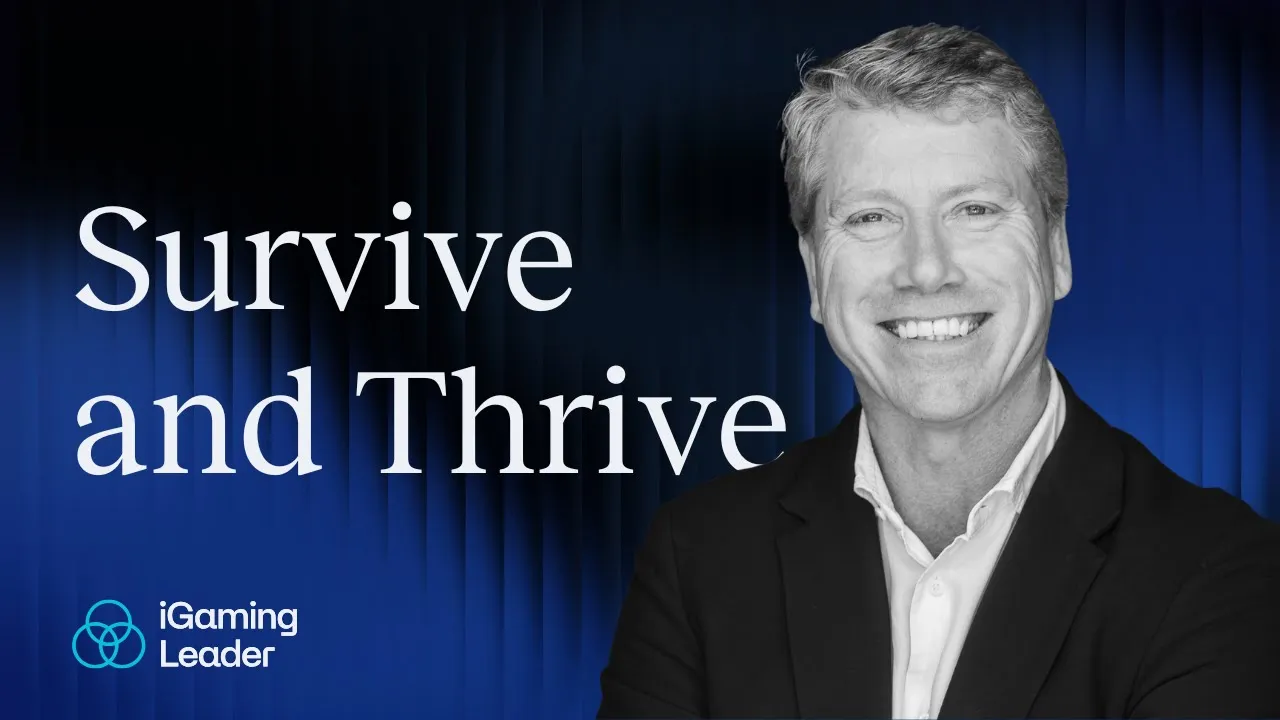
Leadership Is Learned During Days of Thunder Not of Sunshine

Andreas (Andy) Koeberl is an engineer turned entrepreneur and CEO. He started his career in aerospace engineering before moving to Microsoft, where he honed his commercial instincts. In 2017, he co-founded HPYBET, a retail sports betting business that grew to become one of the top operators in Germany and Austria before being sold to SNI in 2020. He then joined BetGames as CEO to lead a full company turnaround, taking the business from decline to record growth years of 50% in 2024 and 45% in 2025. In late 2024, he co-founded Autonomous Minds, an AI deeptech startup building the data infrastructure layer for the agent era.
Key topics discussed
00:00 – How COVID wiped out 100% of HappyBet's revenue in 90 days.
03:00 – Running a seven-figure monthly OpEx with zero revenue.
06:00 – The two-column whiteboard exercise Andy used to manage the crisis.
08:00 – Why not a single person quit during COVID
11:00 – "Andy bombs": dropping unscheduled harsh truths and why it kept the team together.
13:00 – "Shock them with your honesty." Advice from mentor Armin Sageder
15:00 – Leadership is learned during days of thunder, not sunshine.
21:00 – BetGames: flying to Lithuania and finding great people.
27:00 – Turning down a deal that would have more than doubled revenues to protect a niche identity.
30:00 – How BetGames went from near-death to the number two crash game in its core markets and record growth.
36:00 – What an "agent-first Palantir" actually means.
42:00 – Burnout does not come from hard work.
Key takeaways
Leadership Is Only Forged in Crisis: Andy's view is unambiguous. You cannot develop real leadership capability during good times. The crisis is not an obstacle to leadership; it is where leadership is created. The ability to stay calm, tell the truth, hold a team together, and control what can be controlled while accepting what cannot is a skill that only gets built under real pressure.
Radical Transparency Holds Teams Together: During COVID, Andy shared the cash balance, runway, and daily reality with his team every single day. He gave people tasks and kept the business moving even when the shops were closed. Not a single person left. The lesson: smart, invested people will find out the truth anyway. Telling them first, clearly and without spin, builds more loyalty than protecting them from it.
The Theory of Constraints as a Permanent Operating Philosophy: Andy does not only apply financial discipline during hard times. He runs tight operational constraints at BetGames even during 50% growth years. The result: headcount has stayed flat or declined while revenues have grown, because every departure becomes a forcing function to challenge whether a process can be automated or eliminated rather than backfilled.
Sunshine Is More Dangerous Than a Crisis: The most common leadership failure Andy has seen is not handling adversity badly, but handling success badly. Overhiring, inflating OPEX, chasing shiny objects, and losing focus on what pays the bills are all far easier to do when money is flowing. Being deliberately counter-cyclical, investing aggressively during downturns when competitors retreat and applying constraints during record years, is the harder and more valuable discipline.
Focus Is the Survival Skill for Smaller Organisations: The BetGames founding team's refusal to add roulette, and the subsequent near-death of the business, is Andy's clearest example of what happens when identity protection overrides commercial logic. For smaller organisations, distraction is fatal. Doing two or three things with genuine quality is the only path to sustainable growth.
Only Surround Yourself With People Who Have Also Failed: Andy has consistently rejected high-profile advisors from large corporates in favour of investors and mentors who have personally faced failure, near-bankruptcy, and crisis. The reason is practical: when you are a founder in real distress, only someone who has been there can give you advice that is worth anything, including the mental and emotional support that textbook answers cannot provide.
Memorable quotes
"You are not allowed to call yourself a senior leader until you've managed at least one substantial crisis. Not successfully. Just managed one."
"Everybody can be a sunshine leader. Leadership is only forged during a crisis."
"My mentor always told me: shock them with your honesty. I try to live by that in my personal life too."
"Burnout does not come from hard work. It comes from emotional stress. And as a founder, you are in with your time, your accountability, and your own cash."
"The best advisors are the ones who've been in your shoes and who you can call and say: I have no clue how to handle this, without being anxious about what they'll think."
Important links
Episode Transcript
Read transcript
Andy: [00:00:00] You are not allowed to call yourself a senior leader if you never had to manage at least one substantial crisis in your career.
If you have like seven-figure OpEx run rate
every month and no revenues left, um- That puts you a bit into distress.
Andy: I had to tell the team, Guys, I don't know if we survive. Right? Like, I have no clue if the company exists in two months.
Leo Judkins: not a single person ran away.
Andy: Shock them with your honesty, right?
When do you need your leader the most? When we hit our revenue numbers every month and smash records and increase salaries every six months and throw champagne parties? Or ? when the shit hits the fan?
Leo Judkins: Leadership is learned during days of thunder, not sunshine.
Andy: Sunshine is such a dangerous period because people get distracted so easily. so easily.
Andy: when you have periods of burnout, and everybody has them, right?
I don't believe burnout comes from hard work. It can be induced by it, but it comes always from emotional stress.
Andy: the only place where you'll find more hypocrisy than in iGaming is Hollywood, right? And they are paid for it
Leo: everybody
Leo (2): Hey, [00:01:00] welcome to the iGaming Leader Podcast I'm your host, Leo Judkins, founder of iGaming Leader Mastermind. And on this show, I sit down with some of the most inspirational and forward thinking leaders in our industry diving into the real challenges, high stakes decisions and lessons. That shape our
industry
If you are a VP Director or an Executive in iGaming this podcast is built for you.
Before we dive in, a quick thank you to our sponsor Sum Sub, the full cycle verification platform. Trusted by top iGaming operators worldwide, sum sub helps onboard players quickly stay compliant and prevent fraud all without slowing growth.
More information in the description. . .
Leo: Welcome to The iGaming Leader Podcast. I am here with Austrian software engineer turned entrepreneur and CEO who started building his own company at 26. Uh, Uh, started in aerospace, moved to, uh, Microsoft, and then got poached by what later became his mentor. Co-founded a business, then moved over to another business, uh, uh, to become a CEO, to turn that [00:02:00] around, uh, and then founded his own, his own, AI-led business. Welcome to the, uh, to the podcast, Ali. Good to have you.
Andy: Thanks for having me
Leo Judkins: Um, hey, Ali, I wanted to start kinda at the Happybet, bet story and what, uh,
what exit really means. You, um, um, was a Playtech-funded business, um, doing 20 mil in revenue. You, uh, reached breakeven in December 2019 after three years of grinding. 90 days later, COVID hit and killed the entire retail business.
You lost, uh, 100% of your revenue overnight. Um, tell me a little bit more about that kind of external hit and what that does to you as a, yeah, as somebody running the business, and how you dealt with it.
Andy: I mean, that was a very, very interesting, uh, uh, period of my life, as you can imagine. I remember thinking in January we had a little party to celebrate cash break-even of the retail business because we were basically a retail business. Uh, digital was still in its, uh, its infancy. We had a website, but it was, it was really crap.
So it was, it was not there yet. So we were actually a, a retail platform, um, with equity and, and franchise shops across Germany and Austria, and was quite a ride. So we [00:03:00] built it up for three, three and a half years, and then we reached a point where we became like the number three in the market and number four in the market quickly, something that nobody has done before.
Um, and then we, we reached a point where we said, "Okay, retail itself, at least the German part is, is basically cash break-even." So we had a celebration in January, and then I think it was the 13th of, uh, March 2020, we basically shut down the entire world
Leo Judkins: Lee
Andy: your, um, revenues are gone because not only sports was gone, but as you know, governments had, um, other priorities than keeping retail betting shops alive.
So we were basically from down to zero, like literally. which was quite interesting because if If you have like a seven-figure OpEx run rate every month and no revenues left, um- That puts you a bit into distress.
Leo Judkins: Yeah
Andy: was hard because of course it was, I built the business from scratch. We started Um, with, with three people and then or three and a half years later it was like 180 or something.
Um, and all of the sudden [00:04:00] you don't know if the company will survive, if you have to fire basically everyone, if you have to go in liquidation, if you, whatever, get sold because, you know, it was a play tech funded business back then, so it's like corporate CBB, so it's like corporate CBB, uh, VC. um, luckily we keep quite a calm head because the one thing we've done in February before the whole thing happened was we got some fresh money.
was actually meant for, for acquisitions because we also grew inorganically, so I, um, I acquired six companies and integrated them, uh, uh, during these three and a half years to boost the growth, right? Because as soon as you have corporate investor, there is only one direction is up,
Leo Judkins: Yes.
Andy: There is no, uh, bootstrapping or something.
we had that cash. Luckily, we, um, yeah, made a few really quick decisions. Uh, things like calling all of our sponsorship partners, uh, telling them, "Guys, we have to postpone the payments because at the end of the day, you can choose to enforce it and we're dead and you get [00:05:00] nothing, or have a chance that we can pay in a few months."
Luckily, all of them agreed, and that was something that we have done very early. Our competitors didn't do that that quickly. so they suffered of course. Um, and yeah, I had to tell the team, "Guys, I don't know if we, if we survive," right? Like, I have no clue if the company exists in two months. But, uh, yeah, up our sleeves and, uh, cut the costs.
Control what we can control, right? This is like
Leo Judkins: Yes
Andy: is always first things first, go to the whiteboard and write down two columns. What can I control? What can I not control, right? We can control our costs. We can control our roadmaps. Um, we cannot control when we can reopen, right? This is an external shock.
At the early days of COVID, we, we, we did not know, nobody knew, um, if this is like a two-week thing or if this is like a two-year thing, right?
I had a good friend who runs a hospital.
I called him actually two or three days after we, we had the lockdown and He basically told me, "No, it's not as dangerous. The problem is just we're not prepared for it, [00:06:00] it's just so contagious that the mass of patients and the mass of sick people is just overwhelming the systems, and that's the main issue and not that this will wipe out, like, 10% of the population is not gonna happen."
Which was good news. So I knew that, if we survive three, four, five months, um, would probably have a good chance to make it because the disease itself is not as lethal as, as it was cooked in the beginning. So that was quite an early observation and bet, uh, on that. And according to that, we, we just handled, right?
We stretched out our cash flows. We said, "Okay, let's try to survive six months." Um, luckily, there was also a lot of support from Playtech. Uh, we have to really give the guys kudos here. and the entire team stuck together. Uh, not a single person quit or left, so
Leo: Yeah
Andy: one of the proudest moments I had.
Um, but yeah, the six months were absolutely, absolutely mad, yeah
Leo Judkins: I've heard you say a few times is kind of control the controllables. We call it spheres of control. Um, I [00:07:00] think that's really important, especially in crisis management, thinking about, okay, one of the things that we can do?
And it works really well when, especially when the emotions are high, right? When there's things that affect people or, you know, let's say redundancies or turnaround in businesses. I first wanted to dive in what you said there at the last bit, which is it was one of your proudest moments that, uh, not a single person ran away. Why is that, you think?
Andy: With it. Uh, course I knew it's a lot of uncertainty for everyone. Like, every company got hit by it, right? Um, but I also knew that, you know, we were a startup. Even though we had, like, some corporate VC money, we, didn't pay massive salaries. So it was, for most people it was like, you know, this 24/7 startup grind.
It's our baby, it's our business, right? Especially, I mean, those listeners having a bit of exposure to retail know that you have a bit of a different bond to your organization, to your company than in a digital business, right? Where everything is, like, zero and ones. Like, you have something physical, [00:08:00] right?
You have shop stuff. You meet your customers, right? So you have au- automatically, like, every individual contributor has a bit of a more intense bond to, to the startup, Because, yeah, it's their baby, and they can literally touch it. Um, but I was also clear that people have to pay the bills, right? And people have to feed their families.
So at the end of the day, of course I was nervous to, to lose some of the core people because, um, I was always planning for success. So meaning that I knew that, again, from a cash flow perspective, we'll probably make it if the assumption holds that we can reopen in a couple of months. Uh, but what then, right?
Like, if half of the core team left, then you basically run an empty shell and crash against a wall afterwards. Uh, so this was basically a concern. I think at the end of the day what I learned, uh, is Leadership is a profession that only, I would say, gets forged and manifests itself during a crisis. I, I have this very hard opinion that you are not allowed to call [00:09:00] yourself a senior leader if you never had to manage at least one substantial crisis in your, in your career.
No matter if you, if you, were successful or not, this is less about did I turn things around successfully. It's more about, r- uh, cro- um, up your sleeves, right? Keep the team together and not just call your five headhunter bud- uh, buddies, uh, and, and put, uh, and, and update your LinkedIn profile, right?
And run away. So I think, uh, that was probably the biggest learning period I had. I, I would not wanna miss this experience and especially the outcome. Company survived, it then got sold, and then the team stuck together. And I think the key was simply what I now call Andy bombs, which I still drop, which is basically some harsh truths.
Just put them on the table, like randomly sometimes, right? In the middle of a meeting or, um, not in a, let's say, dick way, right? But,
Leo: Yeah
Andy: you know, my, you know, my, my mentor, Armin Sageder, always told me, "Shock them with your honesty," right? This is
something that I try to, to live by also in my personal life, [00:10:00] right? it's like you work with smart people.
Like you work with engineers, you work with people with degrees, you work with people who, who grind for you seven days a week, who are really invested in your business, right? As I said, it's their baby. They can literally touch it. They are genuinely interested, so they would anyway know what's going on and will find out.
Maybe it takes a bit longer, but don't fool them. Just tell them the truth, right? And I think that was the key here, right? Like I, I told them every day. Like I told them how the cash looked like, how much money we have, what the runway was. How we could potentially create a bit of revenues, how we can
What we can actually do day by day because people were still here, right, and people still had jobs. So what, job do you give them? What tasks do you give them, like every day when the shops are closed, right? Which
Leo Judkins: Yeah
Andy: psychologically extremely important, right? Is don't sit at home for six months or three months or whatever, right?
So, um, so we did a lot of cleanup work. We, we actually used the chance to [00:11:00] do a lot of, of research. We called our customers because they all had customer IDs, right? We, uh, worked on the product and so on and so forth. So people got a bit distracted and felt like, okay, company is going forward, right? So they know there is enough cash, and they know there is the backing, and they know that we don't drop the pen for like three months or four months and do nothing and sit tight on our asses and assess, right?
This didn't happen. So I think this helped a lot and, uh, yeah, I was inspired by, by Armin's words, right? Um, which I think, uh, yeah
Leo Judkins: I,
I I, I, you s- you said something um, before as well, which said, uh, "Leadership is learned during days of thunder, not sunshine," and I, I, I love that. Uh, it kind of goes into exactly what you just said earlier. Um,
Andy: a, it's ...Yeah, it's, you have, every, every, when do you need your leader the most, right? When we hit our, our, our revenue numbers every month and, and smash records and increase salaries every six months and throw sh- champagne parties, or when the shit hits the fan, right?
Like, everybody can be a sunshine leader. It's like what I saw at Microsoft. Like, I don't want to miss a Microsoft school. I think this is a sales engine that I don't want to miss, right? But I really learned to sell there. [00:12:00]
Leo Judkins: Yeah
Andy: you learn nothing about leadership because it's
only up, up, up. I remember our worst year was, like, 98%, uh, revenue attainment, uh, or budget attainment with, with a 24% annual growth of a company that was 30-something years old, right, or 40 years old.
Like, mad, right? An 80% contribution margin. So this is a problem, right? And people got fired because of that. So you don't really ... I don't want to be mean here, right, so no offense, but you don't learn leadership there, right? You, you just don't learn. You learn how to sell and how to chase KPIs and just quarter by quarter by quarter and grind.
Yes. Good. You need to learn this as well. But leadership, I think, is a, is a skill that I only learned, uh, when I hit the first real substantial crisis, which in this case was the near death of, of Happy Bet during COVID, yeah
Leo Judkins: Yeah. And you know what? You know what I think, Andy, which is also true, which I, I truly believe is true. Uh, not just leadership gets kind
of taught in, in,
in that crisis, but also leaders stand up and break in, that. like the non-leaders break in that. They're like, they... it ...
it ... You know, you s- you
It's, it's a perfect scenario to see who's actually a [00:13:00] leader.
So not only does it get taught in that situation, it shows you who is and who isn't a leader. And the second thing is that I also believe
that that's
where innovation happens, right? You have to be creative, you have to find new solutions to a new problem that you haven't forecasted.
And you said something before about, you know, finding mentors or finding advisors around you that, uh, You, basically you just gotta find people who failed recently and and like, that's
such a great take because that's where it c- that's, that's where it all gets taught, right?
So, so when you think about the industry now, and you know, you have the, the tax hike in the UK, challenges in the Netherlands or whatever, you, you know, we have all these challenges everywhere in terms of scrutiny, um, in terms of, you know,
uh,
uh, numbers hitting, hitting the bottom line. Do you feel that that's also where leadership gets shown and innovation happens, uh, for the future?
Andy: Yeah, I mean, 100%. Like, at the end of the day, you know, we didn't call it creativity when it comes to innovation. Like, um, his name, but I listened to a very, very famous designer, and he said that he never asks for more money, or he was [00:14:00] actually asked, "Why didn't you ask ... You could work for everyone, for Apple, for Nike, et cetera.
Why don't you ask for more?" And he said, "Because this is exactly the point. Creativity and innovation means that you come up with something within very tight boundaries, and not with something when you have endless resources and can just throw money out of the, out the window and can hire whatever talent you want," right?
I, I agree. I think it's the same ... It's a good metaphor, actually, or analogy here, right? Like, if you have some constraints, if, you know, the shit hits the fan, excuse my French, um, you have to wake up and you have to become creative. Easier said than done, 100%.
Leo Judkins: Sure
Andy: a UK operator and now face, like, a mid-size or smaller operator, right?
Not Entain or, or Flutter, like, small guys. I mean, that's, that's a tough cookie now, right? Like, this is for sure tough boardroom discussions. But at the end of the day, those who make it will probably be, as cheesy as it sounds, um, way better afterwards. And, um, the tighter the constraints, the [00:15:00] more innovative, or let's call it creative, you need to become, right?
Leo: Yep
Andy: yeah, I had to do the same, like, 15 times in my in my life. Um, and um, it always worked out, let's say, afterwards way better than before. Yeah. Can happen that you die, okay? But then maybe your business is anyway, um, not meant to be sustainable, right? Uh, I mean, if you, if you're 100% dependent on one market and an external or severe external shock, be it the COVID, be it a tax hike, uh, whatever, can wipe you out
I would ask a few questions as a board member anyways, right? So, I mean, assuming that these are not startups. Of course, if you're a startup, you focus on one thing and do it well, and then ... But if you're an established company, right? Which we have plenty of them in, in, in this industry as well,
Leo Judkins: I love the theory of constraints I, I, Uh, how, but how do you use that now? Do you use that at all whenever the... Uh, uh, of course, I don't know exactly what the situation is in your business profitability-wise and stuff, but, but how do you, like, in days of sunshine, uh, do [00:16:00] you use this theory of constraints as well?
Do you
apply that principle?
Andy: a lot. But we, we always have the ... I mean, in both business, no matter if it's Autonomous Minds and then also back when we had su- substantial crisis at BetGames, um, uh, and, and then like really, really strong years. I mean, BetGames is a very thriving company, very profitable, which is a very hard thing to do for a small mid-scale live dealer business, because live dealer is all about scale, right?
Like, this is why you have Evolution and, and Pragmatic, because they have the scale, um, and the innovation. But in Prag's case, they're just execution champions and they have scale, right? so we always ran, I always run any business on a, on a, what I said before, on a sustainability criteria. And of course, when you work in the AI space and, and like we do there, have a lot of VC money, you have pressure to grow, grow, grow, grow, grow, right?
But I can tell you that we still look at every single, uh, pound we spend three times, right? And we kill [00:17:00] things immediately. We measure everything to the dot, right? Which is the beauty if you build something from scratch in AI, right? That you can measure a lot of things. and we keep a very tight corset around things, right?
So even when we hire people, right, like it's, it's very, very, very rare that we just say, "Okay, we have now 20 additional contracts, we need five new people." No. We, we just, we just believe that more rigor your operational constraints are, the better for the business. It's a different story if you work for like a large organization, of course, and a corporate, right?
Like this is some two fundamentally different things. But, uh, still at BetGames, I remember when we had record years, 50% growth in 2024, 45% growth last year. This year also looks like another 30-something percent growth for like 15, 16-year-old company. Not too bad for a live dealer, right? and very, very profitable.
There is no, uh, let's pump up salaries every six months, or let's [00:18:00] hire more people. I can tell you that BetGames', um, headcount is now stable, but from the record years '24, '25, I think at the beginning of '24 we had, like, or 30 more people in the back office. I mean, the studio obviously grows, but when we'd only talk about back office, we had, like, 20 or 30 more people than we have now, right?
So the headcount is flat or actually in some cases declining, actually It's uh, because we innovate, because whenever somebody leaves or when we make a strategic decision, I force everyone or I forced everyone to, uh, challenge processes and structures,
Leo Judkins: Yep.
Yeah
Andy: we automate things? Can we... We're in twen- 2025.
I remember last year, like, we're in 2025, like, AI is everywhere. Why do we create banners by hand? Like, it's, it's nonsense. It's completely idiotic, right? and I think is, is a key success criterion nowadays. It was probably different five years ago, right? Before the age of AI and the age of automation.
Um, but yeah, 100%, like, keep the [00:19:00] constraints up and... A lot of keep the constraints up, you can lift them or broaden them. You have to because if you grow, at some point you need to invest, and I'm not saying do not invest. We just invest in very different areas, right? And spend a lot of money on technology, like, shitloads of money, uh, on, on technology.
Um- So there's a shift from labor budgets to technology budgets coming along, but it still doesn't mean that you go crazy because you had a record year and spend, uh, and, and spend your profits immediately on, on pumping up salaries artificially or just hire another 20 people and find something to do with them.
Like, there's nothing easier than hire another three development teams, and I promise you, hire three additional development teams in an iGaming company, they will be super busy and they will be the, at 100% capacity, and your roadmaps will still shift and will still be shit, right, in terms of your deliveries.
Always happens. Um,
Leo Judkins: Yeah. Yeah
Andy: that's why I'm a strong believer, be careful during the days of sunshine. It's a bit the opposite, so it's a bit counter-cyclical when, when there is a crisis. So remember, we invested quite a lot actually when, [00:20:00] for example, at Bad Games, when we had like '22, '23, the crisis years, we basically scratched the entire roadmap and built entire product lines from scratch.
Um, and as you can assume for a live dealer, that means not only OPEX and, and, and getting new developers in or different developers in, but also lot of multi-million CapEx environments because you need to
Leo Judkins: Yes
Andy: build studios, et cetera, et cetera. Money that wasn't really there back then. So it's like this, yeah, this textbook, be a bit more aggressive when, when you have the team and the technology, but you are in a crisis, so you know that if you have the backing and you have the runway, right, the cash flows, then invest, and then during days of sunshine, well, be careful, right?
Leo Judkins: It's, It, it's, it's, it feels counterintuitive maybe to some people, but that makes a lot of sense because that... It's kind of like you were saying about that COVID time. If you're
first,
first mover to actually do something about it, like a crisis similarly, right? An external crisis when the macro [00:21:00] turns and, you know, the macro environment is different, that usually hits a large portion of, of, of companies.
And so when you're able to aggressively invest because you've got the runway, because you've been, you know, applying a theory of constraints while the sun was shining, uh,
that,
that makes you a first mover and
that,
that allows you to survive in,
in,
in an environment like that.
Andy: A lot, maybe one sentence, I've seen it a lot also in this industry is if you go too aggressive. So again, I'm not advocating for hit the brakes when, when times are good. Like go aggressive after what works, right? And double, triple, quadruple down, of course, right? 100%. But the, the big mistake I've seen, even friends, um, there's two large companies, uh, in, in Austria that raised like one raised 400 million from a US VC, right?
And I remembered one of their co-founders is a friend of mine. We went to, to uni together and he said, "I have no fucking clue how to spend this money. Like literally it's good to have it, but we have no clue how to spend this money. They forced me to hire 1,000 engineers now. Like the core product is somewhat stable [00:22:00] now and works, now I have to like tenfold my team and find jobs for them."
And that company almost went bust a few years later
Leo Judkins: Oh
Andy: overhired. And it's not because they hired too many people, but because they got completely distracted, right? Like as, as I said, there's nothing easier than, okay, you have a few million extra cash flow, let's hire more and more and more developers and, and do X and Y and C.
and you lose track because somebody needs to match it. Somebody needs to validate it. So that's the core message. So sunshine, yes, double down, triple down on what works. Use some money to experiment because you need to innovate, okay? Like we also, like in BetGames, we established two years ago, established an incubation team, right?
It's like a, a handful of people who just play around with AI and build like avatar studios and stuff like this. it doesn't mean that we now go crazy and say we double the headcount and go all in on X, Y and Z. It doesn't make any sense, right? Because it kills the core business, was the right decision to be done, yeah
Leo Judkins: And I think the other thing is through, in, uh,
in,
in
[00:23:00] like any
sort of investment during days of sunshine is that it's never just the cash investment,
right?
Whatever it is, into people, into technology, it's the time investment that actually kills it, right? Because when people are no longer under that theory of constraints, they make these kind of lazy decisions on the technology or the people that
they b-
thinking is gonna fix the thing instantly. But it always comes with a, you know, a ma- m- management debt, right? With cost and a cost of time. And, um, and I think often the- that's where these, these things get killed. But, but I wanted to talk a little bit about, uh, about Betgames and, and how you entered there because you...
you-- With HappyBet, of course, right?
you were in a very challenging situation with COVID hitting and then having to turn that business around. Nobody leaving. Your, like you said, proudest moment,
Very entrepreneurial
startup kind of vibe, right? Everybody's in there, you're sharing runway and cash flow and everything, right? But then you come into
like
a very different environment.
You're being brought in by, you know, somebody else ex-
well, let's kind of.
Tell the story in a bit about how you came in and what you found. That's, that's where I'd love to start.
Andy: Yeah, I mean, o- once we, [00:24:00] the decision was taken to basically sell Happy Bet, uh, to, to, to Sni in 2020, um. Which was I think the right thing to do at this point, uh, just from a synergy perspective. Um, I was just exiting the business myself because I don't wanna work for corporate, period. I'm, I'm unleadable, I think, so it's, it's something I feel not ashamed I cannot I cannot work for somebody else, right?
Don't like to have a boss, which is, I think, very telling. Um, but, uh, it is what it is. and then I just got a call from, um... It was completely unplanned, uh, from the ma- from the main, uh, shareholder and investor in, in a company called BetGames. And, uh, he called me and said, "Look, I heard you're..." I knew him, and I...
He said, "Okay, I heard you're, you're free now, and I have this, uh, little personal investment in a company I love very much." But, you know, as an industry back then, live dealer was, like, growing 20%-plus a year. Um, a company is shrinking by 3%. This is impossible, right? And, um, "Can you jump on a plane and take a look for me?
Uh, because, uh, I want to, uh, I need a new CEO, and I would like to have your [00:25:00] opinion." So put up Google Maps and just had to,
Leo Judkins: So
Andy: to see where, where Lithuania was, right? I knew it was one of the Baltics, but you know, it's like,
Leo Judkins: Yeah
Andy: the top one or the bottom one? So it was the bottom one. So I flew to Lithuania.
Um, it was still COVID times. It was, uh, summer 2020 for the first time. I think late summer 2020 when I said, "Okay, I'll, I'll take a look." And, um, yeah. Um, looked at the company. I saw technology, great people, right? But bit of a management issue there. So, um, not in a, in a negative way,
but like this classic example where you have, like, a, a founding team was still running the business, like, in 2012 when they built it. Which isn't necessarily a, a bad thing. BetGames is still run in a very, very, very hands-on entrepreneurial way. Like, you have to imagine a 600-people company, there's only two hierarchy layers.
There's the C-level, and then [00:26:00] there is a team lead layer. Nothing else, right? So it's, it's really, it's, it's really run in, in a very lean way. So this was not the, the problem. The problem was more, like, ignoring what's going on on the market fundamentally, right? Left and right. So I called him back and said, "Look, I think this company has a lot of potential.
Uh, but you have to probably change two massive things. First of all, probably half of the management needs to go be downsized." Because I think when I, when I arrived, the, the, the, the exec team, the C-level team was, like, 9 or 10 people,
Leo Judkins: Oh my God
Andy: In such a small company. just historically grown, right?
Because the founders were, were just super nice people, and it's like, "Okay, you, need a CMO," right? The chief marketing officer. Who likes marketing, right? And then, uh, some girl raised her hand and said, "Yeah, I like marketing." Okay. Chief Marketing Officer, right?
Leo Judkins: Yeah
Andy: one of these I would say romantic stories that works early days, of course, when you build something up, right?
But the company had reached a, like a size and a distribution and also size of, let's say, customers, tier ones that had different [00:27:00] demands, right? And the market was moving really, really fast. Like Evolution was already a machine back then, right? Like like 2019 when Prag really started to take off, right?
2019, 2020, 2021, right? And all of the sudden you have um, left and right that were always there, but they were just ignored for five years, right? Uh, because we're so special and we only do, uh, special content and niche content and, we don't need to compete with Evo and Prag and Evolu- and, and, and Games Global and Playtech and so on and so forth.
But reality hit differently. So came there toughest year I think of my life. I think I told you about HappyBet a lot, but I think, uh, from a Personal perspective and from a, a leadership perspective, this was for sure the toughest thing I've ever done. Because you have to imagine you come there as a foreigner,
Leo Judkins: Yep
Andy: team, is like 20 years older than you, does not speak a word English.
So I always had to use a translator, right, uh, with many of these people. there is a complete [00:28:00] r- reluctancy to change anything. And not to change anything, to recognize that maybe looking left and right and doing some of the boring things to just get the company back on a growth track and then innovate, innovate, innovate, right?
Like, you know, you always move between exploitation and, and, and exploration, right? When you, when you look at strategies. the company needed some urgent, um, exploitation, right? With some, like, no-brainer products that we should have done. And that was a pretty, pretty tough fight. So I remember it was like, um, a lot of shouting mesh- matches, but via email because we couldn't talk to each other a lot.
And, um, then a few, few decisions were made from a product perspective that I didn't back, but, you know, um, founder decided to do them, and that almost killed the company. Um, multimillion investments into sports products, et cetera, that completely crashed against the wall commercially. Very well executed.
That's what I meant before. So the company had great capabilities, strong [00:29:00] execution, just did the wrong things, right? So they delivered a, a fantastic product, but, you know, at the end of the day, the player decides, and the player decided, try it, but I won't come back." Right? So that almost killed the company.
And then after 18, months, we were finally at the point where I also had enough board backing, um, to fundamentally, um, overhaul the company. That was then the easy part. Like, changing this things
Leo Judkins: Yes
Andy: emotionally hard, but like from a from an execution perspective, pretty straightforward because I knew what to do, right?
And, um, yeah, we replaced basically the entire management team with the exception of the CFO. Uh, everybody else had to leave, and, um, brought in a lot of quite experienced, um, international people, um, within a year. And then we scraped the-- we scratched the roadmap and said, "Okay, we're not doing this old stuff anymore.
There is no point in this," because, you know, [00:30:00] even the TAM for, for that kind of product was, was already way too small. It was like, I thought it was like 200, 250 million euros in GGR a year that that particular niche probably could produce, and Betgames was already doing like back then 150 million or something.
So
Leo Judkins: Yeah.
Andy: you cannot do, um, you n- cannot grow this market, right? Because you saw slots, RNG games, fast-paced games were on the rise back then already, right? And, and they're s- they still are, right? So story short Scratched everything, uh, rebuilt the product from scratch. So have to imagine the company was back then, like 12 years old, um, or 11 years old, and didn't have a single roulette table in the portfolio, right?
A live dealer product, right? When, when we know that roulette, the roulette category is like 50% of the global live dealer GGR still,
Leo Judkins: Yeah
Andy: Um, so we, we, we basically produced all these products because I knew, okay, we're live with like 1,500 brands globally, so we have good distribution, the product doesn't work in out of 10 [00:31:00] markets that we're, um, that we're targeting.
we built like tons and tons and tons of, of games, um, launched them, got into the crash vertical. I flew around the world to talk to all the customers and said, "Look, guys, you're our best customers. Do me a favor. The company is..." And as again, brutal honesty, is dying. Help me understand our player profile.
what
Leo Judkins: Does it?
Andy: of games are they playing?" luckily we had these great relationships, um, in the company, which was again, um, due to the strong team that the company had. Like from that perspective, everybody loved Bet Games. Like even if you go out there and ask about Bet Games and its people, like it's, I think it's one of the most beloved company out there.
There is not many people, like at least from the top 20 customers we have, says it's a rubbish company or they are greedy or, or something, or they're increasing prices like every, every six months like the big boys do. I think we never increased prices in six years, uh, or seven years. Um, but um, yeah, they gave us a lot of insight and then, yeah, we started to say, "Okay, we're actually, we [00:32:00] only have an overlap with Evolution players of 20% or less," right?
Um, so other live dealers, the product portfolio are not the, the immediate product, the immediate product threat, but crash games and slots are eating our lunch, uh, so we went into the crash space, um, very successfully with a, with a product that is now the number two in, in, in our core markets.
Number two or number three, it depends on, on, volumes, but, uh, on which metrics you look at. Um, so that alone basically almost doubled the company's revenues. And then we added all the casino portfolio, brought on new customers, signed large deals with game show deals with, um, with the likes of Entain, et cetera.
Um, and then yeah, company since then is, is thriving, but it was basically, I wouldn't even say a turnaround. It was basically a rebuild,
Leo Judkins: that, I mean, that's one of the things, isn't it, Andy? Especially, so you've gotta, with founding teams or founders, it, um, and entrepreneurs in general, we're all built to find problems, identify problems. We're really good at, at finding them and then fixing them, right? And so I think [00:33:00] one of the things that the curse of entrepreneurship is that you constantly have these shiny objects, and you constantly see opportunities everywhere, right?
And you
see revenue
opportunities everywhere. And you know you can make money. But the problem is that when you do that, you're so thinly spread that,
A,
the market doesn't know you for any single thing because you're doing everything, and B, you're, like that investment of time that we were talking about earlier, which you can only spend once, is now gone on many different things.
And it sounds like that was the case with Sportsbook there in terms of development. It's like another vertical. It's another pro- it's a distraction to the business Um, and, ultimately, um, you know, successfully, successful businesses just do one thing and do them really, really
well.
It's not true everywhere. But I think that's where, especially with leading successful small businesses to mid-size to then large
is really that thing.
Andy: the key sentence. Uh, successful small businesses, right? So distraction is deadly, right? For, for, for smaller organizations. so I, think, I think you hit the nail here, right? if you are a large organization like Evolution, et cetera, of course you, you need to be on every, in every niche somehow, and I think they have done the right thing [00:34:00] similarly to Playtech by just acquiring a lot of stuff rather than building it themselves.
Um, but for a small organization, this is not possible, so you should actually know what are the top two, three opportunities you can actually not only work on, but you can deliver them to, to satisfy your, your, your customers' needs and the players' needs at the end of the day in a proper quality. I remember when of the largest operators in the world offered us to completely replace, um, back then Esugi's, um, Esugi's roulette environment, and
Leo Judkins: That's it, yeah
Andy: have more than doubled the business for us, um, just produce a few roulette tables, right, for them.
And they offered us exclusivity, global exclusivity. And, and, uh, it was in the, in the first year, in this very tough first year, and I immediately said yes, of course, because I did a quick calculation and said, "Yeah, okay, just do this." It's not sexy, but again, it recovers the business. It, it, it basically gives us the cash flows that allow us to go from exploitation to exploration again and then build, 'cause it's a privately debt-- it was privately held and still a privately held, completely debt-free, um, [00:35:00] business,
Leo Judkins: I just
Andy: today Betgames does not have a single sign of debt, so it's very sustainably run, uh, out of own cash flows. And I said, "Okay, let's do this," right? And presented it to the board. That was the time when I was not a board member yet, and everybody was like, "Yeah, of course," like, "No-brainer. What, what do we even discuss?
Why do you show us the slides?" Like, just completely, "Yeah, do it." Like, amazing because the spillover effects to other operators, et cetera, I mean, it's amazing,
Leo Judkins: Nothing
Andy: Like, how do you get such a chance? Well done, boy, right? Like,
Leo Judkins: Yes
Andy: good, job. And then I remember the, the, the founding team stepping in and saying, "No fucking way.
We're leaving immediately. We're dropping the pen if you do this to our company. We're not producing roulette. We're unique. We're niche. We do nothing else than our weird games," and put their bets slip on it, and that was one of the, the harshest discussions I ever had, I think, in my career. But at the end of the day, we didn't do it and did the other thing, the sports thing, the sports product, and instead of
thriving
and- and- [00:36:00] we almost died and, uh ... But yeah, you know, everything happens for a reason.
Leo Judkins: It's one of these key things, right? Where, um, focus and just do more of the boring stuff and do it really well. That's where the money is for most, most businesses. So-
Andy: I'm a big advocate for a lack of innovation in this industry. I think there's zero innovation in this industry. But at the end of the day, you need to understand what pays the bills, right?
If you, if you wanna do anything successfully in any business, in any vertical, as an established company, you need to protect your baseline cash flows, right? The stuff that actually pays the bills. Unless you are, whatever, 90 days from bankruptcy and you need to
Leo Judkins: F
Andy: stunts and, and do weird thing.
Yeah, of course. But, uh, that, that's what a lot of people often forget, and that's why I'm saying sunshine is such a dangerous period because people get distracted so easily. money is thrown at them. Um, they increase the OPEX run rate, which is very, very hard to decrease, right?
Leo Judkins: [00:37:00] Yeah
Andy: if you pump up salaries
Like, there was this period in the last five years. I mean, look at engineering salaries, like how engineering salaries, like, skyrocketed, like double, triple over the last five, six, seven years, right? in some cases well deserved, but at the end of the day, you will not get rid of these costs quickly. You can fire people, but, you know, good luck with, with slashing salaries, right?
Um, that's a very hard thing to do. In some cases you can't even do it because it's, it's just prohibited, right? Uh, especially in Europe. So long story short, be careful, right? Like if ... It's, it's just, it's just very simple. Understand what pays the bills and then anything extra for your luxuries, right?
Like, it's like in personal life, if you wanna buy a Rolex, well, don't buy it from your salary. Buy it from your maybe interest income, right? Like, this is your play money and do whatever you want with it, but ensure that you have a ma- enough left to pay your mortgage and feed your family and fill your fridge and maybe do a nice vacation per year, uh, and not drop it on stupid things.
And I think this is, uh, the same thing in
Leo Judkins: Of course
Andy: common
sense.
I
Leo Judkins: wanna [00:38:00] talk about the last little bit, Andy, with, um, uh, with your current business. So, uh, tell me a little bit about how that started because you started that while still in the previous business. And a lot of, you know, a lot of guys I speak... guys and girls I speak to, of course, they have their kinda side projects or they have their side ventures.
Um,
but that's not all too common. You st- you started, um, you started that business while you were, while you were still CEO, right? So, it was,
Andy: was actually in late 2024 when we started out, right? The whole thing, I mean, Autonomous Minds is now a fundamentally different company to, where it was or how it started in, in, in in, in 2024, Um- From a product perspective. So the idea basically came up out of frustration, like as so often, right?
Like the whole analytics space is one of the most absurd fields in any business, right? Like your data costs go up, and you hire more and more analysts and scientists and whatever fancy job titles you give them. But for, for, for whatever reason, you still wait a week to 10 days to get any ad hoc question answered, right?
Like answered, answered, not just another dashboard, like an actual
[00:39:00] Yeah
um, I wanted to fix this and, um, there was like the early days of agents, so AI was already a thing, but agents end of 2024 was like the new thing that you read in some like articles maybe. And I, I read a lot of these articles because it's just a leftover from my I, times when I did my PhD, right?
You, you, you always read like this journals and, and newsletters and, you know, see a lot of stuff before it hits the market. So I looked at this, called a good friend. He back then, um, led a, R&D business, an I- an AI R&D business of a San Diego-based company, and asked him if he can produce a, a prototype for me, um, just to ensure that I get my numbers, right?
Like within, uh, my numbers, my answers to the basic business, mainly numbers, within a minute without me having to raise a BI ticket or whatsoever, right? And he did, and it worked out pretty well. So, uh, we decided, uh, to-- And we showed it around, right? And, um, a lot of people said, "Oh, wow, I have the exact same problem.
Can I have this? Uh, can I test this?" So we said, "Okay," called him [00:40:00]again and said, "Quit your job. Uh, let's build a business together and not build one product for, for one company." And that's how it basically started. Then we pivoted a few times and the company is doing quite well, um, already. Um, just closed another massive multimillion funding round
Leo Judkins: Much appreciated
Leo: Right you guys
Andy: now a completely different product because what actually the business does now is building an agent-first Palantir, right?
So basically, um, when you look at the data infrastructure of the last 30 years, right, the last three decades, it's all built by humans, for humans, and for very technical humans, like even Databricks and all the, the hyped businesses. Um, they are great products, but agent, and there will be soon more agents deployed in companies than there will be humans, right?
Has a completely different requirement on data flows and underlying of architecture, right? That's why all these agents, you have your agents and you know, we all play around [00:41:00] with it because we're s- tech-savvy people. But I don't know many examples where particular agent or a handful of agents Got deployed across tens of thousands of employees in an organization, and they are capable of running autonomously, right?
That's why the
company is called Autonomous Minds for agents, right? Um, one of the key reasons, not the only reason, but one of the key reasons is because what goes in and what comes out of an agent is usually different, especially what goes into what the human can absorb, right? You can absorb fuzzy data and, and so on and so forth, but an agent needs to be-- needs to have precise information, right?
And a lot of different information and different formats to what a human needs. So long story short, that's basically what the company is building now on top of the analytics stuff or underneath the analytics stuff, is actually an entire data platform that consumes all your data in your organization, right?
Doesn't matter if structured or unstructured, transforms it, cleans it, labels it, [00:42:00] then builds ontologies and semantic layers on top of it be able to feed that into agents. So our actually consumer is not a human,
our consumer
is an agent. And whatever that agent does for the human, we don't really care.
What all, all, all that company cares about is how can any agent get real-time insights, um, about whatever happens in your organization, uh, and then do something with that data, um, and ideally autonomously. So that's basically the, long, the long story
Leo Judkins: Uh, everybody-- I think everybody also recognizes that specific issue,
right? You
want to have some sort of report on some sort of bits of data. You create a ticket, it takes forever, and then you get something back that's, you know, it's like difficult to interpret. And so, so I see the real business case for
it. makes
a lot of sense. Uh, I was listening to your podcast with Robin, Diary, Diary of a, an iGaming CEO, which I like,
I love.
I love Robin, great guy. One of the things you said at the end
of that podcast was, of that podcast was, uh, what you said earlier as well, that well, that a lot of hypocrisy in the, in the industry, and you were talking [00:43:00] about how, you know, it's really important to have, like, an advisor a grace or
or some sort of, you know, someone next to you, someone that, that...
a mentor, whatever it is. But somebody that, that has also failed, right? So tell me a l- tell me a little bit more about why you feel
that that's
important, not just to have somebody there or to have a group of people there, but
also why
it's somebody that's-- to, to step away from that hypocrisy, what you mean with that, and why it's so important
to,
to focus on that failure.
Andy: I mean, hypocrisy, yeah, I was, I was half joking. Actually, I'm not joking at all. I, I really have the strong op- op- opinion that the only place where you'll find more hypocrisy than in iGaming is Hollywood, right? And they are paid for it. Um, it, it, it's really quite an interesting place here. Um, look, why, why is it important to step away from it?
Why is it important to have people that- Uh, what I say have done it and also failed, right? Like, I think one of the success factors I had in my life is I built Happy Bet, I had Armin as a mentor. He was the founder of [00:44:00] Paysafe Card. he took that money, um, it all into, uh, BGT, Best Gaming Technology.
At the age of 40, he was bankrupt, basically, and then made the turnaround. So he, he knows how to walk the valley of tears, right? At Bet Games, the entire business is owned by entrepreneurs, all of them. Every single investor a, is an entrepreneur, successful entrepreneur now. Some of them, two of them billionaires, right?
But all of them failed multiple times and went through really, really, really tough periods in their life. And I think this is quite a, a, a huge success criteria and, uh, for me personally, because, um, as I said, when does leadership matter? Um, the shit hit the fan. And being a CEO or a founder or whatever, right, is a very lonely job, right?
so the best thing that you can have is to have some trusted advisors, no matter what they are, if they're [00:45:00] investors or, or not, doesn't matter, right? Who've been in your shoes and who you can call and say, "Look, have no clue how to handle this," right? Without being anxious about, oh my God, talking, what will they think if I say I don't know the answer, right?
Or I need advice, or I'm really burnt out or whatever, right? So I always had that through all my, my entrepreneurial or my entire entrepreneurial journey, and I think this is, this is the best, this is the best advice I can give somebody who wants to start a business, um, to surround yourself with these people, right?
Not the ... Like, we got a lot of offers from ex-Google ex-Microsoft whatever, VPs, EVPs, uh, to be our startup advisors when we started building Autonomous Minds and when the, the news, um, basically spilled that we raised a lot of money and so on and so forth. But we always rejected that because, not because they're bad people, but as I said before, they know nothing about leadership.
They have not built businesses themselves. They have not fought against bankruptcy, maybe even personal [00:46:00] bankruptcy, right? Like,
Leo: Mm-hmm.
Andy: had two times in my life where I lost all my money, right? luckily turned it around quite successfully multiple times. But you want people who have been in your shoes, and again, even if they weren't successful it is still better advice also from a mental perspective, uh, when you have periods of burnout, and everybody has them, right?
Not because of hard work. I don't believe burnout comes from hard work. It can be induced by it, but it comes always from emotional stress, in my opinion, right? Like, and emotional stress results when you're a founder. It's your baby. You're in not only with your time, you have an accountability for people.
You're in with your cash, right? Like, this is really important. So you better find people who can actually really hold your hand when you need it because they have been there, rather than giving you some textbook answers or some idiotic corporate advice on how to restructure cash flows and bullshit, right?
Um, [00:47:00] so this is why I think it's, it's so important to, to have people around you that also failed, right?
Leo Judkins: I think that's a brilliant piece of advice to land on. Um, Andy, thank you very much for your time. today. It's been, uh, been great talking to you. Thank
Thank you. That
Speaker: Thank you for listening to the iGaming Leader Podcast. If you are a vp, a director, founder, or an executive in iGaming making the biggest decisions alone, that's exactly what I've built. The iGaming Leader Mastermind for Small inner circles of vetted senior executives weekly hot seats. And accountability from people who understand the effects of the decisions that you need to make.
Find out more and apply@igamingleader.com. And a final thanks to our sponsor, sum Sub, the full cycle verification platform for iGaming operators player onboarding a ML fraud prevention all in one place. More at sum sub.com/gambling. See you next week.
[00:48:00]

Want to learn leadership strategies like
Andy Koeberl
Related podcasts
Podcast Episode
45
43 min
The "Bait and Switch" of the C-Suite: Dealing with the gap between the job description and the reality of a company in trouble
Ian Freeman
Former CCO & CRO
Listen now
Strategic Execution
Stress Management & Resilience
Leadership Development
Podcast Episode
44
43 min
From Affiliate Manager to CMO - Leading Through Crisis, Regulation & Restructure
Elen Barber
Former CMO, Kindred Group
Listen now
Leadership Development
Mental Health and Burnout
Career Growth & Transitions

Podcast Episode
20
45 min
Facing scandals and industry wars with Paris Smith
Paris Smith
Former CEO at Pinnacle, Defy the Odds
Listen now
Leadership Development
Communication & Networking
Stress Management & Resilience